
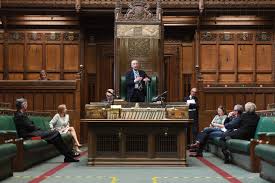

The making of UK legislation rarely begins with certainty. It often starts with unease, a sense that something is not working as it should. A policy failure, a court ruling, a campaign that refuses to fade. Civil servants draft quietly while ministers test the political weather, and by the time a Bill appears in Parliament, it already carries the fingerprints of compromise.
The First Reading is the least dramatic step in the Parliament law process, and yet it matters. A title is read aloud, papers are ordered to be printed, and the Bill exists in public form for the first time. No speeches follow. MPs drift in and out. It feels almost perfunctory, which is misleading, because from this moment onward, the proposal can be scrutinised, opposed, and reshaped.
The Second Reading is where the atmosphere changes. This is the first real debate, focused on the principle rather than the mechanics. MPs talk about why the law is needed, or why it is dangerous, premature, or unnecessary. The chamber’s mood varies sharply by subject. Issues touching crime or national identity fill the benches. Technical reforms pass with polite indifference. The vote at the end is a blunt instrument, but it decides whether the idea survives.
Once approved in principle, the Bill moves into Committee Stage, where its tone shifts again. The noise drops. Clauses are examined line by line. Amendments are tabled, sometimes dozens at a time. MPs with deep knowledge finally have space to speak. This is where legislation becomes human, shaped by practical concerns rather than slogans.
Committees expose fragility. A phrase that sounded fine in a speech suddenly looks ambiguous. An unintended loophole emerges. Ministers are pressed to clarify what the law would actually do on a wet Tuesday afternoon, not in theory but in practice. Occasionally, the government concedes ground. More often, it promises to “reflect” and return later with changes.
The Report Stage brings the Bill back to the full House. Amendments that survived Committee, and those that did not, are reconsidered. Political tensions reappear. Some MPs vote to make a point rather than to win. Others keep quiet, counting future favours. The Third Reading follows, usually shorter and more restrained, marking the Commons’ final say.
If the Bill began in the Commons, it now moves to the House of Lords. The process repeats, but the character changes. Peers speak without electoral anxiety. Former judges focus on drafting precision. Former ministers recall how similar laws behaved once released into the real world. The debates are often calmer, but not gentler.
The Lords are particularly alert to constitutional questions. They worry about executive power, judicial independence, and rights that erode gradually rather than all at once. Their amendments can frustrate governments, especially when they delay legislation promised in a manifesto. Yet this tension is part of how UK legislation is made, not a flaw but a feature.
When the two Houses disagree, the Bill enters a phase informally known as “ping-pong.” Amendments bounce back and forth. Language is softened, then sharpened again. Time pressures grow. Concessions appear late at night. Sometimes the government holds firm. Sometimes it blinks.
I remember noticing during one such exchange how carefully ministers chose words that admitted nothing while still shifting position.
Private Members’ Bills follow the same formal steps but face steeper odds. Introduced by backbench MPs, often on Fridays when attendance is thin, most never reach Royal Assent. Those that do usually succeed because they address a narrow issue with broad support. Their passage feels less like politics and more like persistence.
Throughout the Parliament law process, timing matters as much as content. An election can wipe the slate clean. A cabinet reshuffle can stall momentum. Public attention drifts. Bills are carried over, reintroduced, or quietly abandoned. Lawmaking is not linear; it loops and hesitates.
Devolution complicates the picture further. Some legislation applies only to England. Others require consent from the Scottish Parliament or Senedd. These moments reveal the UK’s uneven constitutional settlement. A Bill can be legally sound and politically fragile at the same time.
Once both Houses agree on a final text, the Bill is sent for Royal Assent. The monarch’s approval is formal, not discretionary, but it marks the moment when debate ends and enforcement begins. An Act of Parliament is born, often quietly, sometimes overshadowed by the arguments that preceded it.
What surprises many people is how cautious the language of Acts tends to be. Sentences are long. Definitions are layered. This is not carelessness but defence. Each word is placed to survive court challenges and changing circumstances. Precision outweighs elegance.
Public engagement with this process is uneven. Consultations exist, but participation is limited. Most people encounter legislation only when it alters their routines, rights, or costs. By then, the debates that shaped it are distant echoes.
There is something oddly reassuring about the slowness. It frustrates campaigners and ministers alike, but it forces reflection. Laws passed in haste leave long shadows. The system resists speed unless urgency is undeniable.
How UK legislation is made is not simply a sequence of steps. It is a negotiation between power and restraint, expertise and politics, urgency and caution. Watching it closely reveals a system designed not to be elegant, but to endure.
The process absorbs disagreement without collapsing under it. It tolerates delay. It allows second thoughts. For all its flaws, it treats law as something to be handled carefully, with an awareness that once written, it will outlast the arguments that created it.
