
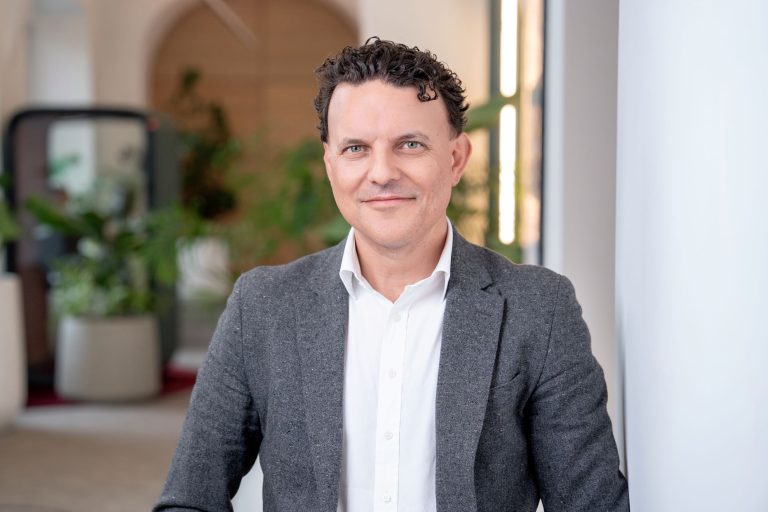
After serving as General Counsel at e-commerce platform Farfetch, solar developer PVcase and gaming company Dream Games—plus an earlier stint as Senior Legal Counsel at Sky—Maynard is returning to private practice. On 2nd February, Burges Salmon announced his appointment as partner in its Corporate & M&A team, based in London. The move signals the independent UK firm’s determination to carve out a bigger slice of the lucrative tech legal market.
It’s an unusual path. Most lawyers who’ve tasted the board-level influence and relative predictability of in-house life don’t voluntarily return to the client-service grind. But Maynard brings something most private practice partners lack: two decades navigating the client side of the table, from scrappy scale-ups to multi-billion-pound public companies. That perspective—understanding what founders, investors and operators actually need when the pressure’s on—is precisely what Burges Salmon is betting on.
“I am thrilled to be joining Burges Salmon and to play an integral role in developing a leading Corporate Tech practice,” Maynard said. “The firm’s culture, deep bench of talent and appetite for investment position it exceptionally well for growth, and I’m excited to be part of that journey.”
The appointment is the fourth partner addition to Burges Salmon’s Corporate & M&A practice in just 14 months. Charles Claisse and Jonathan Cantor both joined in London, while Julie Book was promoted internally. That pace of expansion suggests something beyond routine growth—it looks like a deliberate land grab in a sector where legal work has exploded in complexity and value.
Nick Graves, who heads the firm’s Corporate & M&A practice, didn’t hide the ambition. “We’re delighted to welcome someone of James’ calibre to the firm,” he said. “He brings a rare combination of board-level in-house experience and high-profile, international deal execution that aligns perfectly with our clients’ needs and our ambition to build a market-leading Corporate Technology team. This is a fantastic opportunity for our firm, with the tech sector presenting enormous potential for growth, product and service development.”
Maynard’s CV reads like a tour through the past decade’s tech landscape. E-commerce. Solar tech. Gaming. Broadcasting. Each role demanded multi-jurisdictional deal-making, the kind that spans IP rights, employment law, regulatory tangles and capital markets strategy. At Farfetch, PVcase and Dream Games, he built legal functions from scratch, scaling teams to match companies growing at velocity most traditional businesses never experience.
That experience matters more now than it might have five years ago. Tech companies—whether they’re raising Series B funding or eyeing an exit—need lawyers who’ve actually sat in those board meetings, who’ve wrestled with the specific pressures of hyper-growth, who understand that a founder’s risk calculus differs fundamentally from a FTSE 100 chief executive’s.
Burges Salmon’s pitch hinges on being the credible alternative to the Magic Circle giants. An independent firm with offices in Bristol, Edinburgh and London, it’s spent years building the infrastructure to compete on sophisticated, international work while maintaining what it calls a “collaborative and cohesive culture.” Whether that cultural claim holds up under aggressive expansion is always the question—law firms grow fast, then wonder why the atmosphere changed.
The numbers suggest the strategy is gaining traction. In December, the firm reported completing more than 65 Corporate & M&A transactions throughout 2025, with a combined deal value of approximately £3 billion. Those deals cut across financial services, technology, healthcare, real estate and human capital—a deliberately broad spread that reflects how tech intersects nearly every sector now.
For Maynard, the brief is clear: expand the Corporate Technology offering by tapping into Burges Salmon’s full-service platform. That means coordinating IP specialists, employment lawyers, property advisers and regulatory experts around the specific corporate events that define a tech company’s lifecycle—funding rounds, acquisitions, IPOs, restructurings. It’s the kind of orchestration that requires someone who’s been on the receiving end of that coordination and knows when it works and when it’s just expensive box-ticking.
The timing is worth noting. Tech sector valuations have whipsawed over the past few years, leaving companies—and their investors—navigating uncertainty about exits, valuations and strategic options. That volatility creates legal work, particularly around M&A, as businesses recalibrate their paths to liquidity. Firms that can credibly advise across the full spectrum, from early-stage funding to public company transactions, are positioning themselves for whatever the next cycle brings.
Burges Salmon’s model emphasises its independence in a market increasingly dominated by global mega-firms and their lock-step partnership structures. The firm works with a select network of like-minded independent practices internationally, rather than maintaining its own global offices. That approach suits clients who want senior attention without paying for a firm’s Dubai or Singapore overhead—assuming the network partnerships actually deliver when a deal spans multiple jurisdictions.
Maynard’s appointment also underscores a broader shift in how law firms compete for talent. A decade ago, hiring a partner meant poaching from a rival firm, ideally with a portable book of business. Now, firms increasingly raid in-house teams, betting that deep client-side experience translates into better advisory work and stronger client relationships. Whether that bet pays off depends on whether Maynard can convert his network and insight into deal flow—and whether he can adjust back to the rhythm of private practice after years on the other side.
For clients in the tech sector, the appeal is straightforward: a lawyer who’s recently navigated the same pressures they face, who’s built teams under resource constraints, who’s advised boards through high-stakes decisions, who speaks the language of operators rather than just legal advisers. That credibility matters when a founder is choosing who to trust with a company-defining transaction.
What’s less certain is how sustainable this hiring pace proves to be. Four partner appointments in 14 months indicates serious investment, but also raises questions about integration, culture and whether the firm’s infrastructure can absorb that much new leadership without friction. Law firms are notoriously bad at integrating lateral hires quickly—everyone’s too busy billing to properly onboard the new partner.
Still, the ambition is clear. Burges Salmon isn’t positioning itself as a niche player content with regional work. The firm is aiming at the same market the big global firms dominate, betting that its independent structure and newly bolstered tech expertise give it a credible wedge. Whether that gamble works depends on execution—and on whether clients buy the pitch that independent means better, not just smaller.
For now, Maynard’s move signals confidence on both sides. He’s betting his next career chapter is in private practice, advising the kinds of companies he recently worked for. Burges Salmon is betting his Rolodex, experience and insight will accelerate its tech practice trajectory. By this time next year, the market will have delivered its verdict on whether that confidence was justified.