
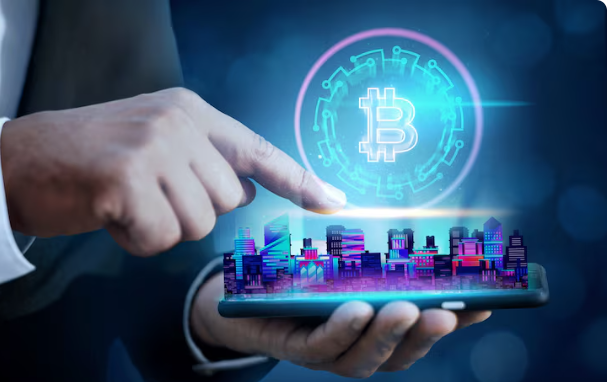

Construction cranes loom over partially completed skyscrapers along the glass-lined streets of Miami’s Brickell neighborhood, casting shadows across sidewalks lined with upscale auto dealerships and rooftop bars. There’s something strange going on inside sales offices. Deposits are not being wired by buyers via banks. They are sending Bitcoin. It seems as though Miami’s real estate market is subtly changing its own regulations as these deals take place.
Buyers of luxury condos in this area are increasingly making deposits with cryptocurrencies, sometimes sending millions of dollars in a matter of minutes. Due to international regulations and bank verification, traditional wire transfers appear to be out of date. This shift may be partially explained by speed alone, particularly in competitive buildings where units sell quickly. Developers seem prepared.
Miami Luxury Real Estate and Crypto Transaction Snapshot
| Category | Details |
|---|---|
| Location | Miami, Florida, USA |
| Trend | Luxury condo deposits made using Bitcoin and stablecoins |
| Key Buyer Group | Crypto-wealthy investors, international buyers |
| Main Benefits | Faster transactions, capital preservation, cross-border efficiency |
| Major Developments | Waldorf Astoria Residences, 888 Brickell |
| Crypto Financing Option | Crypto-backed mortgages and collateral lending |
| City Policy Environment | Strong pro-crypto stance by city leadership |
| Reference |
Agents sit at simple desks with laptops open in sales centers for projects like the Waldorf Astoria Residences, explaining payment options, which now include stablecoins and Bitcoin. The ambiance is more akin to a financial technology startup than traditional real estate. Investors appear to think that using cryptocurrency to pay for real estate enables them to secure properties more quickly, preventing delays that could cost them desirable oceanfront apartments. But there are other reasons besides speed.
Many buyers who are wealthy in cryptocurrency would rather not sell their digital assets outright. Taxes associated with Bitcoin liquidation lower net worth. Rather, buyers secure deposits while retaining exposure to future price increases by using cryptocurrency as collateral. Although it’s still unclear if this approach will be prudent in the event of significant volatility in the cryptocurrency markets, confidence seems high for the time being.
Marble floors shine under high ceilings as you stroll through Miami’s opulent condo lobbies, and salespeople subtly bring up cryptocurrency acceptance in the same way that they would when talking about square footage. Particularly among younger buyers, there is a perception that cryptocurrency has transitioned from novelty to expectation. Crypto is especially helpful to foreign investors.
Foreign buyers have long been drawn to Miami’s real estate market, but cross-border money transfers have historically been fraught with delays, currency conversion costs, and regulatory obstacles. Many of these obstacles are circumvented by cryptocurrency. The friction that previously slowed deals is eliminated as transactions settle quickly, sometimes instantly. Developers frequently instantly convert cryptocurrency to dollars.
They are shielded from volatility as a result, guaranteeing steady financial results. Because they provide the speed of cryptocurrency without price volatility, stablecoins, which are based on the US dollar, have gained popularity as tools for this process. There is a sense of cautious adaptation rather than careless speculation as developers take digital deposits without being directly exposed to risk. This change is promoted by the city itself.
By actively embracing cryptocurrency, Miami’s leadership has positioned the city as a global center for cryptocurrency. The area’s identity has changed in recent years due to the influx of blockchain startups, technology conferences, and cryptocurrency investors. Investors appear to think Miami has something unique to offer: luxury real estate that fits in with the culture of digital wealth. These purchases seem to have a different psychology.
Conventional buyers frequently show up with bankers and lawyers to talk about financing options and mortgage rates. On the other hand, cryptocurrency buyers occasionally show up with smartphones and access digital wallets rather than financial statements. It seems almost unreal to watch them use a few taps to confirm transactions.
The use of digital currency to purchase real estate signifies a change in the way that wealth is viewed. Once thought to be abstract, Bitcoin now represents tangible assets like walls, views, and addresses. It’s difficult to ignore how this conversion gives the impression that digital wealth is permanent.
Cryptocurrency is still erratic. Its use in real estate may change as a result of regulatory changes. Although developers seem upbeat, they also use intermediaries and conversion systems to safeguard themselves.
Regardless, Miami’s skyline keeps getting higher. New skyscrapers promise private elevators, rooftop pools, and views of the ocean. Buyers are still coming in with wealth that is partially invisible. As this is happening, it seems like Miami is selling more than just condos.
