
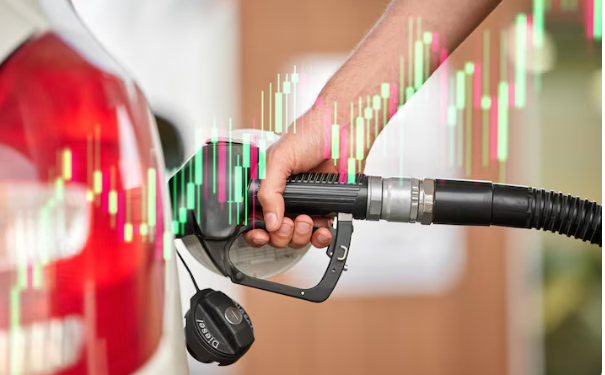

When you pull up to a San Diego gas station in early 2026, the numbers on the pump carry a particular kind of weight: they represent the highest costs the area has seen since late 2023, rising toward values that compel many drivers to make a calculation they had stopped bothering to do when gas was less expensive. Between entering the card and seeing the total increase, the mental math takes place: how many miles to the office, how often this week, and how much that adds up against a monthly budget that was already covering two years’ worth of increased grocery expenses and insurance renewals. For many, the journey is no longer just a logistical issue but also an ongoing financial burden.
It appears that the San Diego Metropolitan Transit System determined that the fact that passengers were experiencing hardship in ways that might be explained by data was sufficient justification to develop a tool. Launched in reaction to the early 2026 price increases, the MTS Commute Cost Calculator is an online comparison tool that shows the true daily and annual cost of driving versus using public transportation by accounting for miles, vehicle fuel efficiency, parking expenses, and current gas prices.
The calculator shows the possible yearly savings of nearly $980 for a short trip by converting to transit; this is real money, relevant to the user’s inputs, and more difficult to discount than a general claim about high gas prices. The potential savings of $10 to $30 per day, depending on the duration of the route, transforms the abstract discussion about transportation costs into something concrete enough to influence behavior.
Key Reference & Data Information
| Category | Details |
|---|---|
| Topic | Gas Price Volatility and New Commuter Budgeting Tools (Early 2026) |
| Key Location | San Diego, California — prices reached highest level since late 2023 |
| New Tool Launched | MTS Commute Cost Calculator — San Diego Metropolitan Transit System |
| Tool Function | Compares driving costs vs. public transit (mileage, fuel efficiency, parking, gas) |
| Potential Annual Savings (Short Commutes) | Over $980 per year by switching to transit |
| Daily Savings Range | $10–$30+ per day depending on commute length |
| National Gas Spending Increase | ~$8 billion more spent on gasoline in the month leading up to April 2026 |
| Best Day to Fill Up | Sunday — generally more affordable than mid-week |
| Commuter Behavioral Changes | Combining errands, biking, using transit, reducing discretionary spending |
| Price Driver | Global conflicts, rising demand, supply uncertainty |
| Reference Website | GasBuddy — gasbuddy.com |
The scope of the problems at gas stations around the country reveals a narrative that extends beyond the financial strain on any one household. In comparison to the same period in prior years, Americans spent about $8 billion more on gasoline in the month preceding April 2026. This collective cost increase absorbs spending that would otherwise go to other areas of the economy, such as restaurant meals, home improvement projects, and the kinds of small discretionary purchases that add up to significant consumer demand.
Global conflicts that disrupt supply expectations, growing demand as spring travel and driving season draw near, and the unique volatility of a commodity market where a development on the other side of the world can translate into a different number at a pump in Phoenix or Charlotte within days are all common causes of price spikes.
The quality and accessibility of tools that customers may genuinely utilize to react is what sets 2026 apart from earlier gas price shock occurrences. While GasBuddy and similar apps have been around for years to assist drivers in finding less expensive stations within a reasonable radius, the more recent generation of commuter-specific calculators goes one step further by treating the commute as a financial decision with quantifiable variables instead of just displaying the location of the cheapest gallon.
Pricing pattern analysis has shown that filling up on Sundays is typically less expensive than filling up in the middle of the week. This is precisely the kind of precise, practical advice that enables consumers to make minor changes that add up over months. not significant alterations to their lives. Just marginally superior choices made in situations that can be repeated.
In reaction to this pricing environment, commuters are exhibiting a combination of strategic and pragmatic behavioral changes. Rearranging daily routines to combine the supermarket run, the pharmacy, and the dry cleaning pickup that could otherwise require separate trips is one of the most popular ways to cut down on total travel miles.
In numerous metropolitan markets where bicycle infrastructure has improved to the point where the option is truly practical rather than aspirational, there has been an increase in interest in biking for everyday commutes. Additionally, the pump bump—the particular type of financial discomfort that makes the bus or light rail seem like a reasonable alternative at lower prices—seems to be giving public transportation ridership, which had been gradually rising from its pandemic-era lows, a little extra boost.
Observing how the landscape of budgeting tools has evolved in response to these circumstances gives the impression that the discussion of transportation expenses is maturing in a manner that it hasn’t before been able to. For decades, there have been spikes in gas prices.
After the immediate crisis passes, focus shifts to other issues, and the structural incentives that influence transportation choices return to their pre-spike default. Instead of only solving an urgent problem, the new wave of tools—such as the MTS calculator, price pattern research, and apps that incorporate numerous cost variables—aims to create a more enduring analytical habit. The real question is whether that habit persists as prices decline. The tools have improved over time. The next price cycle will determine whether or not consumers continue to use them when the pump numbers return to comfortable levels.
