

A crowd that would have appeared more at home at a Senate hearing than a mining site attended a ribbon-cutting ceremony on July 11, 2025, at a coal mine near Sheridan, Wyoming. Chris Wright, the U.S. Energy Secretary, was present. Mark Gordon, the governor, traveled. Representative Harriet Hageman and Senators John Barrasso and Cynthia Lummis were present. A bipartisan note was added to an already politically tense event by former senator Joe Manchin, who currently serves on the board of Ramaco Resources.
Ramaco CEO Randall Atkins discussed Mother Nature’s unanticipated gifts and supply chains that may support American industry for a century while standing in front of cameras at what the business had billed as possibly the largest unconventional deposit of rare earth elements in the country. The declaration that is disseminated throughout news cycles and reframed as a turning point gave the day the feel of a true national moment.
| Brook Mine Rare Earth Lawsuit — Key Facts | |
| Company Named | Ramaco Resources Inc. — Lexington, Kentucky-based coal and minerals company; purchased Brook Mine near Sheridan, Wyoming for $2 million in 2011 |
|---|---|
| Named Defendants | Randall W. Atkins (Chairman and CEO) and Jeremy R. Sussman (CFO) — named alongside the company in the January 2026 complaint filed in the U.S. Southern District of New York |
| Lead Plaintiff | Lynn Henning — filed a 28-page class action complaint on behalf of investors alleging material misrepresentation of Brook Mine’s operational progress and rare earth development |
| Core Allegation | Drone footage obtained by short-seller Wolfpack Research allegedly showed no active work at Brook Mine following its highly publicized July 11, 2025 ribbon-cutting ceremony attended by the U.S. Energy Secretary, Wyoming governor, and multiple senators |
| Claimed Mine Value | Ramaco has described Brook Mine as potentially containing an estimated $37 billion in magnetic rare-earth elements and critical minerals — characterizing it as “perhaps” the nation’s largest unconventional rare earth deposit |
| Broader Context — Wyoming Rare Earth Sector | |
| State Funding | Wyoming awarded Ramaco a $6 million Energy Matching Funds grant in May 2025 — Ramaco remains in good standing on the grant project as of early 2026, per state officials |
| Peabody Energy Grant | Peabody Energy, the largest U.S. coal producer, received a $6.25 million state grant to develop rare earth extraction from Powder River Basin coal operations — indicating Wyoming’s broader rare earth strategy extends beyond Ramaco |
| Ramaco’s Response | “We believe we have meritorious defenses to all claims in this matter” — full statement provided to WyoFile by a company spokesperson; no additional comment beyond that |
| Legal Assessment | University of Wyoming finance professor Ali Nejadmalayeri described the suit as a “fairly standard securities class action” — noting such cases hinge on establishing clear links between company disclosures and measurable market value changes |
A different story was revealed in a 28-page complaint that was filed in the U.S. Southern District of New York less than six months later. Along with other investors who joined the class action, Lynn Henning, the plaintiff, claimed that Atkins, Ramaco, and CFO Jeremy Sussman had misled shareholders about the true status of operations at Brook Mine.
The short-seller and market advocate Wolfpack Research’s reports, which stated that drone footage of the mine site revealed no active work occurring in the months after the high-profile ceremony, were a major source of information for the lawsuit. There is no discernible excavating progress. There isn’t much operational activity. A location that had been marketed to investors and the general public as a development on the verge of revolutionizing America’s rare earth supply chain was essentially motionless.
The entire complaint revolves around the space between the drone footage and the ribbon-cutting. According to Ramaco, Brook Mine contains an estimated $37 billion in magnetic rare-earth elements and critical minerals. The National Energy Technology Laboratory’s analysis, which first assessed Brook Mine coal samples at the request of the Trump administration’s first term, helped the company arrive at this estimate.
The scientific evidence for the existence of rare earth elements at the site seems to be solid, and the NETL findings were authentic. The lawsuit does not assert that Brook Mine does not contain rare earth elements. It is asserting that the company’s public statements portrayed a more active and advanced business than the site’s physical evidence warranted, and that investors were misled about the pace and reality of development.
In response to a request for comment, Ramaco released a statement stating that the company believes it has “meritorious defenses to all claims”—a statement that is both the least surprising and the least informative thing a defendant can say in early litigation, indicating neither meaningful disclosure nor admission.
A little more detail was provided in the company’s February 2026 earnings call: Work at Brook Mine, according to Executive Vice President Chris Blanchard, includes separating hundreds of tons of rare-earth element ore from enriched stratum zones for testing and enlarging a hole to extract thermal coal for a local client. Even though this activity seems tiny, it might be the kind of gradual early-stage mining activities that a site like this might actually exhibit at this stage of development. It’s also possible that the Wolfpack drone footage captured its tiny scale exactly.
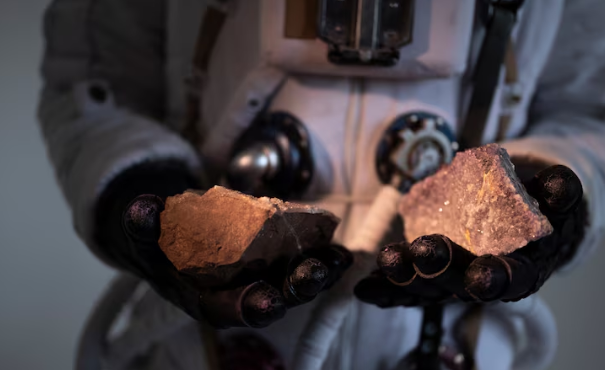
According to Ali Nejadmalayeri, a finance professor at the University of Wyoming, the legal structure in this case is a fairly typical securities class action, which follows a pattern of public euphoria, contradicting facts, and subsequent market value decline.
Following the Wolfpack stories, the stock dropped, and investors claim they lost money as a direct result of remarks they believe shouldn’t have been made. It will take months or years to find out if those connections hold up in court. These kinds of securities class lawsuits are based on extremely detailed factual conclusions regarding what was said, what was known, and how the comments affected investor choices.
This lawsuit has a somewhat awkward place in the larger Wyoming rare earth narrative. The state has been aggressively promoting itself as a domestic supplier of rare earth elements, which are now produced almost exclusively in China and are necessary for consumer electronics, military hardware, and electric motors. These elements include neodymium, dysprosium, and terbium. In May 2025, Ramaco received $6 million in Energy Matching Funds from Wyoming.
State grants for comparable projects in the Powder River Basin have been awarded to Peabody Energy. Regardless of the outcome of the Ramaco litigation, the political and economic reasoning behind this investment is real and will not go away. However, the Brook Mine story serves as a reminder that the ribbon-cutting celebration is not the same as the mine, and that the gap between a viable geological deposit and an operational supply chain is measured in years, capital, and challenging operating realities.
As this lawsuit progresses, it’s difficult not to sense that Wyoming’s rare earth story is one that the state and the nation really need to figure out, and that getting it right is far more important than having it announced.
