

Antitrust legislation is usually not a major concern for a family whose daughter participates in all-star cheerleading. They consider if this season’s routine will be sufficient to qualify for nationals, hotel reservations, uniform prices, and competition dates. In the Jones v. Varsity Brands lawsuit, a federal court was asked to consider whether all of those expenses, including the $300 uniforms, camp tuition, and competition entry fees, were artificially inflated because one company had employed a number of “intentional and methodical business maneuvers” to remove significant competition from the market.
The answer is complex, at least to the extent that a settlement of $82.5 million suggests anything. Varsity Brands denied any wrongdoing, as did its co-defendants. Nevertheless, they reached a settlement. In some respects, the details of what they decided to do about their business practices are also more illuminating than the monetary sum.
Important Information
| Field | Details |
|---|---|
| Case Name | Jones et al. v. Varsity Brands, LLC et al. — Case No. 2:20-cv-02892 |
| Court | U.S. District Court for the Western District of Tennessee; Chief Judge Sheryl H. Lipman |
| Defendants | Varsity Brands LLC; Varsity Spirit LLC; Varsity Spirit Fashion & Supplies LLC; U.S. All Star Federation Inc. (USASF); Varsity founder Jeff Webb; private equity owners Charlesbank Capital Partners and Bain Capital (acquired Varsity in 2018) |
| Settlement Amount | $82,500,000 — plus interest earned through August 2025 of approximately $1.06 million; gross available funds approximately $83.85 million |
| Final Court Approval | December 6, 2024 — Chief Judge Lipman; final distribution authorized February 12, 2026 |
| Eligible Class Period | December 10, 2016, through March 31, 2024 |
| Who Qualified | Individuals in covered states who indirectly paid Varsity through a gym or school for cheer competitions, camps, or apparel — and individuals who directly purchased Varsity apparel; does not include gyms themselves (covered by a separate settlement) |
| Claims Filed and Approved | Only 5,831 valid claims were ultimately approved; 3,044 were rejected for missing documentation, duplicates, or ineligibility; average approved payout approximately $8,181 per claimant |
| Payout Allocation | Competitions (53%), camps (26%), apparel (21%) — payments calculated by “Annual Shares” based on years of eligible purchases in each category |
| Attorney Fees | Up to $27.5 million — approximately 33% of settlement fund |
| Conduct Changes Required | Varsity must not require participants to stay at Varsity-approved hotel accommodations as a condition of competing; USASF restricted from sharing competitor information; no single event producer may occupy more than one-third of sanctioning body governance |
| Official Settlement Website | cheerantitrustsettlement.com |
| Separate Gym Settlement | A parallel $43.5 million settlement in Fusion Elite All Stars et al. v. Varsity Brands resolved claims by all-star gyms and spectators |
The lawsuit claims that Varsity’s stated route to market dominance was not nuanced. Varsity was accused of owning over 80% of the market for all-star cheering competitions and 90% of the market for all-star clothing in the December 2020 complaint. Plaintiffs claimed that the strategy involved leveraging its influence over the U.S., engaging into exclusive negotiating arrangements with all-star gyms that linked financial rebates to attendance at Varsity events and purchasing of Varsity gear, and acquiring rival event producers to reduce competition.
The All Star Federation, a governing body that Varsity assisted in founding in 2003, directed championship bids toward Varsity events in a way that strengthened its standing and excluded competitors. The USASF served as the regulating authority for a sport that was commercially dominated by its de facto originator. That arrangement is not intended to result in competitive pricing. An observer referred to it as “Cheergate” in reference to the extent of the alleged complete market management.
There was a lot of litigation. Over the course of two and a half years, more than 1.6 million documents were produced. In 2021, courts denied Varsity’s move to dismiss, citing a credible allegation that anticompetitive behavior had given rise to monopoly power. Two other related antitrust cases were at different stages by the time the Jones case settled in April 2024. These included a $43.5 million settlement with upscale gyms and spectators and an ongoing lawsuit from a rival event producer that claimed anticompetitive practices continued until 2026.
A specific kind of tale about how class action settlements actually reach—or fail to reach—the people they are supposed to assist is revealed by the final distribution figures. In May 2025, the claims deadline expired. 5,831 of the families who paid Varsity for contests, camps, and uniforms throughout the course of the eight-year program filed legitimate claims.
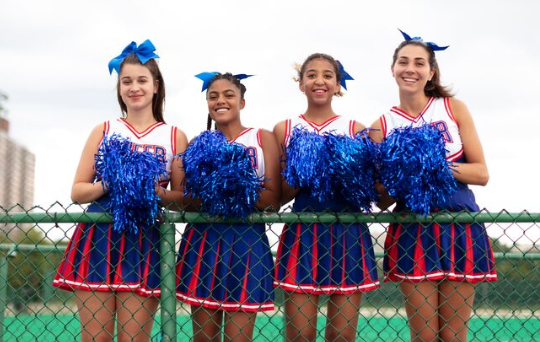
Thousands more people were qualified but either didn’t receive the notifications, didn’t comprehend the procedure, or thought the payoff would be insignificant. In contrast to typical class actions, the average compensation per accepted claimant came to about $8,181 because relatively few claims were approved.
That is a significant amount—enough to pay for a season’s worth of competition fees. There is a great deal of irony. The settlement was big enough to result in actual individual payments, but only a small percentage of eligible families received those payments due to the low participation rate, meaning that a sizable amount of the money was used for administrative and legal expenditures.
Observing how this transpired gives the impression that those who were already following the cheerleading profession closely enough to be aware of the lawsuit’s existence were the ones who benefited the most.
Families who saw the settlement announcement in their email, parents who read trade journals like Cheer Daily, and coaches who told gym parents about it. Despite its size, the competitive cheerleading community is not used to getting class action notices regarding the sport their kids love, despite the fact that the notice program was extensive and included mail, email, web advertising, and event outreach.
In the long run, Varsity’s agreed-upon behavioral adjustments might be more significant than any single check. The settlement prohibits Varsity from requiring teams competing in at least 35% of its events to stay at hotels certified by Varsity, a practice that the plaintiffs said resulted in kickbacks for Varsity while driving up expenses for families.
In order to prevent the kind of cross-pollination between regulators and commercial operators that the plaintiffs claimed had skewed the market, USASF consented to governance limitations. The next several years will determine whether or not those limitations result in a cheer scene that is actually more competitive.
