

Over the past five years, you’ve undoubtedly passed a tiny, colorful bottle of Feel Free Wellness Tonic if you’ve spent any time in an American yoga studio, juice bar, or wellness-focused convenience shop. Instead of anything that might be included in a federal class action lawsuit, the branding was deliberately intended to feel close to adaptogen lattes and coconut water.
Botanic Tonics, an Oklahoma-based company, promoted the product as a soothing, concentrated substitute for alcohol—the kind of thing you go for after a demanding day rather than cracking open a bottle of wine. The details of the latest $8.75 million class action settlement, which was reached in early 2025 and is currently undergoing the claims procedure, are more nuanced.
| Botanic Tonics Settlement — Snapshot | Details |
|---|---|
| Defendant | Botanic Tonics |
| Product Involved | Feel Free Wellness Tonic |
| Total Settlement Amount | $8.75 million |
| Eligible Purchase Window | March 28, 2019 to March 5, 2025 |
| Estimated Individual Payout | $175 to $291.66 |
| Bottles Purchased Without Proof | 10 or fewer |
| Bottles Requiring Proof of Purchase | More than 10 |
| Core Allegation | Failure to warn consumers about kratom |
| Marketing Claim Disputed | Promoted as safe, healthy alternative to alcohol |
| Ingredient at Issue | Kratom, sourced from Southeast Asia |
| Claim Deadline | June 3, 2025 |
| Final Approval Hearing | June 26, 2025 |
| Regulatory Reference Body | DEA Diversion Control Division |
The lawsuit at the heart of the transaction claims that Botanic Tonics did not sufficiently alert customers that Feel Free contains kratom, a Southeast Asian herb that, depending on dosage, has stimulant and opioid-like effects. Although numerous states have outlawed or restricted kratom, it is not prohibited at the federal level in the United States.
The FDA has frequently raised concerns about the drug’s potential for reliance, withdrawal symptoms, and major adverse health effects. The core of the plaintiffs’ case for a product marketed as a wellness drink was the lack of more explicit labeling surrounding an ingredient with that kind of profile. For its side, Botanic Tonics has not acknowledged any wrongdoing, which is how almost all settlements of this kind end.
Compared to many previous class actions, the settlement structure is remarkably consumer-friendly. Customers may file if they bought Feel Free between March 28, 2019, and March 5, 2025. Since no one saves receipts for a $20 wellness shot purchased during a quick stop at a co-op grocery store, those who purchased 10 or fewer bottles are eligible to claim without providing any proof of purchase.
Documentation is required for buyers over that threshold. Depending on participation rates and individual bottle counts, estimated compensation range from $175 to $291.66 per claimant. The final approval hearing is set for June 26, 2025, and the deadline for filing or objecting is June 3, 2025.
The larger background of kratom in American retail is what makes this case intriguing. The drug, which is well-liked in some online forums for its self-medicated use in pain management or opiate withdrawal, has been in a peculiar regulatory limbo for the past ten years while subtly making its way into health goods that appear mainstream.
Anyone who has observed the growth of adaptogen tonics, mushroom coffees, and CBD drinks will see the trend. Products that offer ease without alcohol are continually in high demand from consumers, and marketing has always outpaced regulations. Feel Free entered the space, and soon the gap left.
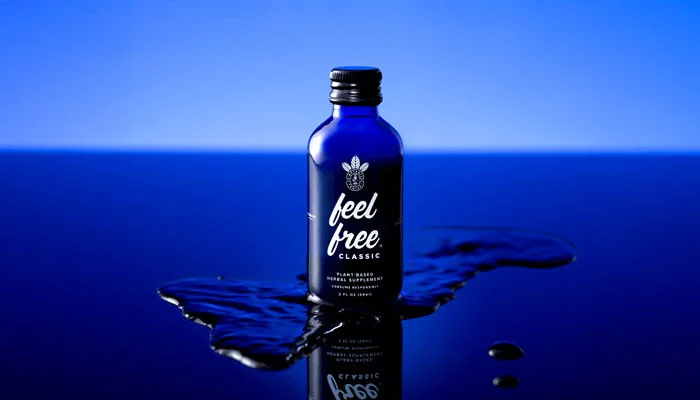
The plaintiffs contended that the alcohol-alternative framing was especially difficult, and the settlement’s presence indirectly acknowledges this. According to the company’s own marketing, those reaching for Feel Free were frequently attempting to cut back on or replace alcohol intake.
The bottle was not promoting wellness by substituting one chemical with potential for dependency for another. Reading the case files gives the impression that the plaintiffs were more concerned with requiring improved labeling than with outlawing the product. The case would have likely been completely avoided with a more truthful bottle that disclosed its ingredients more clearly.
It’s difficult to ignore the sheer number of comparable goods that are currently available on store shelves across the nation, marketed using the same soft, pastel language and containing active ingredients that consumers haven’t given much thought to. That won’t be resolved by the Feel Free settlement alone, but it might change the equation for the next wellness company thinking about aggressive marketing without aggressive disclosure.
As of right now, buyers have limited and targeted practical counsel. File your claim before June 3 if you purchased Feel Free during the window. If you receive the check, it won’t make up for anything the product did or didn’t do for you. However, it’s a subtle kind of responsibility in a retail sector that has been mostly neglected for far too long.
