
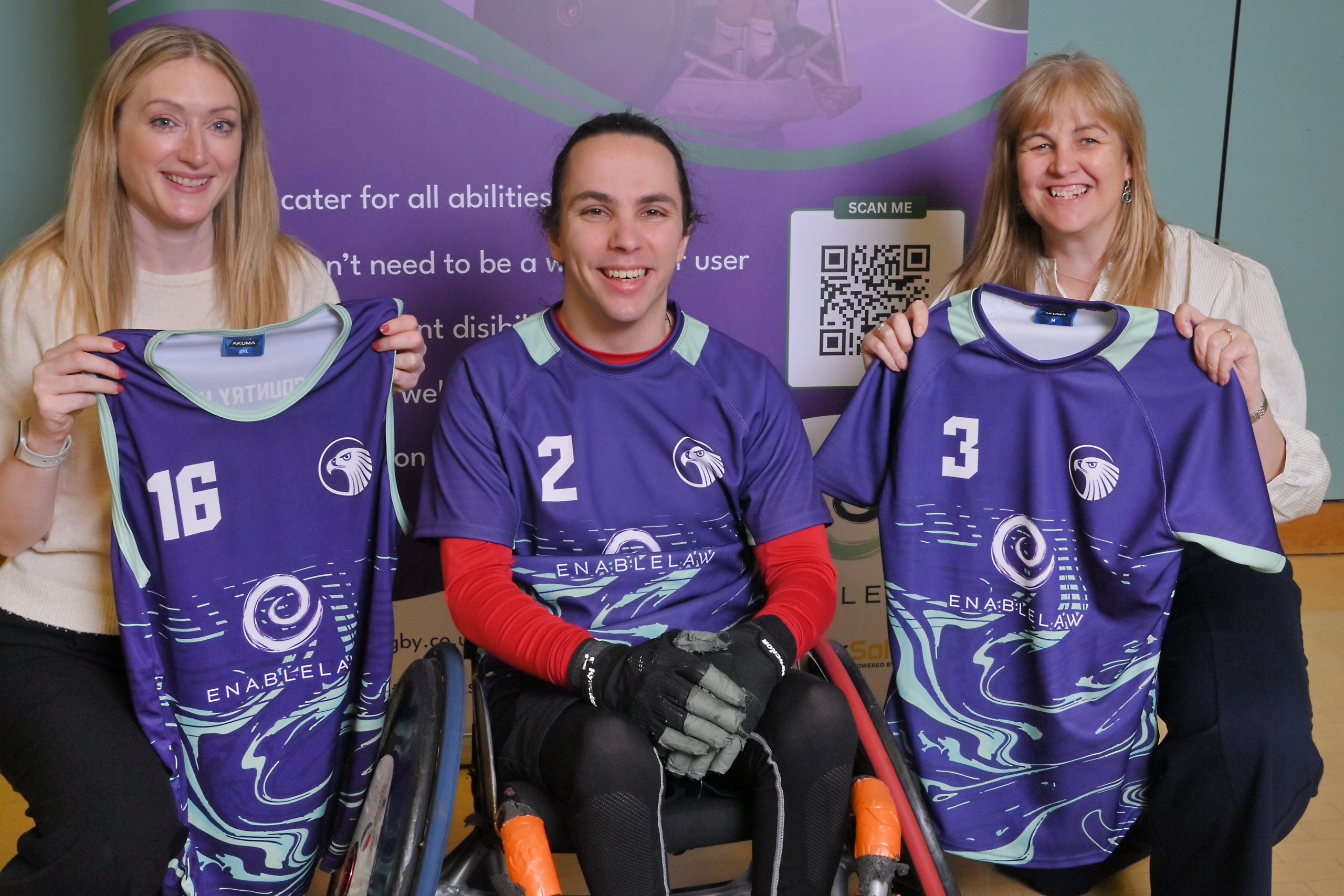

Jesse Hayes took the chair at West Country Hawks Wheelchair Rugby Club in March. Four months later, he’s secured the club’s biggest sponsorship deal.
The Plymouth-based Hawks announced Enable Law as their new head sponsor this week, bringing financial backing that will cover competition fees, venue hire and kit for the only wheelchair rugby club serving Devon, Cornwall and Somerset.
For Hayes, who lives with cerebral palsy, the timing matters. “We are extremely pleased to secure this partnership with a law firm that specialises in helping people rebuild their lives following serious injury,” he said.
The connection runs deeper than marketing. Enable Law built its reputation handling personal injury and medical negligence claims—the same life-altering events that bring many athletes to wheelchair rugby in the first place.
Michelle Biddulph, a partner at Enable Law specialising in medical negligence, tried the sport herself during a recent taster session with the Hawks. “I found out in a recent taster session with the Hawks that wheelchair rugby is an amazing sport, and I know that with our support Jesse and the team will welcome more new members and excel on a national and international level,” she said.
The Hawks have quietly become a Paralympic pipeline since launching in 2011. Several Paralympics GB athletes developed through the club’s Plymouth and Exeter training bases, which cover one of the largest catchment areas in British wheelchair rugby. Some are set to compete at the Los Angeles 2028 Paralympics.
That reach comes with costs. Running a club across three counties means constant expenses: court hire, travel to competitions, equipment maintenance. The Enable Law deal addresses those fundamentals.
“The Enable Law sponsorship is an important step forward for what we do, and we are all very excited about how it will help the club go from strength to strength,” Hayes explained. “The long-term growth of the West Country Hawks is our main objective and with Enable Law’s show of support we will raise the club’s profile in communities around the South West.”
The sport itself defies easy categorisation. Often described as blending rugby, basketball, ice hockey and American football, wheelchair rugby demands both physical intensity and tactical precision. It’s the Paralympic version that the Hawks offer—and they’re the only option for disabled athletes across the entire South West region who want to play competitively.
That monopoly on provision brings responsibility. Hayes acknowledged the club needs more players and volunteers to match its geographical ambitions. “Their backing will have a positive impact and means we will attract more wheelchair rugby players as well as volunteers so we further establish the Hawks as a sports club that our region can be proud of,” he said.
Rob Antrobus, head of Enable Law, framed the sponsorship as both business alignment and community investment. “We are all looking forward to strengthening our partnership with the West Country Wheelchair Hawks to help grow the club across the South West,” he said. “As the club’s main sponsors, it will be an honour to see Enable Law take pride of place on the West Country Hawks shirts because they are real champions of disability sport and provide invaluable resource for the community.”
The firm operates from seven offices spanning Plymouth to London, with its headquarters in the same city where the Hawks train. That local connection influenced the decision, according to Biddulph, who emphasised the health benefits her clients often seek after injury. “As the head of a team of medical negligence and personal injury specialists, I recognise the many physical and mental health benefits that sport provides, and I look forward to seeing the Hawks kick on by empowering individuals with all forms of disabilities.”
For now, Enable Law branding will appear on Hawks shirts when players next take the court. The club plans to use the sponsorship visibility to recruit across the three-county catchment, banking on increased profile to draw both athletes and the volunteer workforce needed to support them.
Whether the financial backing translates to more Paralympic athletes emerging from the South West won’t be clear until the LA 2028 selection cycle intensifies. But Hayes has already demonstrated what four months of leadership can achieve. The question now is what the next four months bring.
