
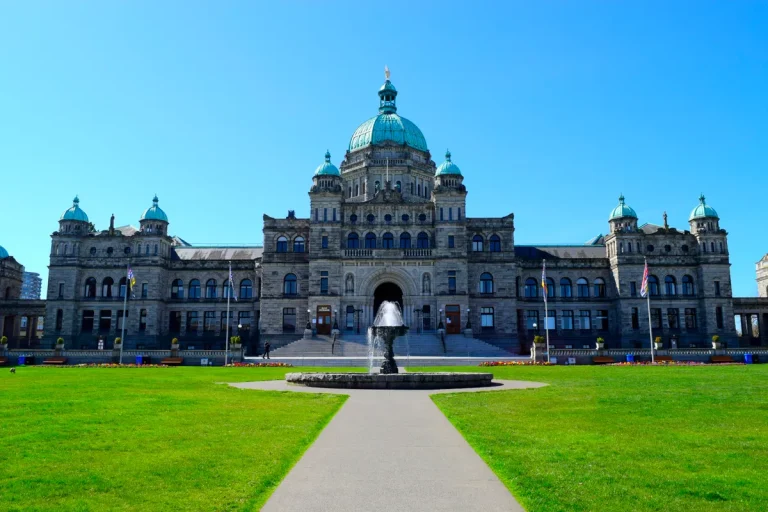
The preview arrives at a moment when the constitutional stakes in Canada could scarcely be higher. Alberta’s independence movement has gained momentum alongside Quebec’s longstanding secessionist politics, placing questions of federal dissolution squarely back on the agenda.
What Canadian Constitutional Law Actually Says on Secession
The foundational authority remains the Supreme Court of Canada’s opinion of August 1998, which held that unilateral secession by Quebec is not permitted under either Canadian constitutional law or international law. The court held, however, that a clear majority referendum result in favour of secession would carry democratic legitimacy requiring recognition by other federation members, while Quebec could not unilaterally dictate the terms of its departure.
That ruling has shaped every serious debate about provincial separation since. A Policy Options analysis published in February 2026 applied the same framework to Alberta, concluding that separation would be illegal under Canadian constitutional law, Indigenous rights law, and international law.
The Canadian secession referenda legal terrain is therefore not a blank slate: the 1998 decision established a conditional framework under which a province may pursue separation through negotiation following a clear democratic mandate, but may not impose terms unilaterally on the federation. Whether Alberta’s circumstances map cleanly onto that framework, and what a “clear majority” threshold requires, are among the contested questions Volokh’s forthcoming post is expected to address.
A broader question hangs over both provinces: the extent to which international law’s right to self-determination applies to sub-state units within established democracies. The CIDOB analysis of the Canadian approach notes that the 1998 ruling explicitly declined to recognise a unilateral right of external self-determination for Quebec under international law, a conclusion that carries implications for Alberta’s movement as well.
Eugene Volokh: A Profile of the Scholar Behind the Conspiracy
Volokh founded the Volokh Conspiracy in 2002 as an independent blog. It moved to the Washington Post in 2014 before relocating to Reason in 2017, where it has remained, according to his Stanford profile.
His scholarly influence extends well beyond the blog. His academic work has been cited in opinions across ten Supreme Court cases and in more than 350 court opinions in total, as well as in over 5,000 academic articles, according to the University of California.
Before entering academic life, Volokh spent 12 years as a computer programmer and holds a B.S. in mathematics and computer science from UCLA, awarded in 1983. He later clerked for Justice Sandra Day O’Connor on the United States Supreme Court and for Judge Alex Kozinski on the United States Court of Appeals for the Ninth Circuit.
He holds the Gary T. Schwartz Distinguished Professor of Law Emeritus chair at UCLA School of Law, a status that took effect on 1 July 2024, and is currently the Thomas M. Siebel Senior Fellow at the Hoover Institution at Stanford. He also co-hosts the Free Speech Unmuted podcast.
The combination of constitutional law expertise, a readership that spans practising lawyers and academics, and a blog with more than two decades of institutional history places Volokh in an unusually well-positioned forum for addressing the Canadian secession referenda legal questions now pressing on both Quebec and Alberta.
The legal analysis, once published, will test whether the Supreme Court of Canada’s 1998 conditional framework can accommodate a province whose grievances are rooted not in linguistic and cultural identity, as Quebec’s historically have been, but in fiscal and resource-extraction disputes with the federal government. How Volokh frames that distinction will be the first thing to watch when the post appears.