
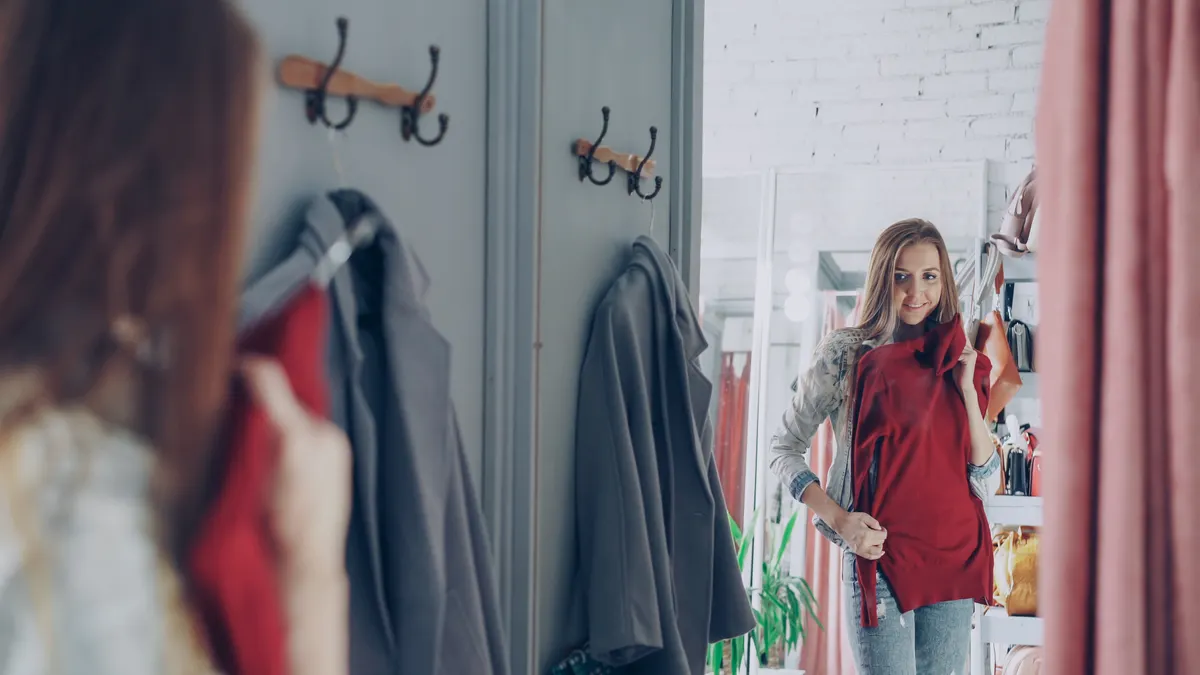

The Trump Carroll Supreme Court battle reached its conclusion on 29 June 2026, when the justices declined to hear Donald Trump’s petition to overturn the jury verdict that found he had sexually abused writer E. Jean Carroll in a New York City department store dressing room in the late 1990s and subsequently defamed her.
The Supreme Court docket (No. 25-573) shows the case was listed under ‘Certiorari Denied’ alongside dozens of others, with no explanation or accompanying opinion from any justice. The denial followed a conference of the full court on 20 February 2026, at which the petition had been distributed for consideration.
What Trump’s Petition Argued
Trump had filed his petition for certiorari on 10 November 2025, raising three questions about the admissibility of temporally remote propensity evidence in sexual assault cases under Federal Rules of Evidence 415, 413(d), and 404(b)(2).
At trial before U.S. District Judge Lewis A. Kaplan, jurors heard testimony from Jessica Leeds, who described an alleged assault by Trump on an airplane in the 1970s, and Natasha Stoynoff, a journalist who alleged Trump assaulted her at Mar-a-Lago in 2005 during an interview. Trump contended Kaplan erred in admitting that testimony. He also challenged the judge’s decision to allow jurors to consider the ‘Access Hollywood’ recording, in which Trump is heard making lewd remarks about women.
Carroll’s lawyers countered that even if Kaplan had erred, any such error would have been harmless given the strength of the evidence. An amicus curiae brief from Citizens United and others was filed in support of Trump’s petition on 15 December 2025, but it did not persuade the court to take the case.
The Second Circuit’s decision of 30 December 2024 in Carroll v. Trump (No. 23-793) had already upheld the evidentiary rulings, finding that the testimony of both women and the 2005 recording were properly admitted under Federal Rules of Evidence 413 and 415, which specifically permit evidence of prior sexual assaults in cases involving sexual assault claims. The appeals court found that no claimed error, nor any combination of errors, in the district court’s evidentiary rulings had affected Trump’s substantial rights.
The Carroll Verdicts and Their Status
A Manhattan federal jury found in 2023 that Trump had sexually abused Carroll in the changing room of Bergdorf Goodman and defamed her by denying the allegations while serving as president, including by insisting he had never met her. The jury awarded $5 million in that case.
Despite Trump’s repeated claims never to have met Carroll, contemporaneous photographs showed the two together at a party with their then-spouses, Ivana Trump and John Johnson. During a deposition, Trump infamously mistook Carroll in that photograph for his former wife Marla Maples.
A second defamation action arose from statements Trump made in 2019 continuing to call Carroll a liar. Because a jury had already established Trump’s liability for sexual abuse, the presiding judge ruled that fact could not be re-litigated in the second trial, and directed jurors to assess only the defamation and damages. That jury returned a verdict of $83.3 million against Trump. The $83.3 million figure, confirmed by AP News, is more precise than the rounded figure cited in earlier reports. A federal appeals court subsequently upheld that award; Trump’s lawyers responded by calling for ‘an immediate end to the political weaponization of our justice system and a swift dismissal of all of the Witch Hunts, including the Democrat-funded travesty of the Carroll Hoaxes.’ Trump continues to appeal the second judgment.
Carroll’s attorney Roberta Kaplan welcomed Monday’s ruling in remarks reported by The Guardian: ‘Today’s supreme court decision affirms once and for all the jury’s unanimous verdict that President Donald J Trump sexually assaulted and defamed E Jean Carroll.’
SCOTUSblog confirms the denial in Trump v. Carroll (No. 25-573) was entered on 29 June 2026. Subject to any onward proceedings in the second defamation case, the first jury’s finding of sexual abuse and defamation now stands as a matter of final federal adjudication. The $83.3 million second-case judgment, still under appeal, is the remaining live financial question before the courts.
