

Purchasing yogurt has an almost routine quality. You grab something from a chilled shelf, look for the words that are important to you on the label (natural ingredients, zero sugar, no additives), and put it in the cart. In 2023, James and Abigail Franco did just that at a Costco close to Chicago. They bought Chobani Zero Sugar yogurt because they believed what the label said. As commonplace as it may seem, that purchase is now the subject of a federal class-action lawsuit that has reached a U.S. appeals court.
In late July 2026, the 7th U.S. Circuit Court of Appeals brought the case back to life, holding that Chobani must deal with allegations that its “zero sugar” label misled consumers. It turns out that each serving of the product contains four grams of allulose, a naturally occurring sweetener that can be found in trace amounts in raisins, figs, and some types of wheat. A food cannot claim to be “zero sugar” or “sugar free” if it contains more than 0.5 grams of sugar per serving, according to federal regulations. Eight times that amount is four grams. The math isn’t close on paper.
However, the legal issue has never been so straightforward, which is one of the reasons this case merits consideration. Chobani’s defense is based on a valid argument: the FDA released guidelines in 2020 that excluded allulose from the total amount of sugar listed on nutrition labels because it is processed differently by the body than regular sugar. Unlike sucrose, allulose does not cause a blood glucose spike. It mostly goes thru the body unmetabolized. That distinction is very important for those who are watching their sugar intake or managing their diabetes. Chobani has consistently argued that its nutrition panel accurately shows zero grams of added sugar and zero grams of total sugar. This claim had some regulatory support under the guidelines in place at the time the product was introduced.
The FDA’s changing stance was what caused the situation to change. In a brief submitted in this case, the agency claimed that allulose, as a monosaccharide, is covered by its regulations’ more expansive definition of total sugars. Circuit Judge Thomas Kirsch deemed that argument convincing, characterizing the FDA’s logic as comprehensive and in line with the organization’s prior declarations. Chobani’s argument that the FDA’s regulation, which lists glucose, fructose, lactose, and sucrose as examples, excludes anything not on that list was rejected by the court. It’s the type of textual argument that seems convincing until a judge explains why it isn’t valid.
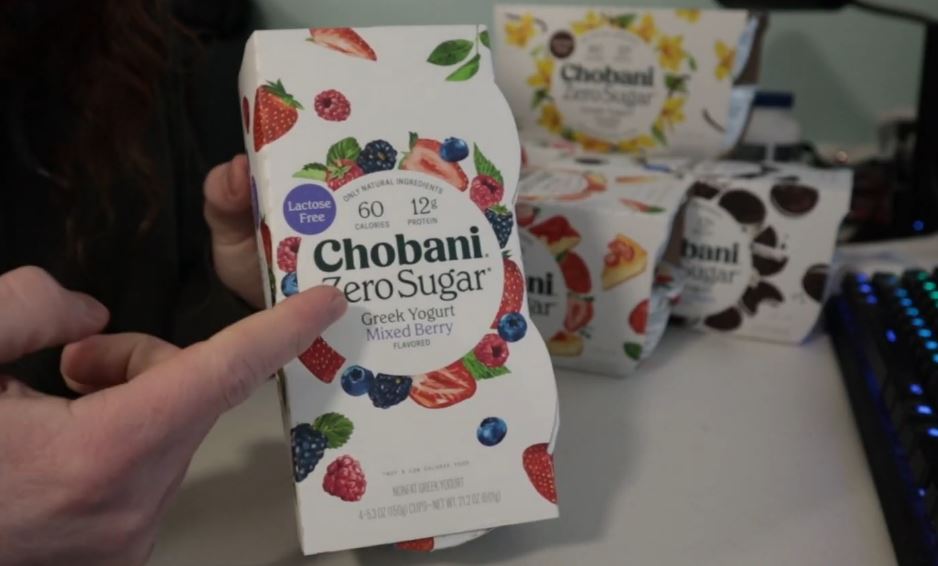
The tension that permeates everything is difficult to ignore. The FDA, which is meant to give the food industry stable, unambiguous guidance, set up circumstances where a business could legitimately think it was in compliance while also making consumers feel duped. Neither Chobani nor the FDA are solely to blame for that. It is the result of regulatory frameworks not keeping up with advancements in food science. The widespread commercial use of allulose is relatively new. The regulations have not kept up.
However, the court made it clear that the label stated “zero sugar,” which the average person standing in a grocery aisle would interpret as an absolute promise. It doesn’t really matter whether a reasonable consumer would be concerned about allulose in particular, according to Judge Kirsch. What matters is that, according to the FDA’s current interpretation, the product may not technically support the claim made on the label. The Francos claimed they were duped. The accusation was deemed credible enough by the court to move forward.
Now that the case is in the discovery stage, Chobani will have to reveal its documents, and the plaintiffs will need to demonstrate that actual customers were actually deceived on a large scale. That burden is more difficult than it may appear. At this point, class-action lawsuits pertaining to food labeling frequently stall. The lawsuit may settle amicably, or the discovery process may uncover issues the plaintiffs were unaware of.
The wider message this conveys appears to be less ambiguous. Fundamentally, the Chobani Zero Sugar yogurt lawsuit is about what consumers are entitled to when they read a label. Purchasing “zero sugar” goods is not something that people do lightly. In a food industry already overrun with deceptive claims, they are managing health conditions, monitoring macros, or just attempting to make educated decisions. Trust is lost precisely at the point where “a customer reading this label deserves accurate information” and “the FDA hasn’t issued a formal rule yet” diverge.
In a market full of sugary, additive-heavy products, Chobani established its reputation as a more honest, clean alternative. It’s important to safeguard that reputation. The case raises issues that don’t go away with a favorable decision, regardless of whether the court finds that the business crossed a legal boundary or not.
