

Notifications from Zelle began to appear in inboxes all over the nation sometime around August 18. The sums were strangely precise: $19.68 in one place, $24.60 in another, and $9.84 for a person who had mostly forgotten to file anything. The $2.4 million class action settlement against G was the source of the payments.One of the more well-known brands in enthusiast PC memory, Skill, was accused of deceiving customers about the capabilities of its RAM right out of the box.
The lawsuit, which was first filed in 2022, focused on a flaw that experts in PC construction are already aware of but seldom consider explaining to novices. A DDR5 kit that is labeled as 6000 MHz does not actually boot at that frequency. For compatibility reasons, it boots at the conservative JEDEC baseline, which is typically DDR5-4800. You must activate AMD’s EXPO profile or Intel’s XMP profile in your BIOS in order to see that large number on the box. The plaintiffs claimed that G. Skill never sufficiently clarified that. They claimed that the packaging suggested a speed that the hardware would just provide on its own.
G.Skill resisted, arguing that its products were accurately labeled and functioned as promised throughout the legal proceedings. The settlement documents carefully point out that the company ultimately decided to settle for $2.4 million in order to avoid the expense and uncertainty of ongoing litigation, not as an admission of guilt. Legally speaking, this distinction is significant, but to someone who recently received $4.92 per module deposited into their account, it probably means very little.
The majority of the story is revealed by the math underlying those meager payouts. Approximately $800,000 of the $2.4 million fund was used for legal fees, and an additional $295,000 was used for administrative expenses. That left about $1.17 million for real purchasers.
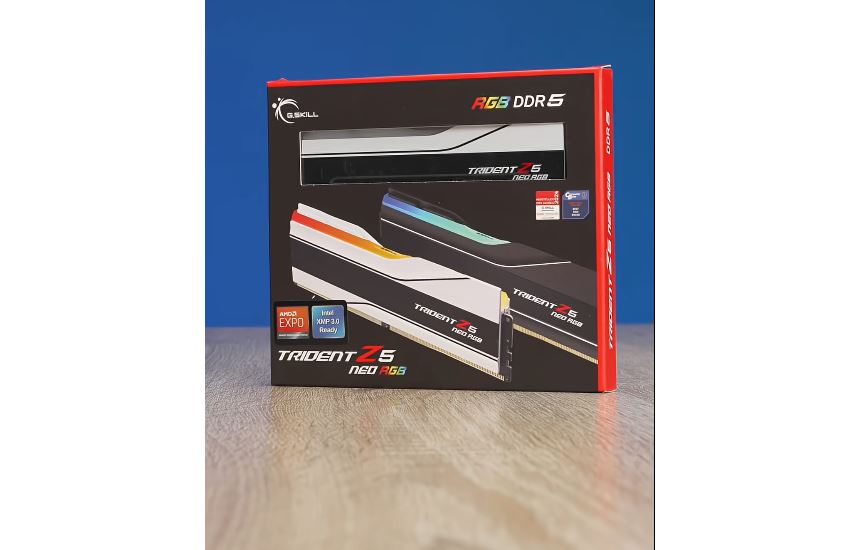
It is easy to see how the numbers decline because claimants are permitted to file for up to five products per household without receipts, and consistent recipient reports show that the per-unit payment is close to $4.92. That week’s Reddit posts were equally amused and dejected. One user joked, “Do that 50 more times and you can afford a DDR5 kit,” which may be the most accurate way to describe the circumstances.
Customers in the United States who bought desktop DDR4 kits rated higher than 2,133 MHz and DDR5 kits rated higher than 4,800 MHz between January 2018 and January 2026 were covered by the settlement. The lawsuit specifically mentioned the Trident Z and Ripjaws series. Those who missed the April claim deadline received nothing, which was a frustrating fact for those who later learned about the settlement via a Reddit post rather than a direct notification.
The labeling change G is what makes this settlement more intriguing than the monetary amounts indicate.Skill consented to move forward. The term “up to” will now be used to describe advertized speeds on product listings and packaging.
Additionally, there will be explicit language stating that in order to achieve those speeds, XMP or EXPO must be enabled in the BIOS and that the outcomes will differ based on the particular CPU and motherboard combination. For years, retail boxes have lacked the kind of disclosure that enthusiasts take for granted.
Beneath all of this is a larger discussion. For a long time, memory marketing has functioned in a state of comfortable ambiguity. The fine print, if any, is buried in online specification sheets when manufacturers print the headline number in large print. The typical consumer may not be considering integrated memory controllers or QVL compatibility lists when they pick up a kit at a retail store or add one to their cart based only on the product title. When someone sees DDR5-6000, they logically anticipate 6000.
It’s really up for debate whether that qualifies as deceptive advertising or is simply a practice of the industry that hasn’t been loudly questioned until now. A number of online commentors firmly agreed with the “buyers should educate themselves” side of the debate. The technical reality of XMP and EXPO is documented and publicly accessible, so that opinion is not totally incorrect. However, one could also argue that finding the documentation shouldn’t require a degree in computer architecture.
For the majority of buyers, the G.Skill settlement might not have a significant practical impact. However, the packaging requirement may. The information gap closes if DDR5-7200 is now required to provide a clear explanation of what it truly takes to achieve that speed. The more important question going forward is probably whether other memory manufacturers take this result as a warning and discreetly update their own labeling or wait until they are sued in a similar manner.
