
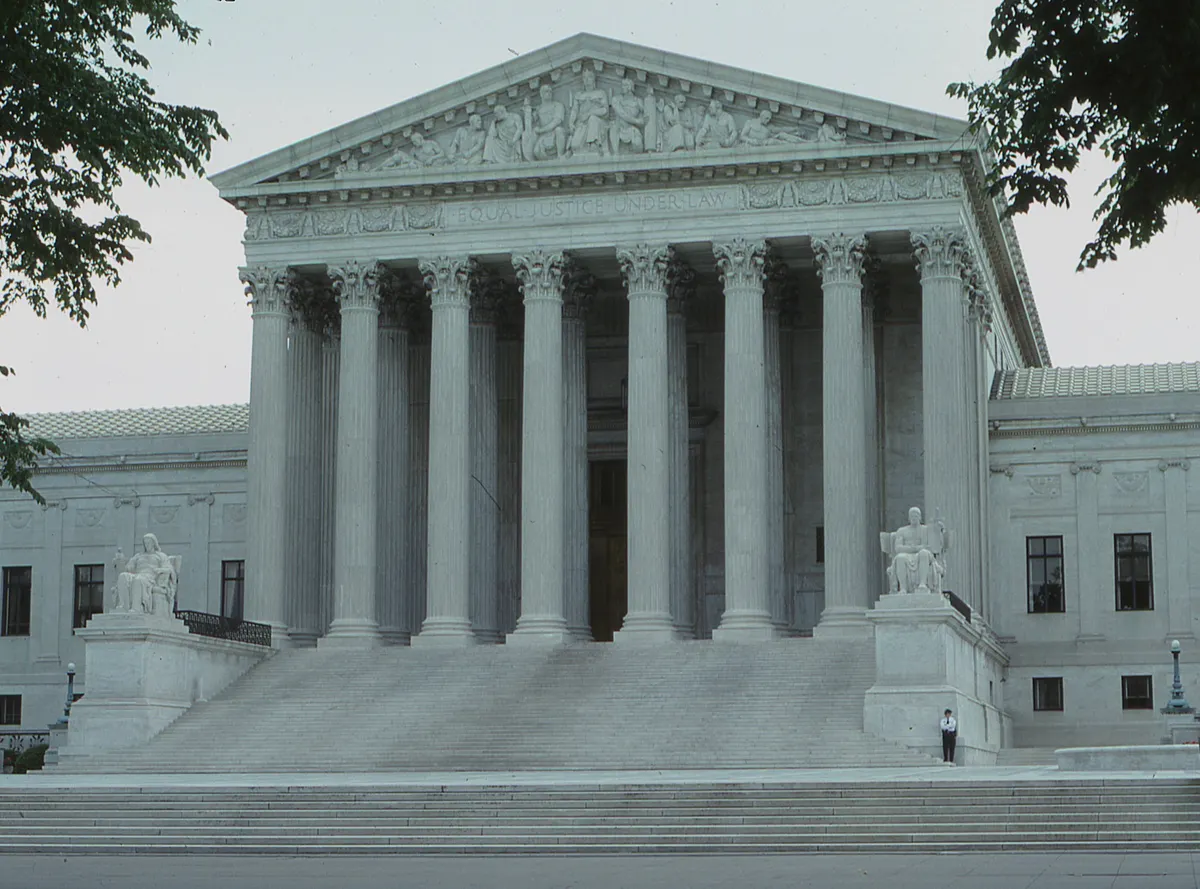

A federal judge in Atlanta has allowed the Emory defamation case against CAIR Georgia and medical student Umaymah Mohammad to proceed, ruling that several statements made about physician and professor Joshua Winer could constitute defamation per se under Georgia law, whilst dismissing a smaller subset of claims. Judge Thomas Thrash of the Northern District of Georgia issued the ruling in Winer v. Mohammad, docketed as case number 1:25-cv-02329 and filed on 25 April 2025 under diversity jurisdiction.
What the Statements Alleged and Why the Court Allowed the Claims to Stand
Winer is a surgical oncologist at Emory Winship Cancer Institute and a professor in the Department of Surgery. He holds dual American and Israeli citizenship and, in March 2024, published an op-ed describing his decision to volunteer as a physician with the Israeli Defence Force (IDF) following the Hamas attack of 7 October 2023.
Mohammad, a dual MD/PhD student enrolled simultaneously in the Emory School of Medicine and the Emory Department of Sociology, gave an interview to Democracy Now! in April 2024. In it, she stated that Winer had participated in ‘aiding and abetting a genocide, in aiding and abetting the destruction of the healthcare system in Gaza and the murder of over 400 healthcare workers.’ Emory suspended Mohammad for one year with effect from 19 November 2024, after finding she had breached the school’s code of conduct requirements for professionalism and respect.
Judge Thrash held that these statements could reasonably imply that Winer actively participated in combat operations, whereas Winer pleads that he served solely as a physician providing medical care and engaged in defensive response only when his unit came under direct attack. Because the implied factual content is capable of being proved false, the claim satisfies the false-and-defamatory-statement element at the pleading stage.
CAIR Georgia hosted a press conference on 11 February 2025 at which Mohammad spoke. She stated, among other things, that a physician faculty member who ‘participated in a military convicted of committing genocide against Palestinians’ made her and ‘black and brown medical students feel unsafe,’ and accused Winer of offering ‘the same disposability to black and brown patients at home.’ The court found that while Mohammad’s statement that she felt unsafe was a subjective opinion not capable of being proved false, the portions implying Winer engaged in combat decisions and provided racially discriminatory care to patients were actionable. CAIR Georgia’s own executive director, at the same event, described Winer’s employment as indicative of Emory’s support for ‘Israel’s perpetration of war crimes.’ The CAIR Georgia press release issued that day included links to a phone script and email template that named Winer, implied he supported genocide and apartheid, and called for Emory to investigate or terminate him.
The court grouped CAIR Georgia’s Instagram posts and executive director statements from 24 March 2025 together with the press release, finding that each, read in context, implied Winer had supported and participated in a genocide and committed war crimes. These too survive dismissal, because Winer’s pleaded counter-facts, if accepted as true, prove the implied factual claims false.
One statement did not survive. The executive director’s remark that Mohammad found it ‘uniquely painful’ to work alongside an IDF soldier contained no actionable factual claim: the only fact asserted, that Winer served in the IDF, is admitted. The court dismissed the portion of the defamation per se claim resting on that statement.
The Emory Defamation Case in Its Wider Institutional Context
The litigation sits within a contested institutional backdrop. Before Mohammad’s Democracy Now! interview, The Guardian reports that an Emory medical school professor, Abeer N AbouYabis, had been dismissed after posting on Facebook in support of Palestinians. Winer subsequently filed a complaint with medical school administrators stating that the interview could expose him and his family to harassment, which triggered the conduct proceedings against Mohammad.
Emory’s own Committee on Free Expression investigated and, in September 2024, concluded that Mohammad’s Democracy Now! interview was protected under the university’s Respect for Open Expression Policy. Despite that finding, Mohammad was formally notified of conduct charges on 17 June 2024 and ultimately suspended; all three complainants at her conduct hearing had advocated for expulsion, according to the Atlanta Press Collective.
CAIR Georgia and co-counsel Jonathan Wallace filed a separate federal civil rights action against Emory University, its Board of Trustees, and Dean Dr John William Eley on 4 August 2025, docketed as case 1:25-cv-04321, alleging the suspension violated federal civil rights law.
A civil rights conspiracy claim in Winer v. Mohammad was also addressed by Judge Thrash in a separate portion of the ruling. Subject to any onward appeal, the defamation per se claims that survived dismissal will now proceed to discovery, where Winer’s account of his IDF service will face scrutiny alongside the defendants’ evidence of the factual basis, if any, for the statements they made or republished.
