
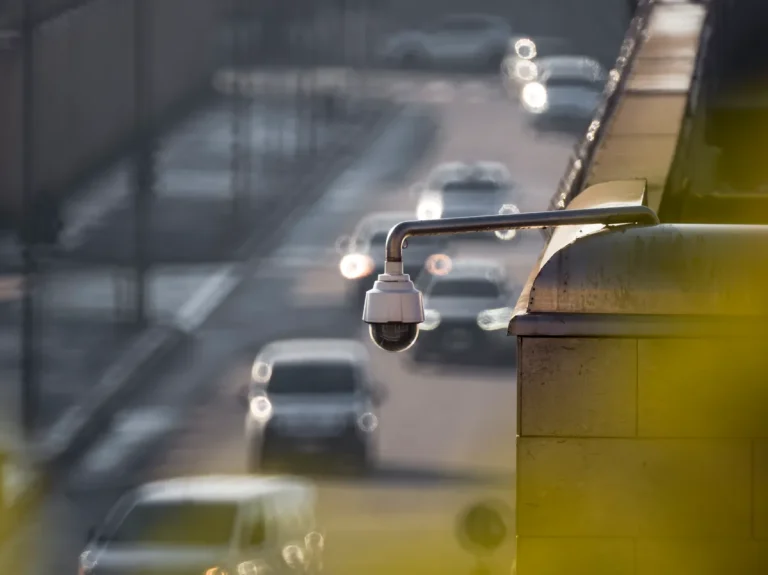
A Florida Surveillance State Built on Immigration Enforcement Grants
‘I’m all about law enforcement having tools to hold criminals accountable,’ DeSantis said. ‘I don’t want to have this become a surveillance state.’ Yet his administration has moved aggressively in that direction. DeSantis asked Florida lawmakers to set aside $250 million for local police for immigration enforcement-related funding, including officer overtime for operations conducted alongside federal Immigration and Customs Enforcement. According to CBS Miami, roughly $147 million of that total has been approved for grants, though only $21 million has been disbursed. The Florida Department of Law Enforcement confirms the State Board of Immigration Enforcement was granted authority to administer the full $250 million programme.
Licence plate readers featured prominently in that spending. Since September 2025, DeSantis’s Cabinet, acting as the State Board of Immigration Enforcement, approved approximately $4.6 million in requests from 18 local law enforcement agencies for around 440 licence plate readers, according to CBS Miami. Not all of the money has been disbursed.
The breakdown illuminates the scale. Orange County requested the most units (97 readers at a cost of $640,200) while Collier County’s 50 readers carried the largest price tag at $1,275,600, according to the Center for Public Integrity. Those grants sat alongside broader Cabinet approvals: in February, DeSantis and the Cabinet signed off on $40 million in immigration grants covering licence plate readers, biometric scanners, and AI-powered mobile surveillance towers. On 9 June 2026, a further $87 million was approved in a separate and larger round, according to WLRN.
Following DeSantis’s public criticism, Jacksonville Sheriff T.K. Waters and Volusia County Sheriff Mike Chitwood announced they would shut down their licence plate reader cameras. A Florida Department of Transportation memo states that agencies previously permitted to use the cameras must remove them within 30 days, according to the Center for Public Integrity.
The DAVID System and Surveillance of Political Critics
The concerns extend well beyond Flock cameras. Florida officers can access the state’s Driver and Vehicle Information Database (DAVID) system for legitimate law enforcement purposes, but the system has repeatedly been used to monitor residents who have spoken out against government policy.
The Florida Fish and Wildlife Conservation Commission (FWC) pulled the driving records of 12 people multiple times since 2023 using the DAVID system, according to the Miami Herald. FWC has said the searches were conducted to assess threats during the 2025 bear hunt debate, but records show some searches date as far back as 2022, according to Axios. A lawsuit alleging illegal data access has since been filed against the agency; documents provided by activists indicate that one individual’s driving records were accessed on multiple occasions, as reported by WCTV.
Other documented instances of alleged First Amendment retaliation in Florida include a 77-year-old veteran investigated by state law enforcement for sending a postcard to a state official, and a Miami Beach woman questioned by detectives over a Facebook post critical of the mayor’s position on the Israel-Palestine conflict. The Hendry County Sheriff accused an environmental fishing guides’ group of inciting threats against public officials, and the Pasco County Sheriff’s Office ended a predictive policing programme through settlement.
That Pasco settlement carried weight beyond its headline. The Sheriff’s Office admitted the programme violated the Constitution in three separate ways and agreed to pay $105,000 to four county residents, with the federal court retaining jurisdiction to enforce the terms, according to the Institute for Justice.
DeSantis criticised the Florida legislature for failing to pass an ‘AI bill of rights’ he proposed last year, which would have introduced sweeping regulations on artificial intelligence and data centres. ‘I think it’s going to get a lot worse unless we have some protections for the people in Florida,’ he said. ‘The only way it could be dealt with is legislatively.’
Whether the legislature will act in the next session, and whether any bill would constrain the immigration enforcement apparatus the Governor himself championed, is the question Florida’s civil liberties advocates are now watching.