

Human Rights Watch (HRW) has warned that Sri Lanka war crimes accountability remains deeply inadequate under President Anura Kumara Dissanayake, despite the new government’s early pledges to break with decades of impunity. A 49-page report published on 1 September 2026, titled Not Genuine with Justice, reviewed seven emblematic cases of grave abuse and found progress across each to be tepid at best.
What the HRW Report Found
The report drew on 32 interviews with victims, family members of the disappeared, civil society activists, and lawyers. It identifies a pattern of interference by previous administrations: investigators under former President Mahinda Rajapaksa (2005–2015) and his brother, former President Gotabaya Rajapaksa (2019–2022), buried investigations, tampered with evidence, and threatened witnesses.
Lucy McKernan, UN Human Rights Council director at HRW, was direct: ‘The Dissanayake administration needs to break from past government practice of delaying and denying justice for grave abuses.’
Two failures are cited in particular. The government has not accepted the OHCHR Sri Lanka Accountability Project, established under Human Rights Council resolution 46/1 on 23 March 2021, which has built a secure repository of over 105,000 items of evidence described by UN High Commissioner Volker Türk as a critical resource for justice and truth-seeking. The government has also failed to establish the promised Directorate of Public Prosecution, despite Dissanayake’s election pledge that such a body would eliminate delays caused by competing governmental responsibilities.
Campaign promises on civil liberties have similarly stalled. Dissanayake pledged during his 2024 campaign to repeal the Prevention of Terrorism Act (PTA), which HRW describes as enabling torture and prolonged arbitrary detention. Instead, usage rose from 38 cases across all of 2024 to 49 cases in just the first five months of 2025, according to the UN High Commissioner for Human Rights, with the law applied predominantly against Tamil and Muslim communities.
The Scale of Sri Lanka War Crimes Accountability Failures
The civil conflict between the Sri Lankan government and the Liberation Tigers of Tamil Eelam (LTTE) is estimated to have caused more than 100,000 deaths. The International Commission of Jurists places the number of unresolved enforced disappearance cases at between 60,000 and 100,000, arising mostly from the armed conflict between 1983 and 2009. Ten separate commissions of inquiry have failed to produce meaningful accountability.
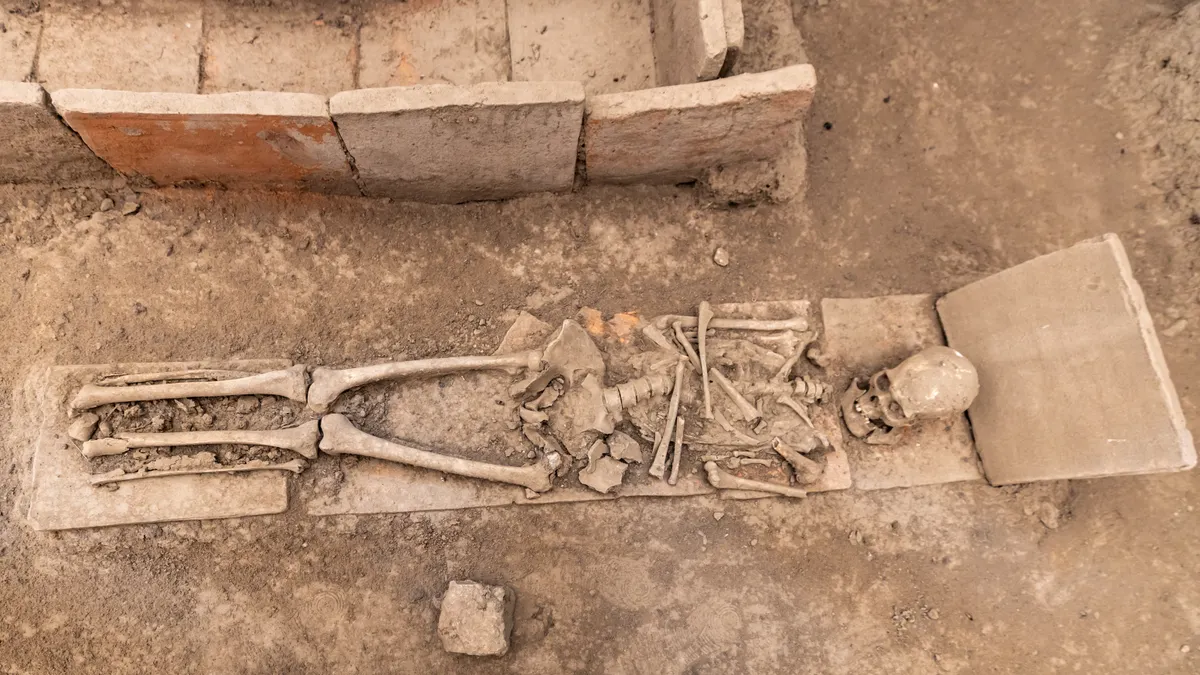
Official government data cited by HRW records 17 mass grave sites across Sri Lanka, including locations at Sooriyakanda, Hokandara, Mannar, and Kokkadichcholai. The most active excavation is at the Siththupaththi site in Chemmani, on the Jaffna peninsula. As of 20 August 2026, the Sri Lanka Campaign reported that 582 sets of remains had been recovered there, including those of babies and young children, making Chemmani the largest known mass grave in the country.
In September 2025, Dissanayake publicly stated: ‘A thorough and open inquiry into the Chemmani mass grave is now underway, which has caused a major stir. Our aspiration is to build a state where such mass graves will never be created again.’ Families of the disappeared and local advocacy groups argue the pace of both the excavation and any subsequent prosecution falls far short of that commitment. Funding shortfalls and adverse weather have contributed to delays, each setback compounding distrust.
The International Commission of Jurists has urged international oversight of the Chemmani excavation and called on Sri Lanka to implement its 2018 law on enforced disappearances and establish an independent special office to investigate and prosecute serious crimes by state officials.
UN Finds Little Progress
A separate report published on 3 September 2026 by UN High Commissioner Volker Türk concluded that, beyond limited advances in a handful of cases, ‘there has been no recognition or accountability for crimes under international law, gross human rights violations, and serious violations of international humanitarian law committed by all parties’ during the war. The same report documented the routine use of torture, deaths in police custody, and a lack of effective investigation into those deaths, issues that domestic advocacy groups, including the Committee to Protect the Rights of Prisoners, link to broader institutional impunity.
Türk stopped short of complete condemnation. In his September 2026 statement, he said: ‘This Government still has an opportunity to turn the tide on decades of abuse of executive power, repressive laws and custodial violence, and entrenched impunity,’ while noting it was ‘encouraging that the Sri Lankan authorities have taken action to address corruption cases and some crimes linked to the post-war period.’
Complicating the picture further, HRW’s World Report 2025 notes that Dissanayake’s own party, the Janatha Vimukthi Peramuna, was itself linked to thousands of enforced disappearances during a violent uprising that ended in the late 1980s. The government’s credibility on accountability reform depends in part on how it addresses that chapter of its own history.
The UN Human Rights Council’s 60th session, at which HRW is urging member states to renew the OHCHR monitoring and evidence-collection mandates for two years, will be the next formal checkpoint for whether international pressure produces any change in Colombo’s posture.
