

Institutions’ responses to abuse allegations are unique. They make a declaration. They make reference to a policy. They carefully point out that the individuals who are accused of causing the harm were breaking the law. That pattern was nearly exactly followed by the University of Michigan’s response to the September 2026 federal lawsuit brought by sixteen former hockey players. The accusations were referred to by the school as “disturbing.” Then it cited its 1982 anti-hazing policy.
While the alleged abuse was occurring, that policy was in place for twenty years. The lawsuit, a 74-page federal complaint filed in Detroit, details what plaintiffs’ lawyer Michael Pitt described as “meticulously planned,” ritualized, sadistic abuse. Between 1984 and 2001, the sixteen men—known only as John Does 1 through 16—were members of the Michigan Wolverines men’s hockey team.
They claim that older teammates have forced them to shave their genitalia, that they have been penetrated by razor handles, that they have eaten live fish, that they have consumed excessive amounts of alcohol, and, in one case, that a blowtorch was placed close to a player’s body while he was lying on a table. The complaint presents all of this as institutionalized initiation, which is something that is expected, enforced, and purportedly known to the coaching staff, rather than the chaos of misbehaving teenagers.
Red Berenson, an 86-year-old legend in Michigan hockey who coached the team for 33 seasons, is at the center of the lawsuit. He guided the Wolverines to 11 Frozen Four trips and two national titles. In Ann Arbor, his name is highly respected. According to the complaint, he was not just ignorant; he told players who voiced their complaints to “be a Michigan Man” and “a good teammate,” and at least one player who objected had his ice time significantly reduced. All of it has been denied by Berenson. There was “a certain element of initiation” by senior players, he told reporters, but he maintained that the coaching staff never encouraged or supported it. “When they say sexual,” he replied, “I’m guessing they’re stretching this.”
That comment is worth pondering for a while. The men who filed this lawsuit are not anonymous in the sense that it would be simple to discount their accounts. According to the complaint, a number of these former athletes from a prestigious program spent years failing to make the connection between what happened in those locker rooms and their adult struggles, including depression, sexual dysfunction, and post-traumatic stress disorder. According to reports, discussions between former teammates in 2024 led to the lawsuit. That particular detail has a subtle significance. More than 20 years later, these men seemed to still be processing what had happened to them.
This is a serious legal risk for Michigan. In 2022, the school reached a $490 million settlement regarding the mistreatment of athletes by former team physician Robert Anderson, who had access to them for almost forty years. The similarities are unsettling. The main accusation in both cases is not only that abuse took place but also that those in positions of power were aware of it but chose to remain silent. The university will probably contend that the statute of limitations makes this case more difficult; it made a similar claim in the Anderson case before reaching a settlement. It remains to be seen if that argument holds up in this situation.
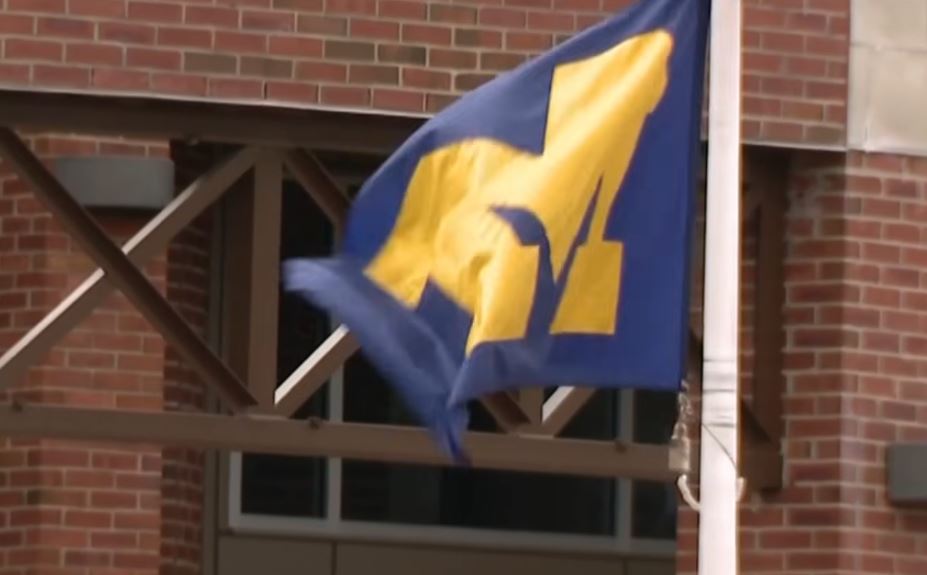
The larger context is also important. A football coach who was fired for having an affair with a team member, a $1.2 million settlement over a sexual assault allegation, and a former coach who is awaiting trial for hacking thousands of female athletes’ personal accounts are just a few of the major misconduct accusations that Michigan’s athletic department has had to deal with in recent years. In late 2025, an independent investigation found that issues were not “widespread,” a conclusion that is now more difficult to defend. Soon after, Warde Manuel, the athletic director, announced his resignation.
Discipline, quality, and a certain level of toughness were the cornerstones of the University of Michigan hockey program’s reputation. “Be a Michigan Man” was an identity, not just a catchphrase. If the allegations in this lawsuit are true, it implies that the same culture of loyalty and toughness that led to championships also fostered an environment where young men felt unable to express themselves.
Any institution would find it challenging to deal with that. Michigan will need to make an effort.
