

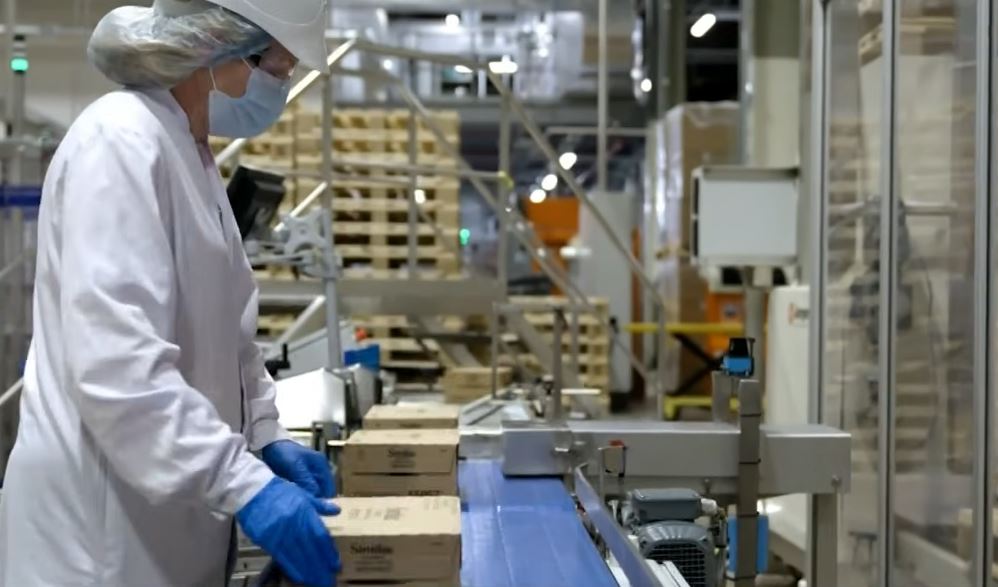
By most accounts, the Sturgis, Michigan plant served as the main source of powdered infant formula in the United States. It produced Similac and other brands that lined pediatrician waiting rooms and filled the cabinets of new parents who didn’t give the formula’s origins a second thought. At its height, it was the biggest facility of its kind in the nation. That was prior to 2022. prior to the recall. Prior to the vacant shelves.
Abbott Laboratories consented to pay approximately $385 million in September 2026 to resolve a civil False Claims Act lawsuit filed by the Justice Department and multiple state attorneys general. The settlement addresses alleged behavior at the Sturgis facility and a second plant in Casa Grande, Arizona, between January 2018 and December 2022. Abbott refused to take responsibility. Throughout, the company has insisted that no distributed, unopened product has ever tested positive for Cronobacter sakazakii, the bacterium responsible for the 2022 illness complaints.
However, the information that surfaced from the government’s complaint presents an unsettling image of what was truly taking place within those walls. It seems that roof leaks were commonplace at Sturgis. Water trickled over formula processing equipment. According to the complaint, Abbott’s solution was to erect “roof leak umbrellas” around the impacted areas rather than addressing the underlying issue. brief detours. That was the answer for a facility that produced baby food.
The spray dryers, which turn liquid formula into powder, were also in poor condition. According to the complaint, Abbott continued to operate them in spite of known pits and cracks in the machinery. Additionally, the company reportedly increased the number of batches that went through the dryers prior to cleaning cycles in order to boost production. Increased productivity, longer cleaning intervals, and recognized structural wear. According to the government’s argument, this made the environment ideal for the growth of bacteria. That series of choices has a certain subtle grimness to it.
The allegation surrounding testing—or rather, the purposeful avoidance of it—was what made the Abbott contamination lawsuit especially startling to watch. In order to prevent producing positive results, Abbott purposefully omitted some bacterial growth tests, according to the Justice Department’s complaint. Additionally, during inspections in 2019 and 2022, the company allegedly concealed contamination findings from the FDA. That’s not the same as a leaky roof. That’s a wise decision.
The initial qui tam lawsuit that ultimately attracted federal prosecutors was brought by three whistleblowers: former Abbott employees Scott Millard, Kristine Cooper, and Loren Cooper. They will all get $69 million from the federal settlement under the whistleblower provisions of the False Claims Act. It’s possible that none of this became public knowledge at all because of their choice to come forward.
Timing is also important. The 2022 recall came at the wrong time. Due to pandemic disruptions, supply chains were already vulnerable. Inventory had been reduced by pandemic stockpiling. Following the FDA investigation, Abbott closed the Sturgis plant in February 2022. The fallout was swift: parents drove for hours in search of formula, store shelves were cleared out, and the Biden administration eventually airlifted product from Europe and invoked emergency production rules. The Sturgis closure was the catalyst for an extremely difficult period for American families with young children.
It’s important to remember that criminal charges were initially considered by the Justice Department. According to reports, prosecutors had developed a case and had internal support to pursue felonies. The criminal investigation was closed after senior DOJ leadership under the Trump administration decided not to proceed. Officials stated that the better course for accountability was a civil resolution. Senator Adam Schiff disagreed, arguing that if the risk of harm to premature infants wasn’t sufficient to justify criminal prosecution, it raised serious concerns about enforcement priorities and prompted a congressional investigation.
Abbott referred to the settlement as a “resolution that carries no finding of fault or liability.” It’s a different matter entirely whether the public reads it that way.
