

A pro se student’s Alamo Colleges First Amendment claim has been dismissed by the United States District Court for the Western District of Texas, after Judge David Ezra adopted Magistrate Judge Richard Farrer’s report and recommendation in Soliz v. Alamo Colleges District, decided on 16 September.
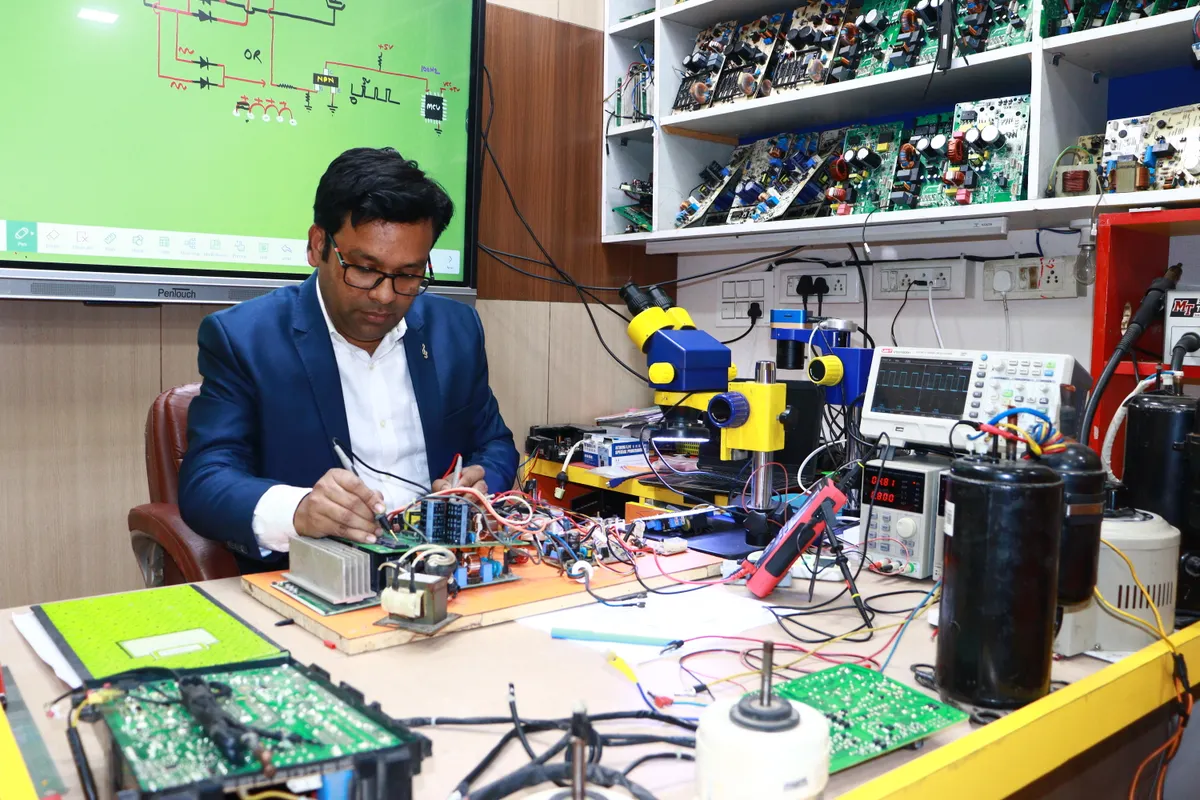
The case arose from a classroom confrontation on 17 January 2024 at St. Philip’s College, one of the individual institutions within the Alamo Community Colleges District (ACCD) system. Plaintiff Joseph Soliz, enrolled in a course taught by Roy Ruiz, was undertaking a lab exercise on electrical circuits when his digital multimeter alarmed. Ruiz offered assistance; Soliz declined, told Ruiz he would ‘get it figured out,’ and accused the instructor of ‘micromanage[ing]’ him when Ruiz reminded him repeatedly to follow the lab directions.
The confrontation escalated. Ruiz removed Soliz’s lab papers; Soliz took them back. Ruiz summoned a staff member, Elizabeth Leon, who attempted to mediate. Soliz ‘told [her] the conversation was over.’ The following morning, Ruiz emailed Soliz asking him not to attend class, citing safety concerns and disruptive conduct. Soliz attended regardless, requiring Ruiz to call campus police, whose arrival resulted in the cancellation of that day’s class.
School administrators subsequently scheduled a student conduct meeting for 22 January 2024. A Zoom meeting notice was issued for 19 January 2024, which Soliz declined to attend, stating the notice was too short and that he had insufficient time to prepare a response. Soliz was ultimately barred from both of Ruiz’s courses until he completed additional safety instruction.
Why the Alamo Colleges First Amendment Claim Could Not Succeed
Soliz brought several claims, including First Amendment retaliation, as well as Fourth Amendment and due process arguments. The court rejected all of them.
On the First Amendment question, Magistrate Judge Farrer found that Soliz had not identified any constitutionally protected activity. Soliz characterised his conduct as ‘protected academic inquiry,’ but the magistrate judge treated that as a legal conclusion unsupported by the facts as pleaded. His disagreement with Ruiz over how to perform a lab assignment did not amount to the expression of a viewpoint or an intellectual position of the kind the First Amendment is designed to protect in an educational setting.
Soliz also made passing reference to an earlier objection to ‘the use of religious symbols during class instruction,’ but the magistrate judge found no causal link between that prior objection and the conduct complained of in the instant case. Ruiz’s actions were directed at classroom disruption and safety, not at any speech Soliz had engaged in.
The court applied the well-established principle from Tinker v. Des Moines Independent Community School District (1969), in which the Supreme Court held in a 7-2 decision on 24 February 1969 that ‘conduct by the student, in class or out of it, which for any reason (whether it stems from time, place, or type of behavior) materially disrupts classwork or involves substantial disorder or invasion of the rights of others is, of course, not immunized by the constitutional guarantee of freedom of speech.’ Although Tinker is often cited for the proposition that students retain constitutional rights at school, the corollary it also establishes is that those rights do not extend to materially disruptive conduct.
The magistrate judge found that Soliz’s own pleaded facts met that threshold. Four conduct reports and one police report were filed between 17 and 18 January 2024, each alleging disruptive behaviour and safety concerns. The Office of Student Conduct received all five. Soliz had caused a circuit to alarm, rebuffed instructions twice, required staff intervention, returned to class after being asked not to, and triggered a campus police call that ended the day’s session. That factual record, as pleaded by Soliz himself, was sufficient to defeat the First Amendment retaliation claim as a matter of law.
Defence Representation and Procedural Posture
The defendants were represented by Gunnar Peterson Seaquist and Sara Labashosky of Bickerstaff Heath Delgado Acosta LLP, an Austin, Texas firm. Seaquist, a partner at the firm whose practice spans litigation, employment, and public law, joined Bickerstaff Heath in April 2014 after five and a half years as an Assistant Attorney General in the General Litigation Division of the Texas Attorney General’s office, a background he brings to public-entity defence work. His career path is set out on his LinkedIn profile.
Soliz proceeded throughout without legal representation. Subject to any onward appeal, all claims against the ACCD defendants have now been dismissed.
