

The realization that Elizabeth Jones could no longer enter the school grounds where her two children grew up, studied, and competed is truly unsettling. Not because she’d threatened. Not because she’d made a fuss. However, because of posts on social media that included jokes, commentary, and pictures from sporting events that were accessible to the general public.
That was in December of 2025. Jones was prohibited from entering any school property by a no-trespass order issued by the Jenkins Independent School District, a tiny district located in Letcher County in Eastern Kentucky. Her posts “appeared to be harassment,” according to officials. At the time of the ban, no particular posts were mentioned. No dangers. No bloodshed. Just a speech that apparently caused discomfort for someone in the administration.
It’s difficult to ignore how strange that reasoning is. Because of what she said online, a parent who had been to games for years without any problems—not a single disruption, not a single rule violation—was suddenly made to feel uncomfortable at her own children’s events. In essence, the district decided it could act as a judge of what constitutes appropriate speech. The Kentucky ACLU held a different opinion.
The ACLU Elizabeth Jones filed a lawsuit in federal court on Jones’ behalf, claiming that the district had violated her First Amendment rights by retaliating against her for speech that was protected by the constitution. The U.S. District Court for the Eastern District of Kentucky received the case. A preliminary injunction preventing Jenkins Independent from enforcing the ban while the lawsuit proceeded was granted by a federal judge in July 2026. Jones was permitted to return to school property. For the time being.
Perhaps more important than any courtroom dispute was what transpired next. The Jenkins Independent School District Board of Education acknowledged that it had violated Jones’ First Amendment rights and consented to a settlement in September 2026. It is important to acknowledge that. Generally speaking, school districts don’t accept constitutional infractions without a good reason. The parties jointly requested the court to make the injunction permanent, meaning the district cannot reinstate the ban based on Jones’ prior posts, and the board agreed to pay $70,000 in damages and legal fees.
According to Bethany Baxter, staff attorney for the ACLU of Kentucky, “government officials cannot punish someone simply because they dislike or take offense at protected speech.” When expressed simply, this idea seems clear. It’s remarkable how frequently it seems to need to be restated.
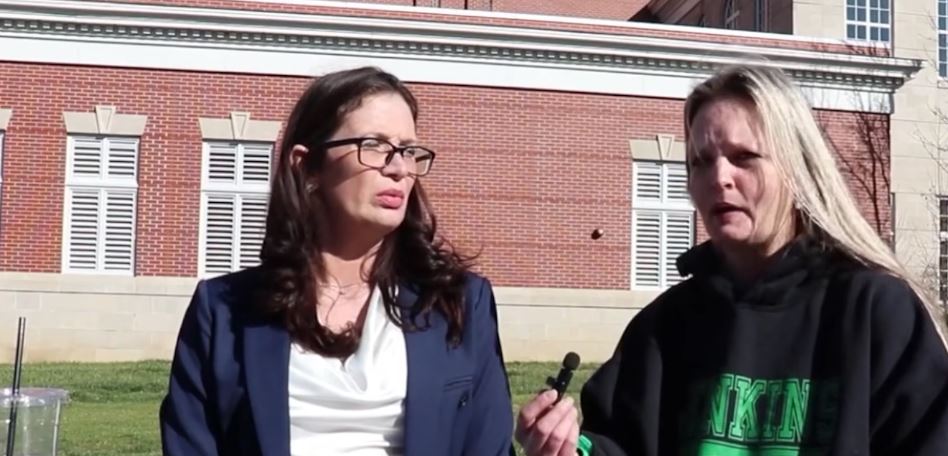
After a case like this, it seems that the repercussions of making a mistake extend far beyond a single parent in a single county. Jones wasn’t the only parent who might criticize a school program or post a joke about a game. If left unchallenged, the Jenkins district’s reasoning—if we don’t like what you say, we can remove you—would have a chilling effect that goes well beyond the school’s boundaries. As they watched, other parents wondered if they might suffer the same consequences from their own words.
“School officials are not the social media police, and no parent should lose the ability to attend their children’s school-related activities simply because of non-threatening, routine online comments that school officials dislike,” Jones stated bluntly following the settlement. It’s hard to dispute that. According to Corey Shapiro, the legal director of the ACLU of Kentucky, the First Amendment is specifically designed to safeguard speech that officials find objectionable, not just that which they find acceptable.
When discussing the boundaries of institutional power, civil liberties lawyers will probably cite the ACLU Elizabeth Jones case. Fundamentally, it’s also about a mother who wanted to watch her children participate in sports. You shouldn’t lose that part.
