
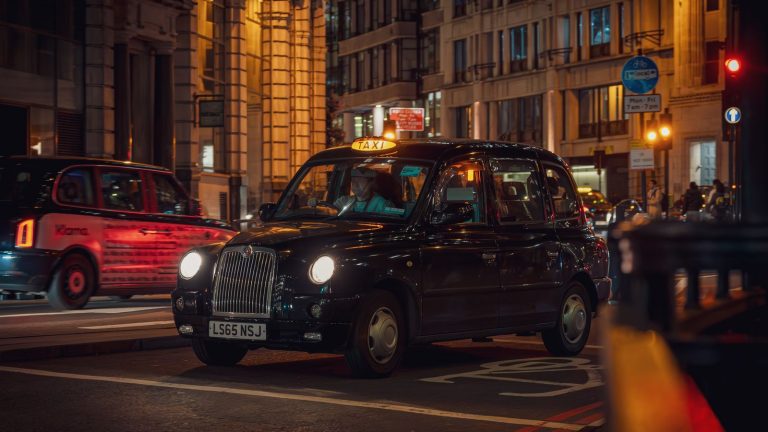
In Garry White and others v Uber London Limited and others [2026] EWHC 2651 (Comm), handed down on 19 October 2026, Mr Justice Birt answered “no” to a preliminary issue on limitation. He concluded that “the claimants’ claims are time-barred”. It was common ground that this “will necessarily lead to the dismissal of the entire claim.”
The claims
The drivers are joined by Justin Peters, assignee of the rights of action of two former private hire companies, Kabbee Exchange Limited (dissolved) and Iride London Limited (in liquidation). They sued Uber London Limited, Uber B.V. and Uber Technologies, Inc. for unlawful means conspiracy.
According to the judgment, the claimants allege that between mid-2012 and 14 March 2018 Uber made fraudulent misrepresentations and deliberate and dishonest non-disclosure to Transport for London (TfL) about its booking and operating system and aspects of its use of certain technologies, including the “Greyball” software. They say that without this Uber would not have obtained a private hire operator licence or competed with them. Uber denies the allegations “in their entirety”. For the preliminary issue only, and without prejudice to that denial, the court assumed that the facts pleaded as the alleged fraud and concealment had occurred (at [7]).
The limitation question
The claims were issued on 2 May 2024 and 24 June 2024, and it was accepted that the primary six-year limitation period had expired. The claimants relied on section 32(1)(a) and (b) of the Limitation Act 1980, under which time does not run until the claimant “has discovered the fraud, concealment or mistake (as the case may be) or could with reasonable diligence have discovered it.”
Their case was that they could not have discovered the alleged fraud until a reasonable period after 25 or 26 June 2018, when Uber’s appeal against TfL’s refusal to renew its licence was reheard at Westminster Magistrates’ Court and the evidence and the Chief Magistrate’s judgment became public. The trial concerned 20 sample black cab claimants and Mr Peters.
Uber accepted that the “statement of claim test” applied under section 32(1)(a), with the “worthwhile claim” test applying under section 32(1)(b), and was content for both to be applied (at [92]). The judge cited Nugee LJ in Seedo v El Gamal [2023] EWCA Civ 330 that “in a fraud case, time starts to run when the claimant has discovered enough to plead their case” (at [90]).
The TfL decision letter
The ruling turned on TfL’s decision letter of 22 September 2017, which refused to renew Uber London’s licence. It became publicly accessible on 20 December 2017, when the Licensed Taxi Drivers’ Association published it on its website. The letter said TfL considered that Uber London had “misled TfL in correspondence in 2014 as to the process by which bookings are accepted through the Uber app” and had not been “open and transparent with TfL about Greyball.”
The claimants argued that the letter did not say whether Uber knew its statements were false. The judge rejected the submission that TfL had been unable to reach a view, holding that TfL “did not have to reach a view on the point” (at [131]), while accepting that TfL had expressed no conclusion on it (at [132]).
He found that the claimants could have advanced their claims “in a reasonable period (e.g. 4-6 weeks) after publication” of the letter, including the claims about the “Ripley” kill switch technology, reported in the press in January 2018, by February 2018 (at [141] and [145]). Black cab drivers, he said, “were well-informed, through a number of sources (including their trade associations)”, and any black cab claimant exercising reasonable diligence would have discovered the necessary facts “at the latest by February 2018.”
He also held that the licensing appeal evidence “did not contain material that could have tipped the balance” towards pleading fraud (at [148]), rejecting a hindsight objection (at [150]).
Because of that conclusion, the claimants’ actual knowledge was not determinative (at [153]). The court made no finding on whether the allegations against Uber are true.
Alain Choo Choy KC and Reanne MacKenzie, instructed by Mishcon de Reya LLP, appeared for the claimants. Sonia Tolaney KC and Michael Watkins, instructed by Herbert Smith Freehills Kramer LLP, appeared for Uber.