
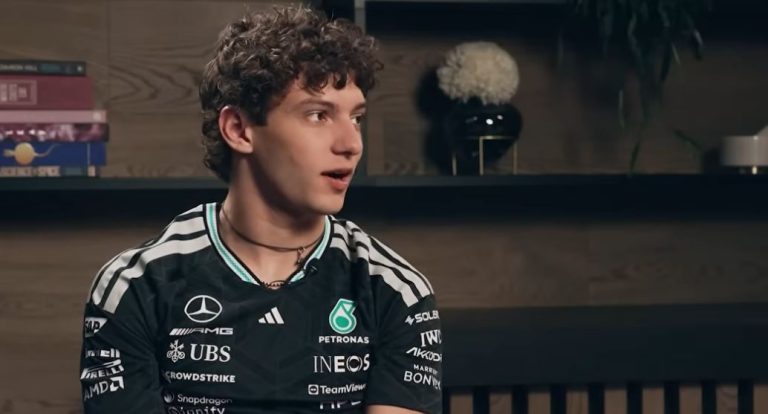
In motorsport, the name Minardi is significant. Giancarlo Minardi, the man behind the cherished backmarker Formula One team that performed well above budget during the 1980s and 1990s, is the father of Giovanni. Giovanni, his son, has made a name for himself as a talent manager. In 2014, he saw a young Bologna boy at a karting summer camp, which proved to be his most important discovery. At the time, Antonelli was eight years old.
Over the next few years, a classic tale of a manager giving everything to a young prospect emerged. When Giovanni Minardi brought an 11-year-old Antonelli to Ferrari’s driver academy simulator in Maranello, Maurizio Arrivabene, the team’s manager at the time, reportedly rejected him because he thought the child was too young. It’s the kind of detail that seems almost like a plot point in retrospect. Mercedes learned from Ferrari’s defeat. Minardi brought Antonelli straight to Toto Wolff’s attention after the Ferrari door closed, and by 2019 the young Italian had formally joined the Mercedes Junior Program.
Up until 2025, the manager-driver relationship appeared to go hand in hand with Antonelli’s ascent. In that year, Antonelli signed what is likely a lucrative contract with one of the most formidable teams in Formula 1, making his debut with Mercedes. Additionally, he reportedly broke off his professional relationship with Giovanni Minardi that same year. That timing, in Minardi’s opinion, was not accidental. It was unfair.
The nature of the claim has been made clear by Minardi’s legal team, which is headed by attorney Mattia Grassani. When the Antonelli camp decided the old management agreement no longer applied once a bigger opportunity came along, years of effort, investment, and networking—including the vital introduction to Wolff—went unrewarded. Grassani has characterized the case as complicated, pointing out that hearings have already taken place for almost a year. Along with the driver, Antonelli’s parents are named in the legal dispute, which is centered on an alleged violation of the management contract that was initially signed on behalf of a minor.
Both parties seem to genuinely think they are in the right here. Minardi’s camp contends that since they laid the groundwork, they should receive a substantial portion of the results. Apparently feeling that the terms were no longer appropriate, the Antonelli side made settlement offers that Minardi’s team rejected as inadequate. Particularly in light of the issue of contracts signed on behalf of children, it is still unclear how a court will consider the particulars.
The fact that Toto Wolff and Gwen Lagrue, the head of driver development, may be called as witnesses to describe Antonelli’s initial management structure makes the case even more difficult for Mercedes. No team vying for a championship wants that kind of distraction in a season like this. It’s hard to say at this point whether the lawsuit will end in a sizable settlement or be settled amicably.
Now, Kimi Antonelli Sued is more than a headline. It serves as a reminder that the path to success in professional motorsport is paved with individuals who contributed to the car’s construction, and not all of them reach the finish line alongside the driver.