
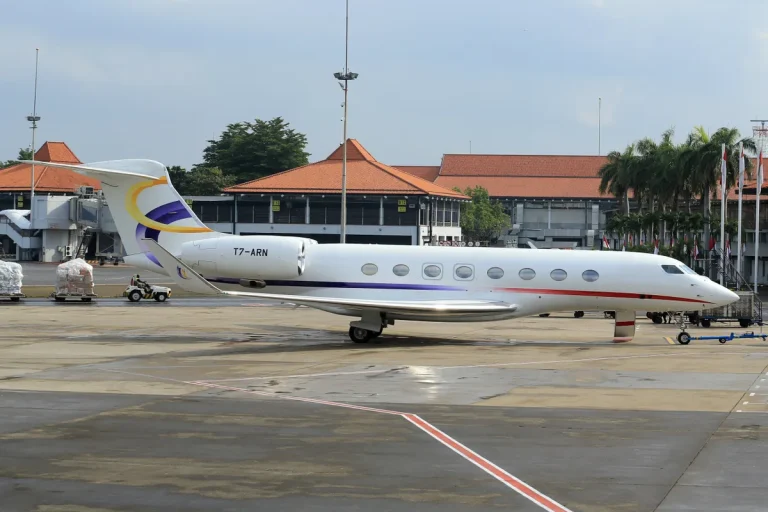
The flight bypassed Port-au-Prince, the capital, because gangs reportedly control roughly 70 percent of the city and surrounding areas. Officials reportedly feared deportees landing there would quickly become targets.
The Supreme Court Ruling That Cleared the Way
The Haiti TPS deportation ruling turned on the scope of executive discretion. The Supreme Court upheld the administrative decision to end the Temporary Protected Status programme for Haitian nationals, reversing a federal appellate court decision from January that had found then-Homeland Security Secretary Kristi Noem exceeded congressionally authorised authority.
Secretary Noem had formally terminated Haiti’s TPS designation on 28 November 2025, with that termination taking effect on 3 February 2026, according to Supreme Court filings referencing 90 Fed. Reg. at 54,733. An earlier step came on 24 February 2025, when Noem issued what filings describe as a ‘partial vacatur’ that shortened a prior TPS extension to expire on 3 August 2025 rather than 3 February 2026, as recorded at 90 Fed. Reg. 10,511 in Supreme Court appendix materials.
Dissenting judges argued that certain statements made by President Donald Trump about Haitian migrants revealed racially charged motivations for ending the programme, which would have entitled the courts to apply closer scrutiny to the executive action. The majority held the decision lay within sole executive discretion.
Haiti TPS Deportation: What the Programme Covered
Haiti has held TPS designation since 2010. When first designated, as many as 200,000 TPS-eligible Haitians were living in the United States, according to the same Supreme Court filing citing 75 Fed. Reg. at 3,477. The programme permitted holders to live and work in the United States in 18-month increments as protection from violence and civil upheaval.
Jean Négot Bonheur Delva, Director General of Haiti’s National Office of Migration, said those on Thursday’s flight included former TPS holders, people who had previously served prison sentences, and individuals of Haitian descent born outside the country.
Multiple humanitarian organisations have called for an immediate halt to deportations, arguing conditions on the ground make return untenable, particularly for women and children.
A Country the State Department Calls Too Dangerous to Visit
The conditions deportees face are documented by the US government’s own agencies. The State Department’s Haiti Travel Advisory, last updated 16 April 2026, designates Haiti as a Level 4 ‘Do Not Travel’ country. The advisory notes that Haiti has been under a national state of emergency since March 2024, that US commercial flights are not currently operating to or from Port-au-Prince, and that the FAA has issued a Notice to Airmen prohibiting US air carrier flights there. US government employees in Haiti are not permitted to travel away from the US Embassy for non-essential purposes.
Several Haitian gangs hold a designation that goes beyond ordinary criminality: the State Department has listed some as terrorist organisations. Among them, Gran Grif, which ICE describes as the largest gang in Haiti’s Artibonite department, is responsible for 80 percent of civilian deaths in that region and has attacked Haitian National Police as well as the UN-authorised Multinational Security Support mission. A Kenyan officer serving with that mission was killed by Gran Grif in February 2025.
The United Nations established a multi-nation gang suppression force in September 2025 to address the security crisis. Its presence has not halted civilian massacres, child trafficking, or mass displacement. The UN reports that over 1.5 million people have been displaced and more than 3,100 killed between January and June 2026.
In 2024, then-candidate Trump falsely claimed that Haitians in Springfield, Ohio, routinely abducted and ate local pets. Following the Supreme Court’s ruling, ICE activity in the Springfield area has reportedly intensified, and members of Haitian communities across the country have reportedly withdrawn from public life out of fear of detention.
Subject to any further legal challenge, removals to Haiti are expected to continue. Whether the transitional government installed after Prime Minister Ariel Henry’s resignation in March 2024 can absorb the returning population, amid active gang control of the capital and an FAA flight ban over Port-au-Prince, will be the operational question that defines the programme in the weeks ahead.