
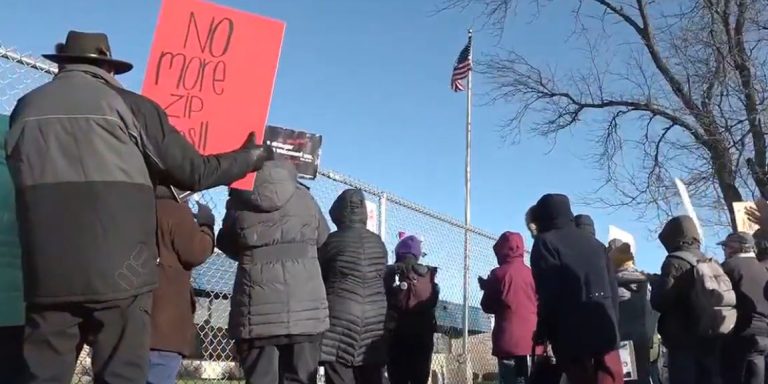
The subtle, bureaucratic penalty is the kind of detail that doesn’t garner much attention on its own. However, a federal lawsuit filed on July 24, 2026, claims that this is exactly what has been happening across the nation to regular people who are just standing by and observing.
The Department of Homeland Security, ICE, and Customs and Border Protection are named as defendants in the lawsuit, which was filed in the U.S. District Court for the Southern District of California. The Electronic Privacy Information Center and three individual plaintiffs from California, Minnesota, and South Carolina filed the lawsuit. All of the plaintiffs had their TSA PreCheck or Global Entry status revoked for peacefully observing immigration enforcement operations.
Although it sounds almost cinematic, the legal complaint describes something that isn’t. The document claims that DHS used “a dragnet of drones, body cams, face-scanning apps, license-plate scanners, and camera phones” to gather information on individuals in the vicinity of immigration enforcement locations. According to the lawsuit, an internal memo directed agents to “capture all images, license plates, identifications, and general information on hotels, agitators, protestors, etc., so we can capture it all in one consolidated form.” That’s not gathering data incidentally. It seems like a purposeful targeting operation.
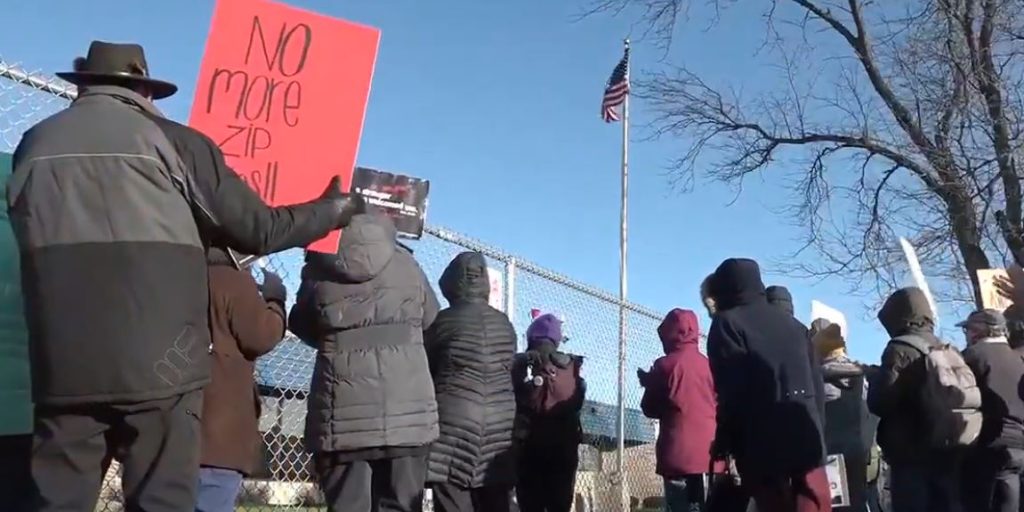
Agents in Maine allegedly informed onlookers that they were being added to a database of domestic terrorists. It has been reported that people in Chicago who were not involved in any illegal activity were subjected to facial recognition technology.
Observers reported that federal agents approached them in several states and called them by their full legal names, which the agents should not have known because the observers had never presented identification. The last detail is the most difficult to change. It implies a degree of prior intelligence gathering that is far higher than what would be explained by an encounter on the street.
According to the lawsuit, all of this directly violates the Privacy Act, which expressly forbids federal agencies from gathering personally identifiable information about people just because they are exercising their First Amendment rights. It also makes reference to the First Amendment and the Administrative Procedure Act, claiming that denying someone the right to travel in response to a legitimate protest is classic government reprisal. Working pro bono with Democracy Forward, the legal firm Hagens Berman is requesting that the court rule that DHS’s so-called Protester Surveillance Policy is unlawful, vacate it completely, and mandate the removal of any improperly collected data.
The official response from CBP was restrained and nearly cliched. A spokesperson cited a list of acceptable grounds for revocation, including pending charges, immigration infractions, and the inability to prove low-risk status, and stated that Global Entry is not revoked because someone exercises their First Amendment rights. Anyone who feels that their revocation was unwarranted is encouraged to request a review, according to the statement. Some of those revocations might have clear explanations. However, the official response feels, at best, lacking due to the timing of these three cases and the pattern that runs through them.
Here, a more expansive emotion is emerging that merits naming. Many people will simply stop filming immigration arrests when they are aware that doing so could result in their being flagged, added to a database, and quietly punished through administrative channels. Following the events detailed, one plaintiff in the lawsuit, a legal observer, allegedly stopped his observation activities. It doesn’t need a dramatic confrontation to have that chilling effect. Travel credentials that have been revoked are subtle. It is disputable. And that may be precisely the point.
Judge Anthony J. Battaglia will hear the case Electronic Privacy Information Center et al. v. Mullin. Although it’s early, courts have occasionally exercised caution in cases pertaining to immigration enforcement and national security. However, it is difficult to interpret this as anything other than a serious constitutional question that extends far beyond parking lots and airport checkpoints because the facts presented in this complaint are sufficiently specific and the pattern is sufficiently broad.