
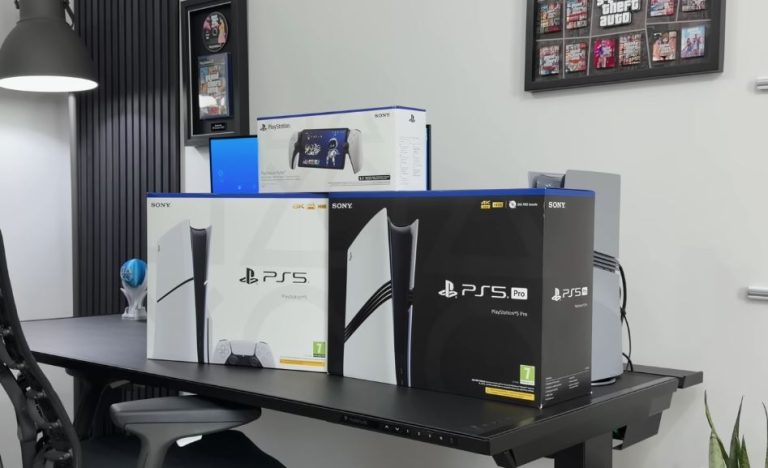
Things became more complicated after that. In a 6-3 ruling on February 20, 2026, the U.S. Supreme Court declared those tariffs unconstitutional, invalidating the administration’s claimed legal authority under the International Emergency Economic Powers Act. Refunds to businesses that had contributed to the duty scheme were started by the government. Sony began getting that money after informing investors that they could anticipate receiving about $508 million back, the majority of which went to its PlayStation division. The business recovered about $356 million in operating income between April and June of 2026 alone. Meanwhile, there was no change in the prices. In fact, following the decision, Sony brought them up once more.
A class-action lawsuit centered on that sequence of events was filed in the U.S. District Court for the Northern District of California on May 6, 2026. The plaintiffs in Walker et al. v. Sony Interactive Entertainment LLC, Amorey Walker and Bryce Foster-Quarles, made the simple claim that Sony was paid twice. Customers were the first to absorb the $50 price increase in order to pay for the tariff. Then, after the tariffs were lifted, the federal government reimbursed those precise expenses. This is referred to by the plaintiffs as a “double recovery windfall.” It’s a phrase that’s hard to forget once you hear it.
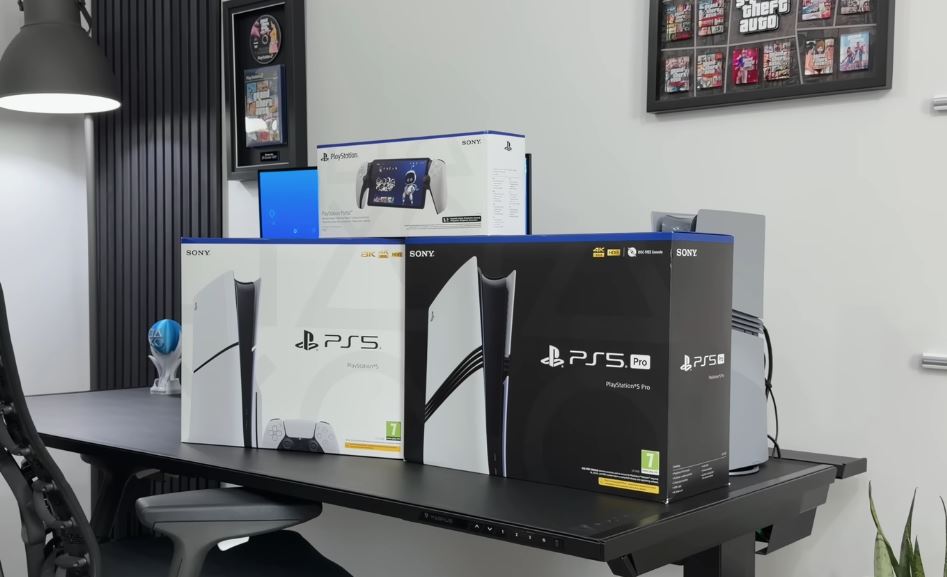
That is not how Sony’s legal team sees it. The plaintiffs’ claims were deemed “speculative and illogical” in the company’s motion to dismiss. Its main contention is that purchasing a product at its advertized price—voluntarily, no less—does not amount to a legal harm.
Sony contends that a “diverse and dynamic set of input costs”—inflation, currency fluctuations, component prices, logistics, and competitive pressure—are reflected in pricing. Tariffs were one of many factors, and Sony believes that the fact that prices increased even after the tariffs were lifted is evidence that its pricing strategy was never solely focused on import duties.
On paper, the position is tenable. However, there’s something about it that doesn’t feel quite right. When Sony raised prices in August 2025, it specifically mentioned tariffs. There is still that press release. Regardless of what the legal standard for injury may say, there isn’t much of a logical jump to link the price increase to the tariff and the tariff refund to the customers who absorbed it. At the very least, it’s an intriguing position to defend when a company publicly attributes a price increase to a particular expense, gets paid by the government for that same expense, and then claims in court that the two are unrelated.
Sony is not by itself. Microsoft claimed that a customer who bought a console at a posted price and received what they paid for has no actionable grievance in a parallel class-action lawsuit over Xbox prices, using almost identical language. Nintendo is being sued in a similar manner. Since the legal defense is essentially industry-wide, there may be some strategy coordination, or at the very least, a common understanding of the boundaries of consumer protection law. It’s interesting to note that Panic, a smaller handheld manufacturer, seemed to interpret that line differently and decided to reimburse customers of its Playdate console $12 in tariff refunds. Even though it’s tiny, it was noticeable.
Here, too, the larger context is important. Researchers at the New York Fed have found that during the Trump administration’s tariffs, consumer goods prices increased by about 2.9 percentage points. These expenses were actual and widely dispersed. The refunds came after the Supreme Court’s decision legally unraveled them. With over 4,000 lawsuits filed in relation to IEEPA refunds to date, courts are now being asked to formally address the question of whether companies owe any of that to the customers who carried the weight in the interim, not just in gaming but across industries. In this way, the PS5 case is only a small part of a much bigger debate about who ultimately pays for poor trade policy.
It is truly unclear whether plaintiffs Walker and Foster-Quarles will win. It is difficult to win consumer class-action lawsuits, and Sony’s legal team is correct that it is challenging to frame voluntary market transactions as injuries. However, the case has garnered significant attention, and the fundamental question—who owns the refund when a business passes a cost on to its clients and then receives a reimbursement—is not going away quietly.