
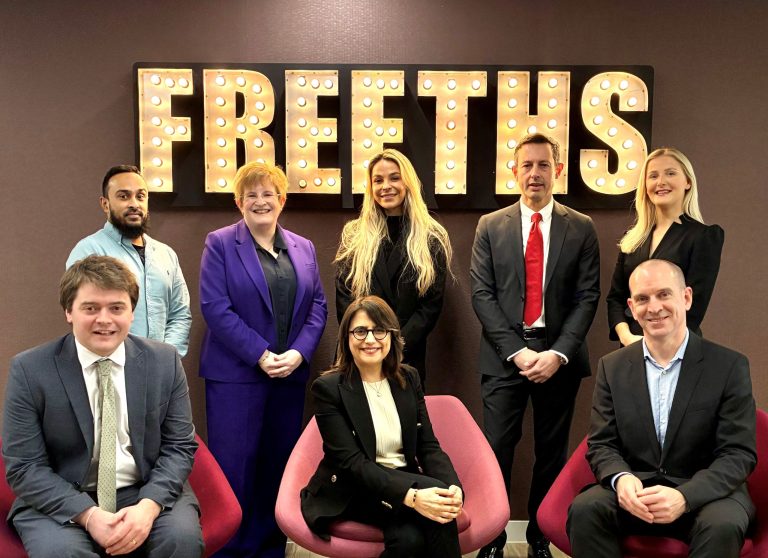
The national law firm—best known for securing a landmark High Court victory for 555 sub-postmasters in the Post Office scandal—has watched its employment practice grow 50% over four years. Now it’s betting that figure will climb further.
Melanie Stancliffe joined as employment partner in the London office. James Dean arrived as pensions partner in Bristol. Russell Dann took a managing associate role in Oxford, whilst associates Alex Blackhall and Arif Rahman landed in Leicester, Erin Garnham in Leeds, and Rachel McLintock in Manchester.
The expansion reflects what Rena Magdani, partner and national head of employment, pensions and immigration, calls unprecedented demand. “I am delighted to welcome our seven new lawyers to the Team,” she said. “This expansion reflects the unprecedented growth and demand for our services as employers grapple with a changing legislative landscape. Our continued investment in high calibre employment and pensions expertise ensures clients receive first-class, strategic, commercial advice across our national office network.”
That legislative landscape has shifted dramatically. The 2025 Act targets fire-and-rehire practices, strengthens trade union protections, and tightens rules around family leave and statutory sick pay. Employers are scrambling to update policies, contracts, and HR systems before the changes take full effect. Legal advisers with employment law expertise suddenly find themselves in high demand.
Freeths operates 13 offices nationwide, serving clients including Centrica, ENGIE, Aldi, Mercedes-Benz UK, and Lloyds Bank. The firm ranks in the UK’s top 50 commercial practices. Its B Corporation certification—requiring verified social and environmental performance standards—distinguishes it from most competitors in the legal sector.
Dean, the new Bristol pensions partner, cited the firm’s trajectory as a draw. “Freeths is a firm that is going places and I’m already proud to be a part of it,” he said. “It punches well above its weight and has sustainable, consistent growth built into its DNA. With an unwavering commitment to its people and a strong presence across key markets, I can’t think of a better place to be building a successful pensions practice.”
The Post Office litigation continues to shape perceptions of the firm. Stancliffe referenced it directly when explaining her decision to join. “I am thrilled to have joined Freeths. Known for the Post Office litigation, I’ve seen the firm win awards, publish a Corporate Conscience report and provide clients with a Horizon Scanner so they can plan ahead,” she said. “It’s a truly collaborative place with excellent lawyers working to achieve the best outcomes for clients. It’s a growing firm which I cannot rate highly enough.”
That case—described as one of Britain’s most significant miscarriages of justice—saw Freeths represent hundreds of sub-postmasters wrongly accused of theft and false accounting due to faulty Horizon IT software. The firm now advises on subsequent compensation schemes.
Dann, now based in Oxford, noted the firm’s reputation across multiple practice areas. “I’m really happy to have joined Freeths, which has an excellent reputation in employment law and across the full range of services the firm offers,” he said. “The firm is both well established and growing at an impressive rate, and I’ve been made to feel very welcome. I’m already working with highly astute lawyers, supported by exceptional internal networks, and I look forward to contributing to the continued success of the team.”
The firm plans further expansion across all 13 offices. Magdani’s team intends to strengthen national coverage as client demand continues climbing. The Employment Rights Act creates immediate pressure, but longer-term trends also favour growth—hybrid working disputes, AI-related disciplinary issues, and evolving discrimination claims all generate legal work.
Freeths will shortly publish results from its 2026 Employment Survey, examining workplace sexual harassment, performance management, HR technologies, artificial intelligence applications, flexible working arrangements, and whistleblowing patterns. The survey aims to provide employers with data-driven insights as they navigate the reformed legal environment.
The firm’s recent accolades include Law Firm of the Year at the City AM Awards 2025 and the Legal Business Awards 2024. It finished runner-up for UK Firm of the Year at The Lawyer Awards 2025. Stonewall named it a Diversity Champion, whilst Investors in People awarded gold accreditation in 2025. Working Families ranked Freeths among its Top 30 Employers for 2025, and the firm appears in the Legal 500 Green Guide 2026 for sustainability leadership.
The seven February hires bring immediate capacity to offices seeing the sharpest demand spikes. London, Bristol, Oxford, Leicester, Leeds, and Manchester all secured new lawyers, leaving seven offices still targeted for future growth. Whether the pace of hiring continues depends largely on how quickly employers adapt to the new legislative framework—and how many decide they need outside counsel to do it.
For now, the employment and pensions practice has the reinforcements it needs. The question is whether seven lawyers will be enough once the full weight of the 2025 reforms hits in the months ahead.