
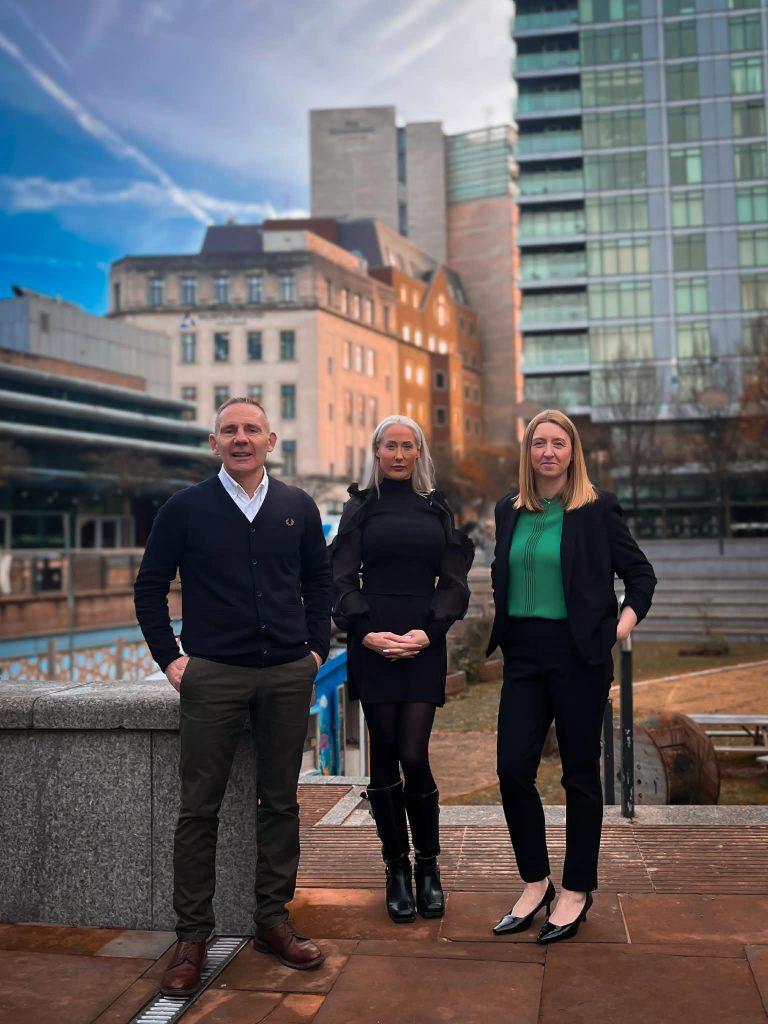
The equity deal, finalised on 27th April 2026, hands Mabrouk and fellow director Ruth Peters a combined 20% stake in the business they helped build over two decades. Managing Director Matthew Claughton, who took sole control in 2018, retains the remaining 80%.
It marks a succession strategy built on loyalty rather than external investment. Rare in a legal sector increasingly dominated by consolidation and private equity.
Since Claughton’s 2018 buyout, Olliers has tripled its turnover to £6.5 million and repositioned itself as a specialist in high-stakes, privately funded criminal defence. The firm now employs 29 lawyers across its Manchester headquarters and London office, focusing on pre-charge representation and cases involving corporate fraud, serious crime and regulatory offences.
“Stacey and Ruth have been instrumental in the Olliers’ success story,” Claughton said. “By becoming equity shareholders, they aren’t just being rewarded for their past brilliance but are committing to the future of the firm. This is about ensuring Olliers remains independent, ambitious and at the top of its game for the long term.”
The timing reflects a broader shift. Private criminal defence work has grown as individuals and businesses facing investigation seek early legal intervention—often before charges materialise. Olliers has carved out a niche in that space, winning Manchester Legal Awards Crime Team of the Year eight times since 2011.
Mabrouk joined full-time in 2003 after her school placement, qualified as a solicitor in 2008, and became Commercial Director in 2021. Her route from work experience to equity holder spans 23 years.
“I started at Olliers on work experience while I was at school, then worked part-time during the holidays supporting the accounts team and assisting fee earners,” she said. “That experience shaped my decision to pursue a career in criminal law. To now have an equity stake in the firm is something I’m incredibly proud of.”
She didn’t stop there.
“We have built a business that is profitable, independent and growing year on year and this next chapter is about scaling that success while maintaining the legal excellence and client care Olliers is so highly regarded for.”
Peters joined in 2005, qualified two years later, and now leads business development across all practice areas. She was named Manchester Legal Awards 2021 Solicitor of the Year—a recognition that came as the firm began investing heavily in digital marketing.
That strategy has paid off. Peters attributes much of Olliers’ private client growth to what she calls “winning the battle for ‘share of answer’ in the AI and search landscape”—a sophisticated approach uncommon in criminal defence circles.
“As business development director I have spent the last few years combining high-level criminal defence with a sophisticated, digital-first marketing strategy,” Peters said. “We are winning the battle for ‘share of answer’ in the AI and search landscape and that has been the engine behind our private client growth.”
The equity stake, she added, changes little about the mission. “Taking an equity stake is a very proud moment, but the focus remains the same: ensuring Olliers is the definitive first choice for anyone facing a criminal investigation or prosecution in the UK.”
Both directors moved into their current roles in 2021, the same year Claughton began formalising succession plans. “Since moving into director roles in 2021 we have shared a vision for the future,” he said. “Together we are highly focused on growth and being an outstanding criminal defence firm.”
The firm’s credentials support that ambition. Olliers holds top-tier rankings in both the Legal 500 2026 and Chambers Guide 2026, and was named a Times Best Law Firm 2026. It took Crime Team of the Year at the Manchester Legal Awards 2025—the eighth time it has claimed that title.
What distinguishes Olliers, according to those familiar with its operations, is its proactive approach to the investigative stage of criminal cases. The firm focuses on pre-charge engagement, aiming to resolve matters before prosecution begins. That requires discretion, speed and deep expertise—qualities that command premium fees.
The shift toward private funding in criminal defence has created opportunities for firms willing to invest in marketing and client experience. Olliers has done both, building a reputation that extends beyond Manchester’s legal community into boardrooms and executive suites where investigations begin quietly.
For Mabrouk and Peters, the equity deal represents not just reward but responsibility. They now share financial risk alongside decision-making power, cementing their roles in a firm that has grown from regional player to national presence.
Claughton’s decision to bring them into ownership rather than seek external capital signals confidence in organic growth. It also reflects a belief that succession works best when leadership continuity is guaranteed.
Whether that approach can sustain Olliers’ growth trajectory over the next decade remains to be seen. The criminal defence market is competitive, and the digital landscape Peters references is crowded with firms now investing in similar strategies.
What’s clear is that the firm’s leadership is aligned. Three directors, varying equity stakes, shared ambitions. For Mabrouk, who started by answering phones during school holidays, the journey from work experience to owner is complete. The next chapter—scaling a £6.5 million business in a shifting legal market—begins now.