
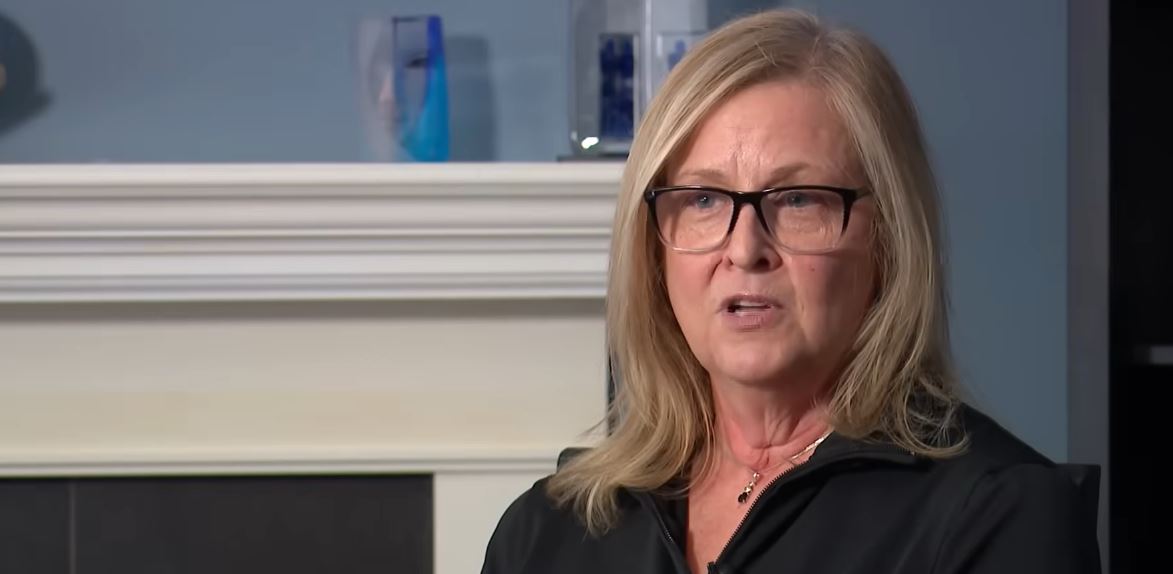

Nicole Cleland was doing something perfectly lawful early on January 10. During Operation Metro Surge, the 56-year-old Richfield, Minnesota resident and qualified legal observer was tracking what she thot were federal immigration vehicles. She remained at a distance. She remained in her vehicle. Then a Border Patrol officer approached her window and called her name.
He was already aware of her identity. It’s worth pausing to consider that detail—the informal, almost casual delivery of her name. It’s not because it’s dramatic, but rather because of what it suggests. Cleland had failed to identify herself. She hadn’t talked to anyone. However, before she could say anything, a federal agent pulled her name and, according to court documents, instructed her not to follow him going forward. She was informed via email three days later that the Department of Homeland Security had revoked her Global Entry and TSA PreCheck status. No justification was provided.
As a Global Entry member since 2014, Cleland has worked as a payments director at Target Corp. and was most recently reapproved in 2024. Five years is the intended duration of that status. It didn’t.
She is currently one of four plaintiffs in a federal lawsuit that was filed in the U.S. District Court for the Southern District of California against three agencies and the men in charge of them: Rodney Scott of CBP, David Venturella of ICE, and DHS Secretary Markwayne Mullin. “It isn’t about losing that privilege,” Cleland told WCCO earlier this year. The lawsuit, which is supported by the Electronic Privacy Information Center and is represented by Democracy Forward and Hagens Berman Sobol Shapiro, claims that Homeland Security has been operating what it refers to as a “secret Protester Surveillance Policy”—collecting records on Americans exercising their First Amendment rights and then using that data to punish them. “It is about how I lost the privilege.”
That distinction is more important than it may seem. Whether Global Entry is a right is not at issue in this lawsuit. It depends on whether the government can deter people from lawfully observing law enforcement activity in public areas by revoking that status. The Border Patrol agent specifically mentioned using “facial recognition” and a running body camera when he interacted with Cleland, according to the filing. The legal team contends that whether that was an attempt at intimidation or a statement of fact, the result was the same: Cleland has since self-censored her electronic communications and now travels with anxiety and fear. Before testing it, she reportedly feared that her passport might also have been revoked.
In a statement, CBP stated that criminal records, customs infractions, or the inability to prove low-risk status are valid reasons for removal and insisted that Global Entry is not revoked due to First Amendment activity. However, Cleland’s lawsuit makes it clear that between the January encounter and the revocation, she had no further interactions with law enforcement. Not one. Furthermore, her status has not been restored.
The larger lawsuit describes remarkably similar circumstances involving two other women: one in South Carolina whose Global Entry was revoked ten days after witnessing federal agents, and another in San Diego who was boxed in by agents in a Target parking lot with a camera aimed at her face. In both instances, there was no apparent intervening cause, and the revocations came after First Amendment activity.
Reading the accusations gives the impression that the mechanism here is more about discouragement than enforcement. Fewer people will observe federal agents in public if they are aware that doing so could result in surveillance and deny them travel privileges. For decades, civil liberties attorneys have cautioned about this chilling effect, which is rarely so well-illustrated. In a statement, John Davisson, deputy director of EPIC, stated unequivocally that the government’s collection of records on individuals for exercising their constitutional rights sends a clear message to everyone else.
The courts’ decision is still up in the air, and DHS has not indicated that it will change its mind. However, the Nicole Cleland Border Patrol lawsuit has already accomplished something that courts occasionally fail to do: it has exposed the workings of a system that was ostensibly intended to remain hidden. A woman who was legally observing from a car became a named entry in something. She really paid a price for that entry. A federal judge will now have to determine whether that series of events constitutes punishment or policy.
