

Around the end of January 2026, iPhone users in the US began to notice something strange in their bank accounts: a tiny deposit, usually ranging from eight to forty dollars, that was identified as “Lopez Voice Assistant” or “Lopez Voice Asst—Payouts.” For many, suspicion was their first reaction. People’s questions about whether it was a scam, whether someone had access to their banking information, and whether they should contact their bank flooded Reddit threads. It wasn’t a fraud. It involved Apple paying out its portion of a $95 million class action settlement that had been pending in court since 2019.
Fumiko Lopez, a resident of California, filed the case, officially known as Lopez v. Apple Inc., claiming that Siri, Apple’s voice assistant, had activated without her consent and recorded conversations she meant to be private. The lawsuit also alleged that those recordings were given to third-party advertisers, such as eateries and apparel companies, who utilized the data to display targeted advertisements on Apple Search and Safari. Lopez was not the only one who saw this. Eventually, the class expanded to include anyone with a Siri-enabled device who, at any time between September 17, 2014, and December 31, 2024, encountered a similar unintentional activation.
Everything was denied by Apple. The business has consistently insisted that it did nothing wrong or illegal. This denial is noteworthy because it is common in settlements of this magnitude. Companies settle because litigation is costly and unpredictable, not necessarily because they acknowledge fault. Although $95 million is a substantial sum in everyday terms, it is a manageable amount for a company the size of Apple. However, the fact that the case was finally approved in late October 2025 indicates how seriously the court took the underlying accusations.
Payouts were limited to $20 for each eligible device, and each claimant could have up to five devices, so the maximum amount for any one person was $100. In actuality, the average was significantly lower. 9to5Mac reported that the average payout was about $8.02 per device. Approximately $40 was awarded to those who submitted claims for two devices, which is consistent with what many Reddit users reported discovering in their accounts. It’s not money that can change your life. It most likely didn’t even cover the price of the phone case that most people purchased years ago. However, that is somewhat irrelevant.
The claim requirement, not the payout amount, was what made the settlement unique. You couldn’t just have an iPhone or HomePod to be eligible. Under oath and with the knowledge that perjury carries legal repercussions, you had to attest that you had accidentally activated Siri during a private or confidential conversation. It’s a particular thing to attest to. The question of how many people actually remembered such an event versus how many were, let’s say, approximating their recollection was raised on Apple’s own community forums. Although a large number of claims were processed by the settlement website, the final amount per device was closer to $8 than $20, indicating a high number of valid claims.
May thru July of 2025 was the claim window. Many recipients of January 2026 payments acknowledged that they had totally forgotten to submit a claim. The mental gap between “clicking a form” and “receiving a bank transfer” can be significant, and class action settlements frequently take months or years to complete. In the words of one Reddit user, “Don’t even remember filing for this, so that’s a nice surprise.” That reaction has a subtle yet striking quality. Apple, a well-known company, was accused of listening in on private conversations and selling that information to advertisers. In the end, the issue was settled with deposits that were so small that the recipients forgot they had requested them.
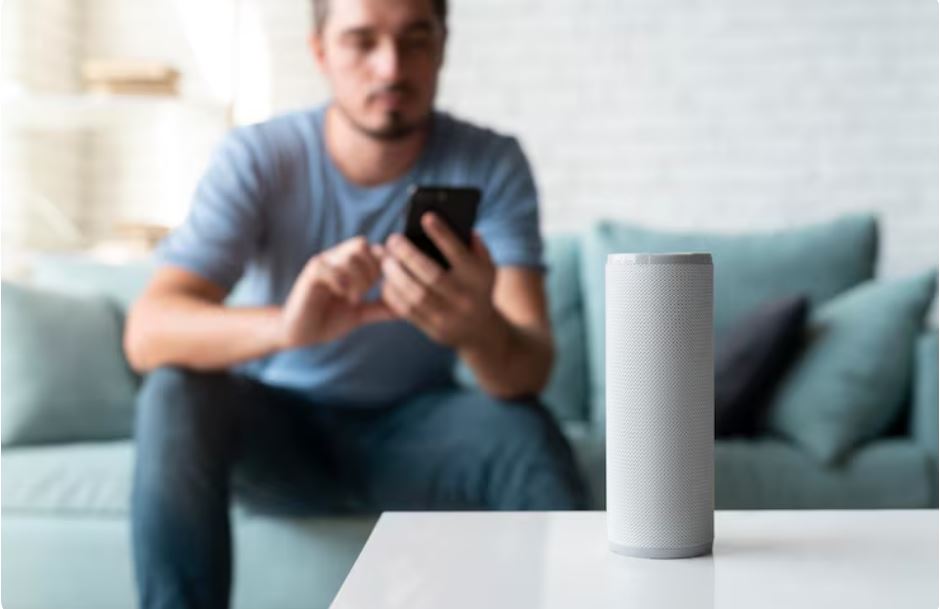
It’s really unclear if this settlement significantly alters how voice assistants handle unintentional activations. In recent years, Apple has made public pledges regarding Siri privacy, including modifications to the processing and storage of recordings. This litigation may have played a role in those changes. In any case, they might have been in the pipeline. Since 2014, technology has advanced significantly, and people’s expectations regarding data privacy have also changed. The fundamental issue raised by the case is more difficult to ignore: that the gadget in your kitchen, on your nightstand, or in your child’s bedroom is constantly listening for a wake word and occasionally misidentifies it.
As of right now, the settlement website is handling reissuance requests for individuals whose payments failed, the deposits have arrived, and the threads have subsided. In essence, the legal chapter is over. However, the fundamental question of what voice assistants hear, store, and do with what they record won’t go away anytime soon.
