
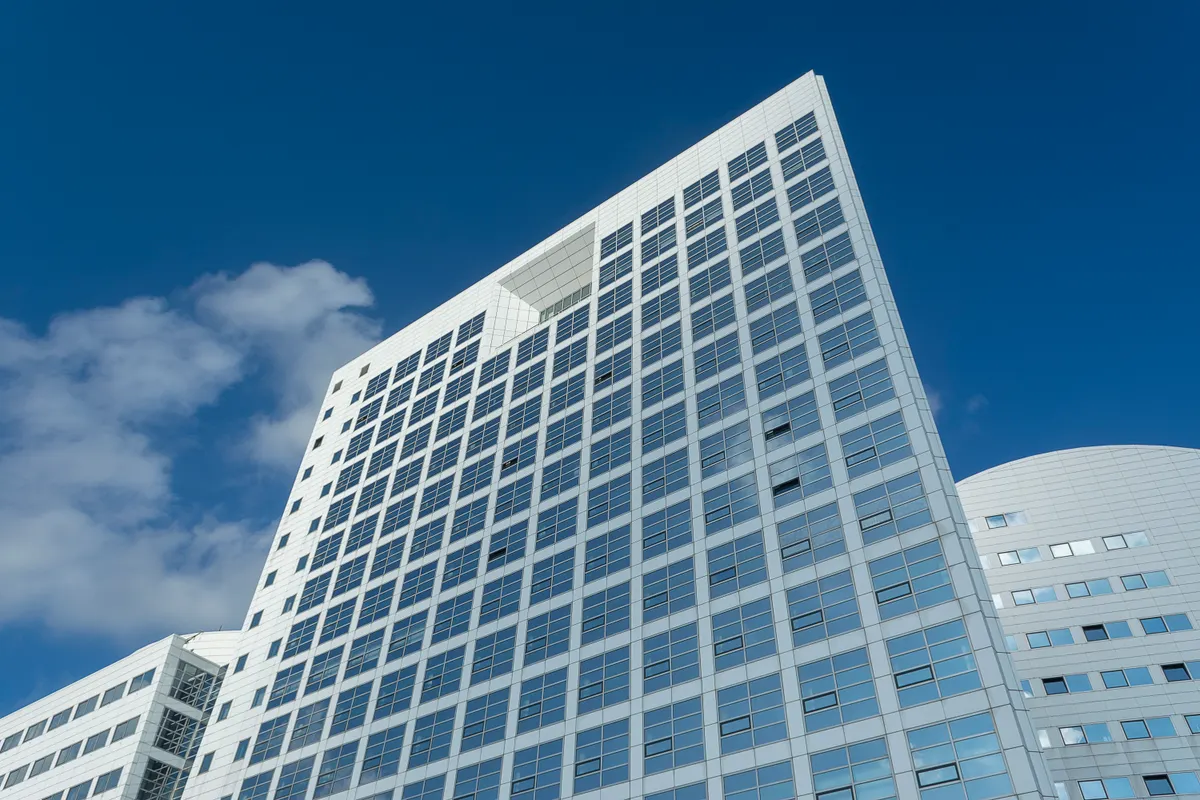

UN human rights experts have called on ICC member states to take urgent collective action against fresh US sanctions, warning that the Trump administration’s campaign to penalise the International Criminal Court now threatens the entire architecture of international criminal accountability.
The experts’ statement, issued on Friday, came in direct response to sanctions announced on 18 August by the US Department of State against ICC President Tomoko Akane and Senior Trial Lawyer Abdoulaye Seye of Senegal. Secretary of State Marco Rubio described the Court as ‘corrupt and fatally politicized.’
ICC Member States Sanctions: The Cumulative Toll
The 18 August designations have substantially expanded the reach of US pressure on the Court. Nine of the eighteen ICC judges, both Deputy-Prosecutors, the former Prosecutor, and one staff member have now been sanctioned by the United States in total, according to the ICC’s own statement.
BBC reporting confirmed that the Trump administration had already targeted at least eleven ICC officials before the latest round, including nine judges and the chief prosecutor. The August designations add Akane and Seye to that list, with the measures due to take effect on 17 September rather than immediately upon announcement, according to Al Jazeera.
The practical consequences for both officials are severe: freezing of any US-held assets, a prohibition on entering US territory, and an inability to use US-linked credit cards or access financial services connected to the country.
The ICC rejected the designations in unambiguous terms, describing them as ‘a flagrant attack against the independence of an impartial judicial institution which operates pursuant to the mandate conferred by its States Parties from across regions,’ and stating they undermine the rule of law.
Rubio’s Justification and the Gaza Context
Secretary Rubio stated that Akane and Seye had directly engaged in investigations and prosecutions against government officials from countries outside the Court’s jurisdiction, calling it a ‘dangerous precedent.’ JURIST reported, citing UN News, that Seye has been investigating Israel’s role in the West Bank, including the funding and provision of weapons to settlers.
Akane, a Japanese national elected as ICC President in March 2024, has become the most senior Court official yet to face US designation. Japan’s Prime Minister Sanae Takaichi described the sanctions as ‘very unfortunate’ at a press conference and indicated she planned to continue communication with relevant countries, including the United States. Japan’s foreign ministry separately stated the country has ‘consistently supported the ICC’ and remains committed to strengthening the international rule of law.
Human Rights Watch went further, calling on the Japanese government specifically to issue a strong condemnation, citing Japan’s longstanding support for the Court.
A Pattern Rooted in Earlier Executive Action
The current sanctions regime rests on an executive order issued by the Trump administration in February 2025, legally distinct from Executive Order 13928, which underpinned the earlier round of designations in 2020.
Under EO 13928, then Chief Prosecutor Fatou Bensouda and Phakiso Mochochoko, who served as Head of the Jurisdiction, Complementarity and Cooperation Division of the Office of the Prosecutor, were added to the US Treasury’s Office of Foreign Assets Control’s List of Specially Designated Nationals and Blocked Persons. Both were targeted during the ICC’s examination of alleged war crimes by US military personnel in Afghanistan.
President Biden formally revoked EO 13928, with the State Department stating that such measures ‘are not an effective or appropriate strategy for addressing the United States’ concerns with the ICC.’ The original 2020 State Department action had framed the designations as protecting US personnel from what it characterised as an illegitimate investigation.
The UN experts warned that if the US policy of seeking to ‘systematically dismantle the ICC’ were to succeed, it would, in their words, ‘roll back international criminal accountability gains against impunity forged in the fires of Nuremberg and Tokyo, and the International Criminal Tribunals for the former Yugoslavia and for Rwanda; and extinguish hope for victims of the gravest atrocity crimes across the world.’
They also cited Article 70 of the Rome Statute, the foundational treaty that empowers the Court, which protects officials from coercion, threats, or retaliation in the performance of their duties, arguing that the extraterritorial reach of the US sanctions constitutes a direct violation of that provision.
Whether Japan’s diplomatic discomfort translates into coordinated pressure from ICC states parties, particularly those in Europe and Africa, will determine how effectively the Court can insulate itself from the next round of designations. The 17 September effective date is the next hard deadline.
