
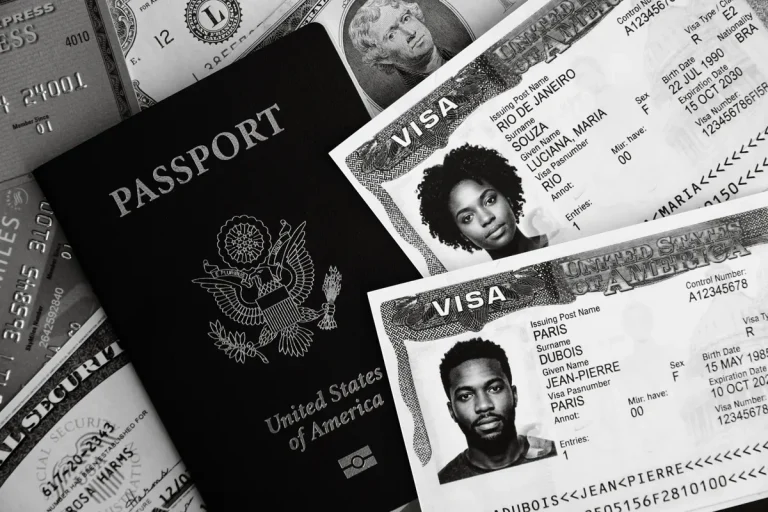
Judge Wise delivered a 90-page opinion on 28 August 2026, ruling in favour of the plaintiffs on six of their eight claims. The case, Stanford Daily Publishing Corporation v. Rubio, docketed as 5:25-cv-06618, was filed on 6 August 2025 and assigned to Judge Wise following an initial referral to Judge Virginia K. DeMarchi.
The plaintiffs are Stanford Daily Publishing Corporation and a noncitizen student holding an F-1 visa. The defendants are Secretary of State Marco Rubio and, as named in the original complaint, the Secretary of Homeland Security, sued in their official capacities. The court notes that at the motion-to-dismiss stage in January 2026, the named DHS defendant was Kristi Noem; the complaint originally named Markwayne Mullin in that role.
The Speech-Based Deportation Ruling’s Legal Foundations
The INA provisions at issue permit the Secretary of State to revoke a visa ‘at any time, in his discretion’ and authorise deportation where the Secretary of State ‘personally determines that the alien’s presence would compromise a compelling United States foreign policy interest.’ Judge Wise held that applying those provisions to punish protected speech is unconstitutional.
Drawing on American-Arab Anti-Discrimination Committee v. Reno (9th Cir. 1995) and the Supreme Court’s decision in Bridges v. Wixon (1945), the court reaffirmed that the First Amendment draws no distinction between citizens and resident aliens. The Ninth Circuit in AADC had held that deporting aliens for protected speech is prohibited, reasoning that if noncitizens lacked First Amendment rights at the deportation stage, their rights in all other contexts would be ‘a nullity’ given the permanent chilling effect of deportation’s threat.
The government contended that noncitizens hold only ‘reduced’ First Amendment protection on an ‘ascending scale’ tied to their immigration status. Judge Wise found that argument unsupported: the government cited no case applying any such doctrine to lawfully present noncitizens. The Ninth Circuit has treated it as ‘an uncontested proposition’ that student visa holders may assert First Amendment claims, as confirmed in Ibrahim v. Department of Homeland Security (9th Cir. 2012), a case involving a Stanford student whose visa was revoked whilst she was abroad.
On vagueness, the court applied the heightened standard established in Sessions v. Dimaya (2018), where the Supreme Court held that because deportation is a ‘grave’ and ‘drastic measure, often amounting to lifelong banishment or exile,’ immigration laws must satisfy the same exacting vagueness test as criminal statutes.
Judge Wise characterised the government’s conduct as ‘a viewpoint- and content-based restriction as applied to protected speech,’ and wrote that ‘in the United States, freedom of speech belongs to the people. It is not the government’s to take.’ The opinion repeatedly invoked founding figures including Benjamin Franklin and James Madison.
A Parallel Ruling in Massachusetts, and the Road to Appeal
The Stanford Daily decision joins a companion ruling in AAUP v. Rubio (No. 1:25-cv-10685, D. Mass.), filed on 25 March 2025 by the Knight First Amendment Institute on behalf of the American Association of University Professors and affiliated campus chapters, alongside the Middle East Studies Association. That case involved nine days of testimony and 250 exhibits.
Judge William G. Young, a Ronald Reagan appointee, issued a 161-page verdict finding that officials had pursued a viewpoint-discriminatory policy of arresting, detaining, and deporting noncitizen students and faculty who engaged in pro-Palestinian protest, with the purpose of chilling such speech. Judge Young described the matter as ‘perhaps the most important ever to fall within the jurisdiction of this district court.’ On 22 January 2026, he issued a remedial order vacating the administration’s policy, finding it violated both the First Amendment and the Administrative Procedure Act. The federal government appealed to the United States Court of Appeals for the First Circuit under case numbers 25-1658 and 26-1141.
The present analysis of the decision, and commentary on the precedents the district court did not address, including Reno v. AADC (1999) and Harisiades v. Shaughnessy (1952), reflects that the outcome, whilst consistent with the Ninth Circuit’s AADC line, is not the only plausible reading of the authorities. The government’s appeal in the First Circuit, and the expected appeal in the Ninth Circuit, will determine whether these district court holdings survive.
Subject to any onward appeal, the question of whether the First Amendment fully shields lawfully present noncitizens from speech-based deportation now moves to the circuit level on two fronts. Should even one circuit rule in favour of the First Amendment claimants, Supreme Court review becomes a realistic prospect. The First Circuit’s ruling in AAUP v. Rubio is the next major waypoint; proceedings in the Stanford Daily case will follow close behind.