
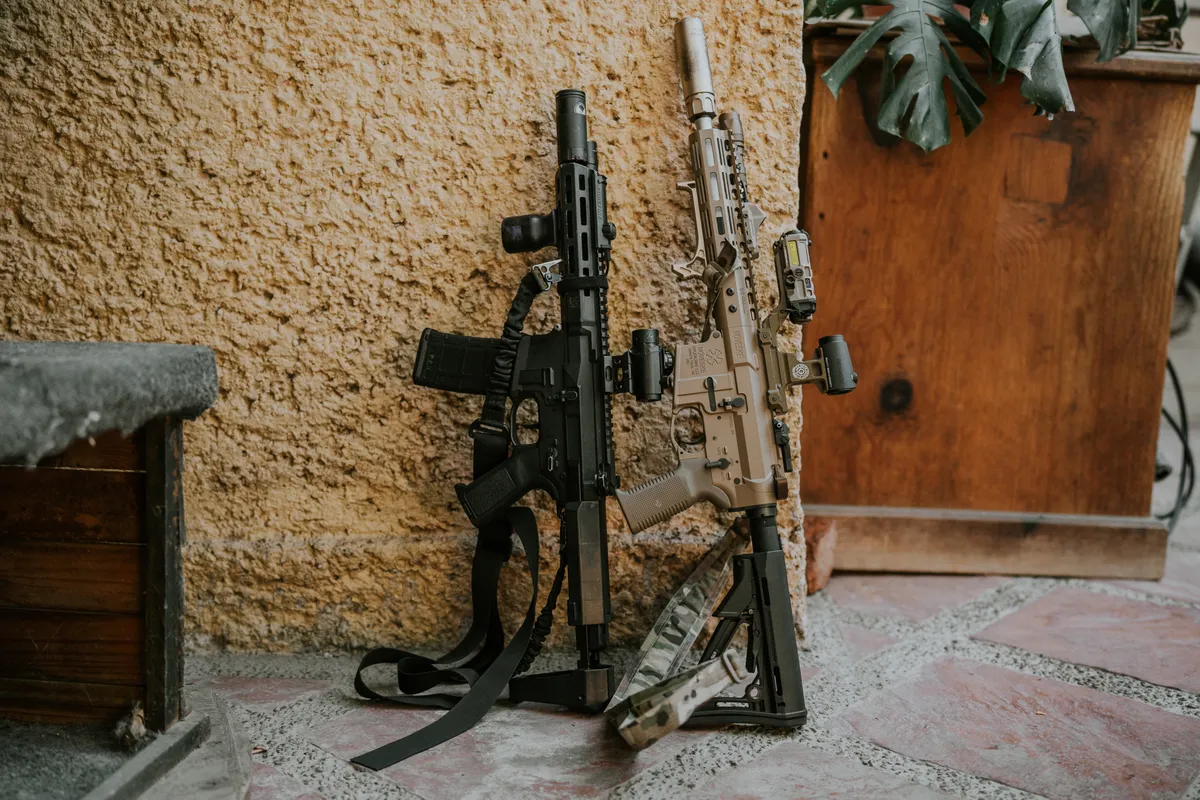

The AR-15 assault weapon ban challenge is before the Supreme Court of the United States, with petitioners in the consolidated cases of Viramontes v. Cook County (No. 25-238) and Grant v. Higgins (No. 25-566) filing their opening brief on 28 August. Law firm Cooper & Kirk represents petitioners in both cases. Oral argument is scheduled for 2 December, with a decision expected in June 2027.
The AR-15 Assault Weapon Ban Challenge: Background and Question Presented
The petitioners’ opening brief frames the question presented as: ‘Whether the Second and Fourteenth Amendments guarantee the right to possess AR-15 platform and similar semiautomatic rifles.’ The brief characterises such rifles as ‘arms’ within the plain text of the Second Amendment, arguing they are in common use and thus constitutionally protected.
The litigation has a long runway. Viramontes and a co-petitioner filed suit in the United States District Court for the Northern District of Illinois in August 2021. The district court granted summary judgment to Cook County in March 2024, and the Seventh Circuit affirmed by summary order on 2 June 2025, with the case docketed at the Supreme Court on 29 August 2025 under Seventh Circuit case number 24-1437. Grant v. Higgins arose from the Second Circuit’s comparable decision upholding Connecticut’s ban. The full procedural history is set out by Ballotpedia.
The Supreme Court granted certiorari and consolidated the two cases on 30 June 2026. Petitioners in Grant include Eddie Grant Jr., Jennifer Hamilton, Michael Stiefel, the Connecticut Citizens Defense League Inc., and the Second Amendment Foundation Inc. According to the McGuireWoods firearms regulatory alert, the cases address what types of firearms are constitutionally protected, a question distinct from who may possess firearms (addressed in United States v. Hemani, decided 9-0 on 18 June 2026) and where they may be possessed (addressed in Wolford).
Amicus Briefs and the Common-Use Argument
By the filing deadline, some 45 amicus briefs had been submitted, all but two supporting the petitioners. The breadth of the amicus field illustrates the legal stakes: Tennessee led a coalition of 27 states arguing that their citizens are among the millions of Americans who own AR-15 platform and other similar semiautomatic rifles for hunting, sport, and self-defence.
The statistical backbone of the petitioners’ case comes from Professor William English’s 2026 National Firearms Survey. Conducted online in July and August 2026, the survey reached 51,398 United States adults and identified 16,688 internally validated gun owners for detailed questioning, according to the survey methodology published on SSRN. It estimates approximately 88 million American adults personally own firearms and that Americans possess roughly 461 million guns in total.
On AR-15-style ownership specifically, the survey finds that ‘25.0% of gun owners currently own an AR-15 type rifle, 12.9% currently own other similarly styled semi-automatic rifles, and 30.0%, approximately 26.4 million adults, currently own at least one firearm in one of these two categories.’ The survey puts the total number of AR-15 style or similar semiautomatic rifles of the types banned by Cook County and Connecticut at approximately 60 million.
The petitioners’ brief also challenges the internal coherence of existing bans. Cook County prohibits a semiautomatic rifle that has no stock; Connecticut prohibits one that has a stock; Maryland bans neither configuration. This definitional inconsistency is central to the argument that ‘assault firearm’ classifications reflect legislative line-drawing rather than any principled historical tradition.
On the Seventh Circuit’s assertion that virtually no difference exists between the semiautomatic AR-15 and the fully automatic M16, an amicus brief on behalf of the Second Amendment Law Center draws on the 1963 classification by the predecessor agency to the Bureau of Alcohol, Tobacco, Firearms and Explosives, which categorised the Colt AR-15 Sporter as semiautomatic only and outside the machinegun classification. A separate brief from ballistics experts contests the Second Circuit’s claim in Grant that the rifle inflicts wounds the size of a ‘Coke can.’
The brief filed by the United States makes a point the petitioners regard as underweighted elsewhere: that longstanding and widespread legality of a class of arms is itself evidence that law-abiding citizens possess such arms for lawful purposes, reinforcing the common-use test drawn from Heller and Bruen. The petitioners’ brief further invokes Justice Barrett’s concurrence in Wolford v. Lopez, 146 S. Ct. 2032, 2054 n.1 (2026), criticising the Seventh Circuit for improperly ‘smuggled additional limits, drawn from our regulatory tradition, into the plain-text stage of the inquiry.’
Opponents of the challenge note the public-safety dimension. Everytown Law reports that from 2015 to 2022, mass shootings involving assault weapons resulted in nearly six times as many people shot, more than twice as many killed, and 23 times as many wounded per incident compared with those that did not. As of the certiorari grant, 11 states and Washington D.C. have enacted outright prohibitions on assault weapons, and 16 further states have enacted related regulations. Respondents’ briefs are expected imminently, with all eyes on the December argument.
