
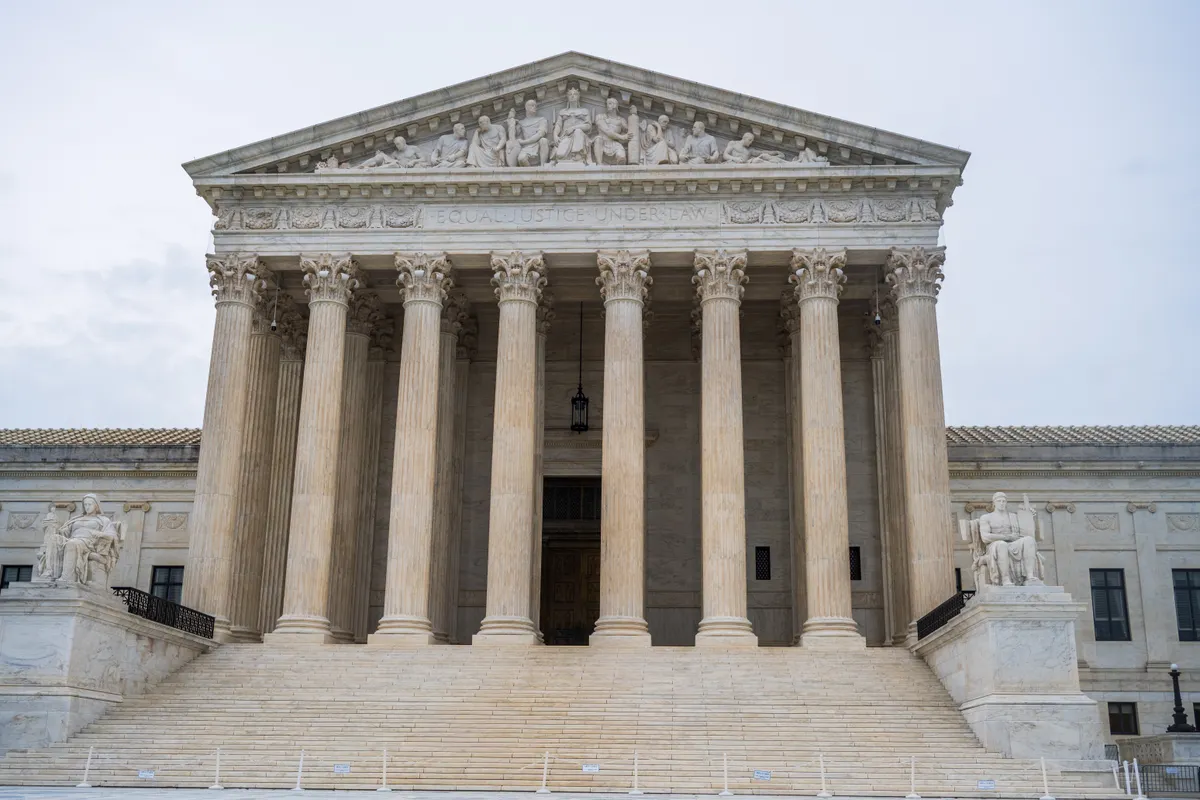

The Fifth Circuit Court of Appeals is set to reconsider the federal felon gun ban challenge on two separate constitutional grounds, having granted en banc rehearing in both United States v. Cordova (No. 24-50564) and United States v. Squire (No. 25-30324), with both cases scheduled for oral argument in January 2027. Together, they place the lifetime ban on firearm possession by convicted felons under section 922(g)(1) of Title 18 of the United States Code in its most precarious constitutional position in years.
Squire: A Commerce Clause Reframe
The Fifth Circuit granted en banc rehearing in Squire on 20 July, following a petition that reframed what had begun as a Second Amendment as-applied challenge into a facial Commerce Clause challenge to the statute. Squire’s argument turns on whether Congress, under the authority recognised in United States v. Lopez (1995), may reach mere firearm possession through the jurisdictional hook that the weapon at some point crossed a state line.
The factual predicate is narrow. According to a Firearms Policy Coalition amicus brief filed in the en banc proceedings, Squire admitted during his guilty plea that his handgun had crossed the Louisiana state line before he possessed it. The government advanced no claim that he engaged in any interstate commerce involving the weapon; it relied solely on the gun’s prior travel.
That slender thread is precisely what Squire’s counsel argue cannot sustain a federal conviction after Lopez. The National Law Journal reported that the en banc grant followed Justice Clarence Thomas’s solo concurrence in United States v. Hemani, 146 S. Ct. 1677, 1694 (2026), in which he called on lower courts to reexamine whether section 922(g) rests on a constitutionally adequate Commerce Clause foundation.
Judge Stephen Higginson dissented from the rehearing grant, warning that the practical consequences of a ruling for Squire would be severe. ‘Can felons from the other eleven circuits now flood the Gulf Coast to rearm themselves?’ he asked. He also noted a textual distinction the panel had not resolved: unlike section 922(q) at issue in Lopez, section 922(g)(1) contains an express commerce element, which the government and other courts have treated as constitutionally sufficient.
The Felon Gun Ban Challenge in Cordova
The Cordova en banc grant, made on 14 September, arises from a different posture. The Fifth Circuit’s published panel opinion confirms that Peter Villa Cordova was convicted of his predicate offences a decade before the events giving rise to his section 922(g)(1) charge, and that his term of probation ended seven years before he was found in possession of a firearm. He does not challenge the validity of his lifetime disarmament in this appeal.
The panel unanimously rejected his Second Amendment challenge on the ground that his prior conviction for evading arrest with a motor vehicle demonstrated dangerousness. Two judges concurred only in the judgment, however, and their opinions signal the deeper fault lines the en banc court will need to address.
Judge James Ho wrote that the lifetime ban ‘disarms individuals for the rest of their lives, regardless of whether the individual has been convicted of a violent crime or spent a single day in prison.’ Cordova himself received no custodial sentence. Judge Ho pointed to the Supreme Court’s holding in Rahimi that a person ‘found by a court to pose a credible threat to the physical safety of another may be temporarily disarmed,’ and to Justice Neil Gorsuch’s separate observation that the court ‘do[es] not resolve whether the government may disarm an individual permanently.’
Judge Andrew Oldham went further, labelling the Fifth Circuit’s controlling precedent in United States v. Diaz, 116 F.4th 458 (5th Cir. 2024), ‘historically bankrupt.’ That decision, as analysed in a review of 2024 appellate decisions, requires the government to show its application of section 922(g)(1) is consistent with a longstanding tradition of disarming persons with analogous criminal histories, and permits permanent disarmament where an offence was capital at the founding. Judge Oldham argued that the tradition of disarming dangerous persons, drawn from English and early American history, supplies a sounder and more coherent basis than the Diaz framework.
A Statute Under Pressure From Multiple Directions
The two en banc grants sit within a broader pattern of institutional pressure on section 922(g)(1). The National Law Journal reported the Fifth Circuit was on pace for a possible record 14 en banc grants in 2026, with 12 en banc oral arguments scheduled. At the Supreme Court, several section 922(g)(1) cases, including Robinson v. United States (No. 25-5903) and Marshall v. United States (No. 25-5259), were relisted following the November 2025 conference, each raising facial or as-applied Second Amendment questions, according to SCOTUSblog.
Whether the January 2027 en banc arguments produce a circuit split on the Commerce Clause question, a revised dangerousness framework to replace Diaz, or both, will determine how soon one or more of these cases reaches One First Street. Subject to any further procedural developments, the Fifth Circuit’s en banc decisions in Squire and Cordova may prove the forcing mechanism that compels the Supreme Court to resolve the constitutional fate of the lifetime felon gun ban.
