
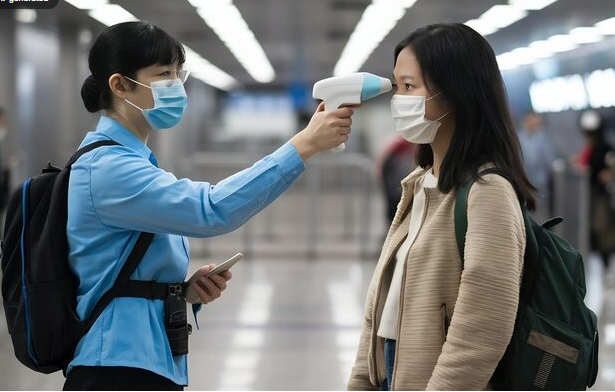

The CDC’s most recent travel advisory is a significant pause, but it doesn’t prevent you from traveling to the Seychelles. Due to an increase in chikungunya virus cases, a Level 2 alert is now in effect for any travel to the archipelago. Although the illness is not fatal, it can be extremely crippling and, in certain situations, unstoppable.
A fever and extreme exhaustion that doesn’t quite match the heat are usually the first symptoms. Headaches, rashes, muscle aches, and joint aches follow. Occasionally, the symptoms go away in a few days. Joint pain can occasionally last for months, particularly in elderly people. Because of a scientifically grounded precautionary mindset, rather than out of fear, the CDC is strongly recommending that pregnant travelers completely reconsider their travel plans.
| Category | Details |
|---|---|
| Issuing Authority | Centers for Disease Control and Prevention (CDC) |
| Advisory Level | Level 2 – Practice Enhanced Precautions |
| Affected Location | Seychelles, Western Indian Ocean |
| Reason for Advisory | Chikungunya virus outbreak |
| Transmission Method | Mosquito bites (Aedes species) |
| Common Symptoms | Fever, joint pain, muscle pain, rash, fatigue, headache, nausea |
| High-Risk Advisory | Pregnant individuals urged to reconsider travel |
| Preventive Measures | Use insect repellent, wear long sleeves and pants, stay indoors |
| Vaccine Availability | No vaccine currently available |
| Advisory Status | Active (February 2026) |
Tropical climates are ideal for the virus, which is spread by mosquito bites. The Seychelles provide the perfect environment for the Aedes mosquito because of their humid microclimates, still water pools, and heavily vegetated coastlines. Consequently, local health authorities have increased their efforts to control vectors while recommending that residents and visitors take the standard precautions, such as wearing long sleeves, applying repellents, and staying in screened accommodations.
Chikungunya is especially annoying because of how fast it moves. Symptoms typically appear three to seven days after exposure, in contrast to illnesses that take a long time to develop. Within 48 hours of enjoying a juice at a beach café while admiring the Indian Ocean’s hues, you might find yourself having difficulty climbing the stairs of your guesthouse.
However, there is no cause for panic. While the CDC’s Level 2 advisory calls for increased awareness, it does not explicitly forbid travel. Instead of canceling, it advises travelers to plan. Especially for places like the Seychelles, where tourism and economic resilience are closely related, that is a crucial distinction.
Additionally, the timing of this advisory coincides with the busiest season. Due to its appeal as an escape from winter, February usually draws tourists from North America, Europe, and some regions of Asia. Many of those journeys were scheduled months in advance. As a result, the focus shifts from whether or not to how to go—with caution and the appropriate information.
The most progressive resorts, in my opinion, have started sending out pre-arrival emails with health reminders in recent days. A useful packing checklist was one of them, which included DEET-based repellent, lightweight, breathable clothing, and a reminder to keep windows closed at night. The attempt to reconcile public health and hospitality without coming across as alarmist struck me as especially considerate.
Because there is no vaccine, personal accountability is even more important. Being sick far from home is not comforting, even though the majority of infections are mild. Some tourists are unaware of how a minor medical issue overseas can cause a complete trip to be ruined—flights being rescheduled, excursions being missed, and days spent recuperating in strange accommodations.
However, if used consistently, the preventative tools are remarkably effective. The sticky chemical clouds of the past have given way to compact, mildly scented, and incredibly effective bug repellents. Nowadays, a lot of apparel companies provide travel-specific insect-repellent textiles. Nearly as fast as the risks are changing, the solutions are also getting better.
At the policy level, this advisory draws attention to a more general pattern. When a regional outbreak occurs, public health organizations are reacting more quickly and accurately, and travel advisories are shifting from being about restrictions to being more about readiness. This is especially helpful for tourists who want verified health information before boarding a plane and no longer rely only on embassy alerts or resort notices.
Additionally, it serves as a reminder of how altered climatic patterns are changing conventional disease maps. Due to changing rainfall patterns and temperature changes, Chikungunya, which was previously restricted to small equatorial zones, has been spreading. This fact makes such advisories less infrequent and more frequent. They will influence our travel habits more and more, even though they won’t always garner media attention.
I was reminded of a young couple I talked to in Costa Rica last year who decided to postpone a hike by one day after learning of a dengue outbreak in the area. Their choice was motivated by quiet flexibility rather than fear. After choosing a shady beach over the jungle trail, they claimed to feel “just as connected to the place.” That mindset—aware, flexible, and optimistic—seems to fit the essence of what this CDC alert stands for.
The Seychelles continue to be breathtaking. Still present and worth seeing are the natural settings, the marine reserves, and the distinct cadence of island life. However, the travel experience in 2026 will require us to carry two things in equal measure: caution and curiosity.
While the advisory is in force, some plans may change a little. Some travelers might pack more purposefully or alter their itineraries. Though perhaps more cautiously, the majority will still travel, reinforcing a new traveler mentality that embraces risk without losing its desire to explore.
