
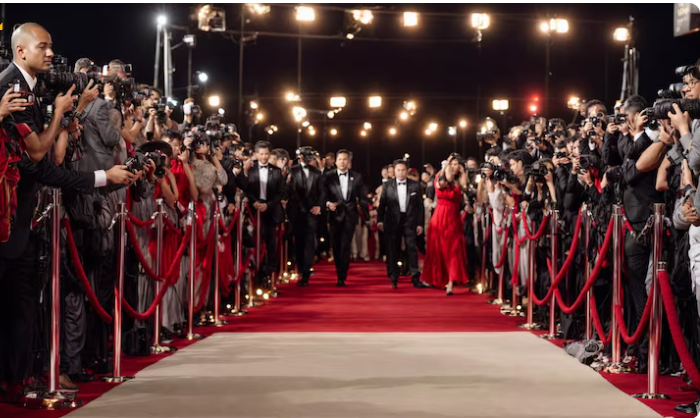

After a while, Hollywood award shows start to blend together. Every year, the ceremony has a recurring pattern that includes speeches, red carpets, and courteous applause. However, the Academy Awards occasionally create a moment that feels a little different, almost like a change in the tone of the business. That sentiment was there at the 2026 Oscars.
The ceremony took place in Hollywood’s Dolby Theatre under the customary spotlight of chandeliers and cameras. However, One Battle After Another had subtly changed the year’s story by the end of the evening.
Key Awards Overview
| Category | Information |
|---|---|
| Event | 98th Academy Awards (Oscars) |
| Location | Dolby Theatre, Hollywood, Los Angeles |
| Best Picture Winner | One Battle After Another |
| Best Actor | Michael B. Jordan (Sinners) |
| Best Actress | Jessie Buckley (Hamnet) |
| Best Director | Paul Thomas Anderson (One Battle After Another) |
| Most Awards | One Battle After Another (6 wins) |
| Major Nominees | Hamnet, Sinners, Sentimental Value, Frankenstein |
| Film Industry | Global Cinema / Hollywood |
| Reference | https://www.oscars.org |
One of the most significant wins in recent Oscar history, the movie took home six awards, including Best Picture and Best Director. Every time an envelope was opened, a sense of momentum grew as the cast continually assembled on stage throughout the evening. The result seemed certain by the time Paul Thomas Anderson won the Best Director award.
During his address, Anderson, who has long been praised by critics but is frequently passed over for the Academy’s top prize, appeared almost introspective. Because they have been in the business long enough to know how erratic award seasons can be, directors of his caliber hardly ever sound surprised by recognition. The subsequent applause, however, had a distinct tone. Something more relieving.
Throughout the year, there had been discussion about the picture itself, which was complex and ambitious. While some viewers thought it was challenging, others enjoyed its narrative scope. Compared to more straightforward crowd-pleasers, such kind of division frequently indicates a movie that stays in theaters longer. Oscar voters seemed persuaded.
The evening created its own noteworthy moments in the acting categories. For her portrayal of Hamnet, which had subtly gained popularity as the awards season went on, Jessie Buckley won the Best Actress prize.
In a category full of strong nominees, Buckley’s performance, which was centered on sadness and subtle emotional depth, stood out. Critics praised the performances of Emma Stone, Kate Hudson, Rose Byrne, and Renate Reinsve. However, Buckley’s portrayal communicated a message that was hard to overlook.
It was evident that the Academy had accepted a performance that relied more on nuance than spectacle when they saw her on stage, holding the golden statue with a look that was both happy and a little overwhelmed. Then one of the most eagerly awaited announcements of the evening was made.
Michael B. Jordan defeated Timothée Chalamet, Leonardo DiCaprio, Ethan Hawke, and Wagner Moura to win Best Actor for his performance in Sinners. Throughout the year, a number of performances received considerable critical support, making the category exceptionally competitive. Jordan’s victory seemed meaningful and well-earned.
He has been one of Hollywood’s most well-known actors for many years, juggling big-budget movies with more challenging dramatic parts. He was able to demonstrate a new degree of passion during his performance in Sinners, which reviewers had long suggested he possessed. The response of the theater’s patrons indicated that the industry concurred.
Supporting categories can have their own emotional surprises, and 2026 was no exception. Amy Madigan, a seasoned actor, won Best Supporting actor for Weapons, a performance that was previously viewed as an underdog by some commentators.Such moments contribute to the Oscars’ unique appeal.
Sometimes, decades-long careers are unexpectedly recognized. Madigan’s victory served as a reminder that, despite the ephemeral nature of award seasons, Hollywood memory can endure.
For his performance in One Battle After Another, Sean Penn won Best Supporting Actor, adding another accolade to the movie’s expanding collection. Since the 1980s, Penn’s career has been characterized by a certain unpredictable quality to his on-screen persona.
As I saw him win the prize, I couldn’t help but feel that Penn is still one of those performers who can take audiences by surprise. Beyond individual triumphs, the evening also represented more significant changes within the film business.
Rather than following safe commercial patterns, many of the nominated films featured ambitious narrative. Sentimental Value, Frankenstein, and The Secret Agent are examples of projects that stretched artistic boundaries in various ways, indicating that Oscar voters are still drawn to films that challenge viewers rather than just amuse them. It’s unclear if that tendency will continue.
Hollywood is undergoing dramatic change. Traditional studios are in competition with streaming companies. Decisions about storytelling are influenced by audiences around the world. Every year, even the format of theatrical releases is changing. However, the Oscars continue to bring the industry together under one roof for a few hours every spring.
It was difficult to ignore how many careers came together on stage at the 2026 ceremony—young actors giving breakthrough performances, seasoned filmmakers finally getting credit, and movies that will probably influence discussions about movies for years to come.
Once the lights go down, awards shows frequently fade rapidly. Sometimes, though, a particular movie or performance sticks in your mind long after the speeches are over.
This year, One Battle After Another and the team of filmmakers who transformed a challenging, ambitious project into the pivotal movie of the Oscars season deserved that lingering moment.
