

The departure lounges were where it all began. The information boards at the airports in Belfast City, Southampton, and Exeter were empty when travelers arrived in early March 2020. Flybe, the biggest regional airline in Europe, abruptly went into administration on March 6 when the majority of its 2,400 workers were still showing up for work.
For years, the airline has been having problems. However, the government’s decision to deny the £100 million bailout it had been requesting was the direct cause. Recently appointed Chancellor Rishi Sunak calculated that Flybe’s issues were structural rather than pandemic-related and that public funds shouldn’t be used to fill a gap that existed before the crisis. Regarding the structural issues, he was correct. It is more difficult to determine whether the computation was accurate.
Important Information
| Field | Details |
|---|---|
| Crisis Period | March 2020 — ongoing legacy; COVID-19 pandemic triggered the most severe aviation financial crisis in UK history |
| Flybe Collapse | March 6, 2020 — Flybe entered administration after the government declined a £100 million bailout; Europe’s largest regional carrier at the time; 2,400 jobs lost; served regional airports including Belfast City (79.5% seat capacity), Exeter (51%), Southampton (95%) |
| Global Revenue Loss (2020) | Projected $252 billion (approximately £215 billion) loss in global airline revenue during the pandemic — IATA estimate |
| Government Position (Rishi Sunak) | March 24, 2020 — Chancellor Sunak wrote to aviation executives that state support would be considered only as a “last resort,” requiring airlines to exhaust credit lines and raise capital from existing shareholders first; rejected mass industry bailout in favor of “bespoke” individual negotiations |
| EasyJet Government Loan | Secured a £600 million Treasury loan — despite the same airline having distributed £174 million in dividends to shareholders the same month it asked staff to take unpaid leave |
| British Airways NAPS Pension Deficit | New Airways Pension Scheme (NAPS) showed a £2.4 billion deficit as of March 2018; narrowed to £1.65 billion by the 2021 valuation; BA agreed to make £450 million per year in deficit contributions from April 2020 — later suspended for 12 months from October 2020 to September 2021 to conserve cash |
| Eurostar | Called for rescue package during crisis; raised questions about cross-border state aid complexity under then-applicable EU rules |
| Current UK Pension Reform Context | Pension Schemes Bill (2024–25) introduces DB superfund regime, surplus extraction flexibilities, and a Pensions Commission review; Pension Protection Fund set its 2025/26 levy at zero, reflecting improved DB sector funding overall |
| Pension Protection Fund Role | PPF acts as backstop if an employer becomes insolvent — but covers only a portion of liabilities; its involvement in any future airline insolvency would pass significant cost to the broader pension system |
That collapse served as a practice run for the subsequent events. The whole UK aviation industry was in danger of going bankrupt in a matter of weeks. There were almost no more passengers. Airlines with up to £7 billion in refund queues have no income. The industry, which directly employs some 341,000 people in the UK, requested sector-wide government assistance. In a letter to aviation CEOs on March 24, Sunak responded succinctly and firmly: state assistance was a “last resort,” applicable only to specific enterprises that had run out of other choices.
Before Whitehall would talk about anything, he wanted airlines to use credit lines, look for funding from current shareholders, and demonstrate real necessity. It was referred to as a U-turn and worse by the Airport Operators Association. The role was held by the Treasury.
The pension component made the situation more difficult to manage than a straightforward liquidity issue. In 2018, British Airways’ New Airways Pension Scheme has a defined benefit pension deficit of £2.4 billion. The legacy responsibility for tens of thousands of retired and active members persisted even after the scheme closed to new members in 2018 and was replaced with a defined contribution plan. Early in 2020, BA committed to contributing £450 million annually to the deficit.
In order to save money while its planes were inactive, it negotiated a 12-month suspension of those payments by October of that year, delaying £37.5 million monthly. The pension trustees agreed, and BA property holdings were pledged as collateral as part of the security arrangements. By the 2021 valuation, the shortfall had decreased to £1.65 billion, in part due to the earlier contributions and in part because asset returns exceeded projections. That is the hopeful interpretation of the situation. The less hopeful interpretation holds that the company’s operating situation is still unstable and that the £1.65 billion deficit is still a very significant amount.
It is not theoretical to wonder what would happen to such pension commitments in the event that a major carrier went bankrupt. The Pension Protection Fund is specifically designed to cover pension obligations in the event that an employer fails.
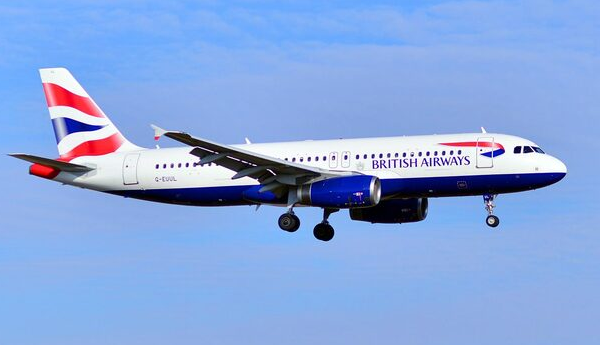
However, it only covers benefits up to a certain amount, and any major airline insolvency would have an impact on the larger DB pension system as well as the taxpayer backstop. Because of this dynamic, pension fund risk was a particular concern during the 2020 crisis, and discussions regarding individual airline bailouts were never solely focused on airlines. It also concerned whether the government could afford to allow a major carrier to fail and cause such a large-scale PPF catastrophe, both financially and politically.
Overall, the UK’s pension environment has significantly improved since 2020. As higher gilt rates strengthened scheme positions, the Pension Protection Fund set its 2025–2026 charge at zero, indicating how much DB funding levels throughout the sector have recovered. A Pension Schemes Bill that would establish DB superfunds, permit surplus extraction with suitable safeguards, and resurrect a Pensions Commission review is now being considered by Parliament.
These are not emergency protocols. These are tidy-up measurements that show a sector in generally better health. Legislative tidying has not addressed the particular contradiction that the airline pension crisis revealed, which is between an employer’s capacity to fulfill long-term obligations and the government’s unwillingness to guarantee either the employer or the scheme.
Looking at the policy record from 2020 to the present, there is a sense that the UK was fortunate in a particular way: the pension deficits decreased, the airline industry stabilized without a series of significant insolvencies, and the Pension Protection Fund was spared from having to absorb anything catastrophic. When Flybe’s boards went dark at Southampton in March 2020, that result was not assured. The same “last resort” reasoning that failed to contain the previous one now essentially underpins the foundation for what will happen next, and there will be a future time, whether it be in aviation or somewhere equally pension-heavy.
