
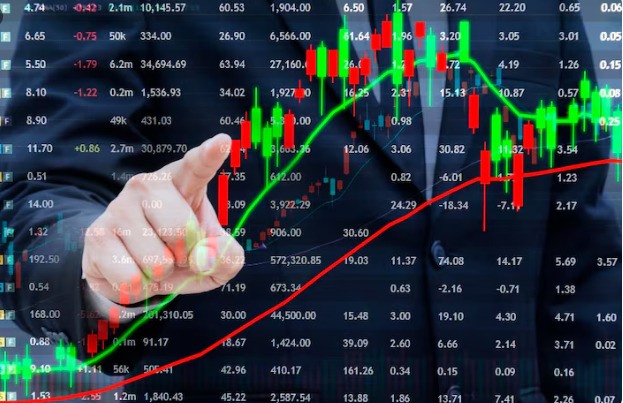

There is an exceptionally high level of energy in the morning traffic outside the Bombay Stock Exchange’s historic structure. The screens in brokerage offices glow green, delivery bikes maneuver through limited alleys, and street merchants shout louder. The attitude on Dalal Street immediately changed when the BSE Sensex rose more than 1,200 points, surpassing 75,000.
The decline in crude oil prices and an improvement in attitude around the world preceded the surge. Asian markets rose, while indications of a reduction in geopolitical tensions in West Asia seemed to reassure investors. The response seemed to happen right away. A few days ago, traders were hesitant, but now they are placing aggressive buy orders.
Important Information
| Category | Details |
|---|---|
| Index | S&P BSE Sensex |
| Current Level | ~75,297 |
| Daily Change | +1,229 points |
| Companies | 30 large-cap stocks |
| Exchange | Bombay Stock Exchange |
| Founded | 1986 (Sensex launched) |
| Market Signal | Strong bullish sentiment |
| Drivers | Lower crude prices, global optimism |
| Key Market | Indian equity benchmark |
| Reference | https://www.bseindia.com |
Analysts leaned forward to watch real-time chart updates as they entered a modest brokerage office close to Horniman Circle. Some were taken aback by the gap-up opening. Others, citing nighttime signs, anticipated it. In any case, the Sensex accelerated rather than merely rising.
The index, which monitors thirty large corporations, frequently represents general economic optimism. Gains in all categories indicated that participation was unrestricted. The increase is said to have been caused by stocks like Titan, Mahindra & Mahindra, and Trent. The rally felt more convincing because of its scope.
Global factors seem to have had a disproportionate impact. India’s economy, which depends heavily on imports, benefits from lower crude prices. Inflation worries diminish when oil prices decline. This frequently promotes the purchase of stocks. Investors appeared to take this into account when making valuations.
Gains from the previous session, when the Sensex had already surged more than 1,300 points, were maintained during the rally. The story was altered by two powerful days in a row. Analysts started talking about momentum rather than recovery. The move might have been accentuated by short-covering.
The rapid changes in mood in Indian markets are difficult to ignore. Investors were concerned about foreign institutional selling just a few weeks ago. Conversations are now dominated by positivity. The market’s sensitivity to global cues is reflected in the rate of change.
Traders discussed whether the surge would continue while standing close to a television that was showing financial news. Valuations, according to some, are still stretched. Others cited domestic liquidity as a buffer. The conversation didn’t feel exuberant, but rather balanced.
Concerns about foreign flows still exist. Foreign institutions have been lowering their exposure while domestic investors are still making purchases. There is underlying tension because of this discrepancy. Despite its strength, the rally’s longevity is still in doubt.
The makeup of the Sensex is also important. Financial and banking equities are quite important. The index moves dramatically when they increase. Momentum was increased by recent financial strength. Investors seem optimistic about the expansion of credit.
A psychological milestone is also present. Bullish feeling is reinforced when the price crosses 75,000. Attention is often drawn to round numbers. They are frequently seen by traders as evidence of the strength of the trend.
Throughout the afternoon, as people watched screens, the index continued to rise rather than decline. This stability indicates that there was still interest in purchasing. No panic selling, no abrupt turnaround. Just consistent consolidation.
International markets sent conflicting signals. U.S. markets had shown some weakness as Asian indices were rising. The Sensex’s capacity to rise in spite of this discrepancy suggests that local factors have a significant role.
Investors seem to be striking a balance between prudence and optimism. Although powerful, the rally is not careless. Traders are still keeping an eye on currency fluctuations, geopolitical events, and crude prices.
By late afternoon, Dalal Street was still in a positive mood. Conversations turned to industry opportunities as phones rang nonstop. Mid-cap stocks also benefited from the momentum produced by the increase.
The Sensex, which is currently above 75,000, shows both optimism and relief. relief from the reduction of international tensions and hope for further expansion. However, markets hardly ever move in a straight path. Whether the surge represents a long-term trend or a brief spike is yet unknown.
The green screens continue to take center stage as the closing bell draws near. The BSE Sensex maintains its advances, indicating optimism. Even while the movement is motivated by global cues, the response feels quite local: enthusiastic, optimistic, and a little wary.
