
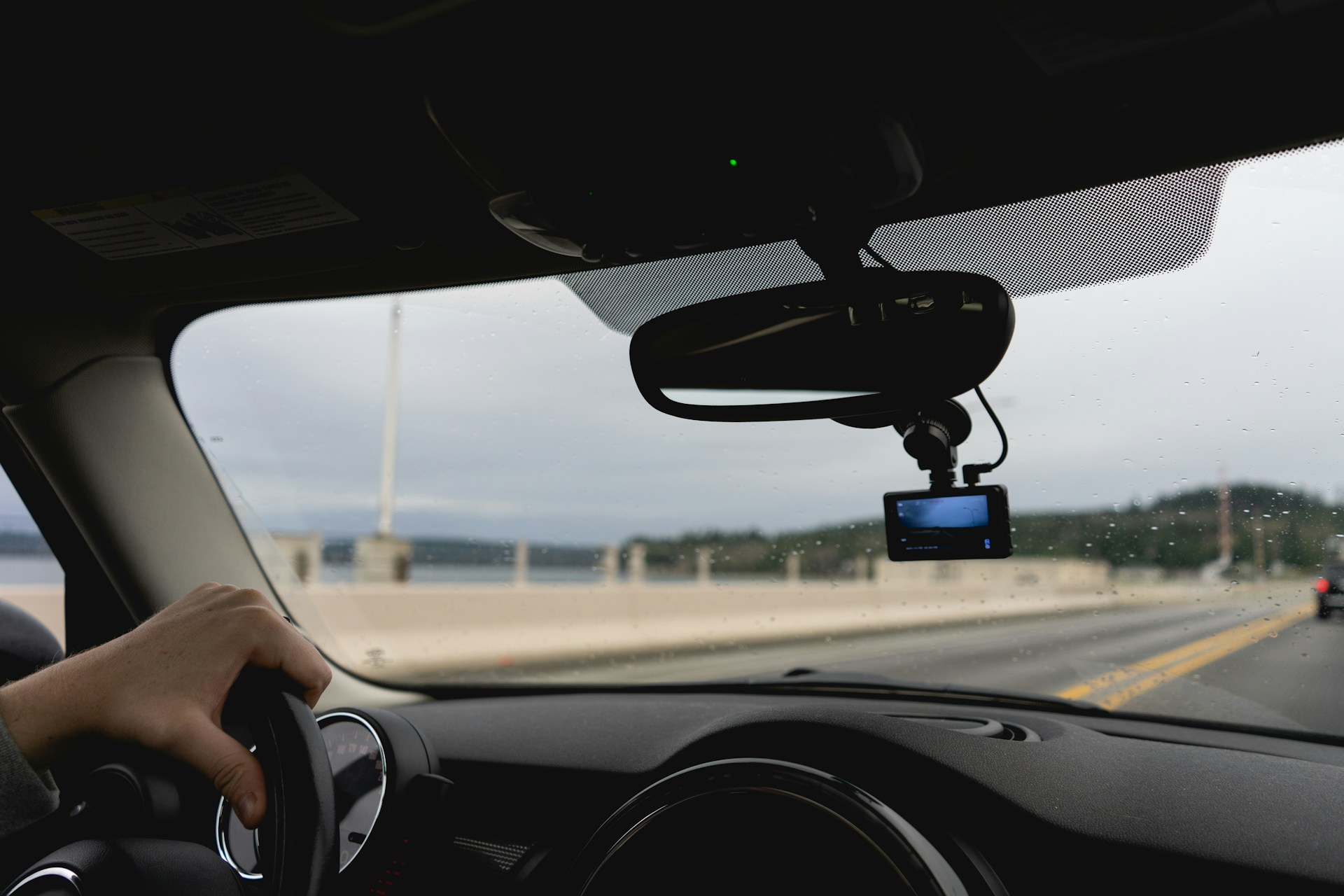

You hit the brakes. Your heart thumps. A blur of metal and noise, then that heavy silence that arrives right after impact—when you’re still trying to understand what just happened. In moments like these, people don’t argue about philosophy. They argue about facts. And that’s where video feels like a lifeline.
But here’s the uncomfortable twist: what happens when that video has been edited?
If you’re counting on footage to protect you—your license, your insurance claim, your reputation—you need to know how courts, insurers, and investigators treat edited recordings. Because while a video can feel like the final word, editing can turn it into a question mark.
This guide walks you through when edited footage can still be reliable evidence, what makes it suspicious, and how to protect yourself if you ever need to use a recording from a dash cam.
Why a dash cam feels like the “truth” (until someone says it isn’t)
A dash cam is more than a gadget. It’s emotional security. It’s that quiet reassurance that if someone lies, you’ve got something solid.
And yet, the moment the word “edited” enters the room, people’s eyebrows lift. Editing suggests choice: what stayed, what disappeared, what got trimmed to make the story look cleaner. Even basic edits—like cutting out “boring parts”—can raise doubts if the missing seconds include a critical event.
Think about how quickly certainty collapses. One person says, “The video proves it.” Another says, “Proves what? The part you decided to keep?”
That’s the core problem: edited video can still be accurate, but it becomes easier to challenge.
When edited footage can still be reliable evidence
Edited footage from a dash camera isn’t automatically useless. In many real situations, trimming a clip from a dash camera is normal, especially when sharing with an insurer or saving storage space. What matters is whether the edit changes meaning, removes context, or breaks the ability to verify authenticity.
Here are the biggest factors that keep edited video credible:
1) The original file still exists
If you can provide the original, unedited recording, you’re in a much stronger position. The edited version can be treated like a “preview,” while the original becomes the primary evidence.
2) The edit is minimal and transparent
Cropping for privacy. Blurring a face. Cutting a long clip down to the relevant minute. These may be acceptable—especially if you clearly explain what was done and why.
3) Metadata and timestamps still make sense
Investigators often look for internal consistency: file creation dates, continuous time progression, and signs the clip wasn’t stitched together. If the timeline jumps oddly or timestamps disappear, the defense (or insurance adjuster) may push back hard.
4) A clear chain of custody exists
“Chain of custody” sounds formal, but it’s simple: who had the file, when, and what happened to it. If the video lived on a memory card, then moved to a phone, then got messaged around, then re-downloaded… it starts looking messy. And messy invites doubt.
5) Corroboration supports the story
Edited video is stronger when it matches other evidence: witness statements, vehicle damage patterns, GPS logs, 911 call timing, or nearby surveillance footage.
How editing can destroy trust in a dash camera recording
Editing doesn’t just change a file. It changes the emotional temperature of a dispute. The other side may go from “Let’s settle this” to “Let’s fight this.”
Here’s what tends to sink credibility:
– Missing lead-up footage: Those 10–30 seconds before impact matter. Without them, it’s easier to claim you provoked the situation or that context is missing.
– Audio removed: Audio can capture horns, sirens, verbal threats, or the sound of braking. Cutting it can look like hiding something.
– Speed overlays or data overlays altered: Some devices embed speed/GPS data. If that overlay is missing or looks modified, questions start multiplying.
– Re-encoding and compression artifacts: When a video is exported repeatedly, it can degrade. Opposing experts might claim the degradation hides manipulation—even if it’s innocent.
And here’s where it gets painfully human: once someone suspects manipulation, they may “devour” every tiny detail looking for weakness. That word—devour—brings to mind a quick, hungry intensity. Like the time you watched a kid at a birthday party devour a slice of cake so fast the frosting smeared across their cheeks, pure determination, no pause for breath. That’s what an opposing attorney can look like with edited footage: relentless, eager, consuming every inconsistency.
A quick reality check: editing isn’t the only issue—perception is
Even if you made a harmless trim, the other side may spin it as “selective storytelling.” It’s not always fair, but it’s common.
And it mirrors something many people have felt during an election season: two people can watch the same clip, the same debate moment, the same news segment—and walk away with totally different “truths.” One side sees clarity, the other sees manipulation. That’s the vibe edited video can trigger in a dispute. The fight becomes less about what happened and more about who controls the narrative.
So the practical question becomes: how do you keep your footage persuasive, not polarizing?
What you should do if you need to use edited dash cam video as evidence
Treat this like a checklist you’ll thank yourself for later.
Preserve the original immediately
– Remove the memory card (if safe).
– Save the raw file to a computer or external drive.
– Avoid recording over the same card.
Make a “working copy” for sharing
Send insurers or others a copy, not the original. Keep the original untouched so it remains a clean reference point.
Document what you changed (if anything)
If you trimmed the clip to highlight the crash, write down:
– what was removed,
– the exact time range,
– and the reason.
Simple notes can go a long way when someone asks, “What else did you cut out?”
Don’t add dramatic elements
No music. No captions that accuse. No zooms that create confusion. Let the footage speak plainly. Overproduction can make it look like persuasion instead of documentation.
Consider exporting in a standard format
Use a widely accepted format (like MP4) and keep a record of the export settings. If possible, also keep the device’s native file format.
If the case is serious, get professional help
For major collisions or criminal allegations, an attorney may recommend a forensic video expert who can authenticate the recording and explain edits in neutral terms.
Why “amylaceous” matters more than it should
“Amylaceous” is a word that feels oddly specific—starchy, powdery, technical. It shows up in science labs, ingredient lists, and the kind of vocabulary that makes people blink twice.
Now imagine this: you’re stressed, talking to an adjuster, and someone starts tossing around technical language—metadata, hash values, encoding, compression. It can feel… amylaceous.
