

For the majority of Americans, the Insurrection Act is a distant, antiquated concept that is only sporadically brought up in news documentaries or textbooks. But now that President Trump has publicly discussed using it to address the ongoing protests in Minneapolis, it has abruptly gained attention. A plethora of constitutional, moral, and practical issues arise when this seldom used statute, which dates back to the early 19th century, is once again positioned as a contemporary executive tool.
The Act, which was first passed in 1807, was designed to assist the president in taking decisive action when regular enforcement fails, especially in situations involving extreme public disorder, rebellion, or obstruction of federal law. It gives the president incredibly wide authority, including the ability to completely circumvent state officials and approve the use of military force within the country under specific circumstances. To put things in perspective, that’s full federal troops on American streets, not just the National Guard under governor command.
| Item | Details |
|---|---|
| Law Name | The Insurrection Act |
| Year Enacted | 1807 |
| Legal Code | 10 U.S.C. §§ 251–255 |
| Presidential Power | Authorizes deployment of military forces inside the U.S. to enforce laws or restore public order |
| Historical Use | Invoked about 30 times by presidents, most recently in 1992 during the L.A. riots |
| Current Focus | Trump floated invoking the Act amid anti-ICE protests in Minneapolis (January 2026) |
| Legal Flexibility | Allows unilateral presidential action under specific conditions |
| Debate | Raises concerns over civil liberties, executive overreach, and militarization of domestic unrest |
| Relevant Context | ICE protests escalated following the fatal shooting of Renee Good by a federal agent |
The law has not been used very often in the past. When local governments failed, presidents have used it to impose desegregation, put an end to riots, and bring order back. In 1957, President Eisenhower dispatched troops to Little Rock. Following the Rodney King verdict, George H.W. Bush used them once more during the 1992 L.A. riots. It is a statute intended for exceptional circumstances rather than regular application. However, its shadow has expanded in recent years.
Trump toyed with using the Act during demonstrations after George Floyd was killed by police in 2020. The topic has now come up again in the midst of ICE operations‘ tensions and public outrage over Renee Nicole Good’s shooting. It feels more intimate, more deliberate, and more personal this time.
It is a little exaggerated for Trump to claim that more than 40% of presidents have used it. Actually, according to legal analysts, roughly one-third have. Nevertheless, his portrayal of the Act as “very common” seems to pave the way for public acceptance, normalizing what has historically been viewed as an extreme measure.
A president can circumvent both local government and the legal system by using troops. It’s a means to “make life a lot easier,” according to Trump. Even though it was casual, that phrase stuck with me because it was remarkably honest, not because it was shocking.
At the moment, sweeping immigration enforcement is being carried out by federal agents in Minneapolis. Over 3,000 arrests have been made since November, according to DHS, with 2,500 officers already on the ground and another 1,500 possibly on their way.
Waves of protesters have taken to the streets; some have done so peacefully, while others have confronted agents head-on. Since Renee Good’s death, tensions have increased in waves, heightened by videos that have gone viral online. Although the situation is unstable, it hasn’t yet escalated to the point where many people think military action would be warranted.
However, soldiers have already been ordered to standby by the Pentagon. Officials in the area are afraid of provocation. Scholars of law are concerned. Activists are also concerned that what is being presented as hypothetical could soon become law.
Senator Tina Smith of Minnesota didn’t hold back in a recent interview. Trump’s threat to use the Act, she said, was “amount to declaring war” on her state. Whether that wording was literal or symbolic, it encapsulated a genuine concern: that the federal government could use its power to impose political will in addition to maintaining peace.
The Insurrection Act’s legal foundation is especially adaptable. It may be used upon request from state authorities or if the president independently concludes that public order is failing. For a long time, this ambiguity has been both its asset and its threat. It offers choices in times of uncertainty. However, unrestricted options turn into temptations.
Unquestionably, federal law must be upheld and cities must continue to be safe. Equally important, though, are how we maintain that safety and who can be relied upon to bring that order back. The use of the military as a tool for law enforcement represents a significant change in the way that civil unrest is handled. It alters how citizens and the government interact, particularly when nonviolent protest and violent disruption are confused.
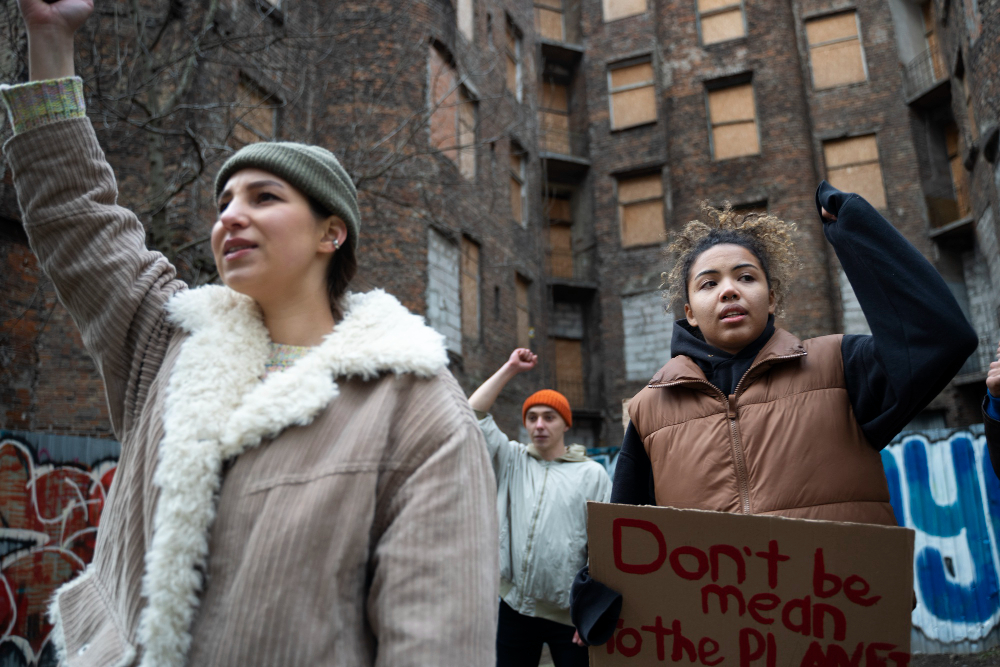
Protesters with signs that said “Deport hate, not people” and “ICE out now” gathered outside federal buildings in Minneapolis in recent days. Although irate and boisterous, the crowd was under control. Families and activists stood side by side. Local authorities participated as well. It was not chaos, but urgency.
Local law enforcement and federal agencies could reduce tensions without resorting to martial tactics by strategically coordinating. However, the possibility of using the Act now hangs over us like a silent command. Its existence reframes the discussion. Negotiation becomes preparation as a result. De-escalation turns into a contest for the president’s signature.
The casualness with which it is being discussed is especially troubling. No longer is the Act considered a last resort. It is presented as a management tool, a practical choice in a disorganized setting. A more profound shift in executive culture is indicated by that tone shift from exceptional to expected.
The temptation to turn to military solutions may increase in the upcoming years as America continues to face demographic changes, political divisions, and civil resistance movements. Examining how and when the Insurrection Act is taken into consideration is therefore especially crucial. Its effects are long-lasting and its power is genuine.
The Act remains unchanged from a legal standpoint. However, its limits are being tested in political usage. The precedent it establishes—rewriting the standards of federal restraint in times when unity is in jeopardy—may prove especially resilient if it is invoked infrequently or casually.
It’s simple to forget that this law was created for a very different time period more than 200 years ago. However, its influence feels very contemporary today. The question is not only whether the Insurrection Act will be used, but also how ready we are for what will happen if it is, as communities, legal institutions, and political leaders consider their next course of action.
