
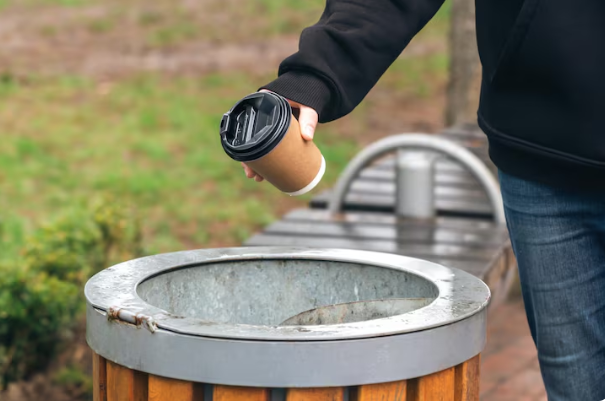

The tiny ritual of the K-Cup is familiar to anyone who has spent the last ten years standing at a workplace coffee fountain. The cup appears. They press the button. The tiny plastic shell hisses, fills the mug, and is thrown—typically into a receptacle with a recycling icon on it. That toss was done in silence for years. The pod was recyclable, according to the packaging. The claim served as the foundation for the brand’s marketing strategy.
The majority of customers trusted the message because they were too busy to question every aspect of their morning. In essence, the system is finally catching up with how infrequently that recycling assumption was really met, as seen by the recent Canadian class action settlement, a separate 2026 American suit, and a number of prior U.S. legal cases.
| Keurig K-Cup Settlement — Snapshot | Details |
|---|---|
| Settlement Type | Canadian class action |
| Claim Deadline | July 8, 2026 |
| Eligible Products | Keurig K-Cup pods and Keurig coffee machines |
| Eligible Purchase Window | June 8, 2016 to approximately October 2025 |
| Pod Compensation (With Proof) | Up to CAD $0.50 per 10 pods, capped at CAD $50 |
| Pod Compensation (Without Proof) | CAD $7 |
| Brewer Compensation (With Proof) | Up to CAD $25 |
| Claim Portal | kcupsrecyclingsettlement.ca |
| Defendant | Keurig Dr Pepper Inc. |
| Plastic Type Used | Polypropylene (#5) |
| Previous U.S. Settlement | $10 million (2023) |
| SEC Civil Penalty (2024) | $1.5 million |
| 2026 U.S. Filing | Sulli v. Keurig Dr Pepper Inc. |
Anyone who bought Keurig K-Cup pods or Keurig brewers in Canada between June 8, 2016, and approximately October 2025 is eligible to seek for compensation under the Canadian settlement, with a claim deadline of July 8. The monetary quantities are small yet genuine. You can get up to CAD $25 for a brewer and up to CAD $0.50 every ten pods, up to a maximum of CAD $50, with proof of purchase.
Since very few people preserve receipts for coffee pods purchased in 2017 or 2019, it is especially interesting that you can still claim CAD $7 for pods without proof. The ubiquitous use of these pods is evident to anyone who has spent time in a Canadian office kitchen. Even though the average compensation is minimal, a huge number of households are eligible to submit.
The case’s legal mechanics are based on something that appears complex but is actually illuminating. The pods are composed of polypropylene, a material that is technically recyclable and frequently has the #5 recycling symbol on it. The issue is that recycling isn’t technically feasible in real life. It depends on what is genuinely accepted by municipal facilities, what can be sorted by their equipment, and what can be processed profitably.
The majority of recycling facilities in the US and Canada are simply unable or unwilling to handle such small pieces, especially when they include a foil top that makes sorting more difficult and organic residue from coffee grounds. In other words, regardless of which bin the customer used, the pods were destined for landfills even if they were marketed as recyclable. This gap was used in the complaint as a false allegation. Keurig has agreed to change its packaging to reflect the fact that the pods are not widely recyclable in many places, but it has not acknowledged any wrongdoing.
It’s also important to comprehend the prior American context. In a 2023 U.S. class action involving identical allegations of deceptive recyclability labeling, Keurig settled for $10 million. The SEC then fined the business $1.5 million in 2024 for misleading investors regarding the pods’ recyclable nature. Because it addressed the corporate disclosure aspect of the matter and implied that the discrepancy between marketing and operational reality had reached the level of information useful to investors, the second penalty is especially noteworthy.
Additionally, a new class action lawsuit in the United States, Sulli v. Keurig Dr. Pepper Inc., was launched at the beginning of 2026, alleging that the business had continued to deceive customers despite the previous court cases. A single label on a single product may not be the issue, according to the pattern seen across various jurisdictions. The way the coffee pod industry has responded to environmental problems is a larger fundamental problem.
The broader cultural context is important. Over the past 20 years, one of the most popular product categories in North American home and office beverages has been single-serve coffee, especially thanks to Keurig’s K-Cup system. Additionally, it generated an astounding quantity of plastic waste—billions of pods are disposed of annually.

The public’s growing concern over that waste put pressure on Keurig and other firms of a similar nature to show sustainability. In hindsight, the recyclable claim appears to be the kind of practical concession that businesses under environmental pressure frequently make. It pointed to a technical defense while enabling the brand to continue selling at volume. In essence, the legal proceedings have questioned the practicality of the defense.
It’s difficult not to consider how frequently consumer products have been marketed with such claims that ultimately depend on nonexistent infrastructure. containers for compostable food that are too large for municipal composting facilities. package for recyclable cosmetics that sorting facilities reject. The majority of cities don’t use bioplastics that need industrial procedures.
The K-Cup case is a part of a broader discussion about how sustainability marketing has surpassed the infrastructure required to make the marketing truthful in many product categories. Anyone who has attempted to properly sort their household recycling in Toronto, Vancouver, or Montreal is aware of how perplexing the labels and symbols can be and how much of the responsibility has been transferred from producers to consumers.
The practical action is modest but worthwhile for Canadians who qualify for reimbursement. The deadline is in early July, and the claim form may be found at kcupsrecyclingsettlement.ca. Although the sums won’t improve anyone’s financial circumstances, they mark a unique instance of corporate responsibility that regular consumers may truly access. Nobody can say with certainty if this surge of lawsuits will significantly reshape the larger system of environmental marketing claims. The next time a coffee pod manufacturer prints a recycling symbol on a package, it’s already obvious that the lawyers in Toronto and California will likely examine it more closely than in the past.
