
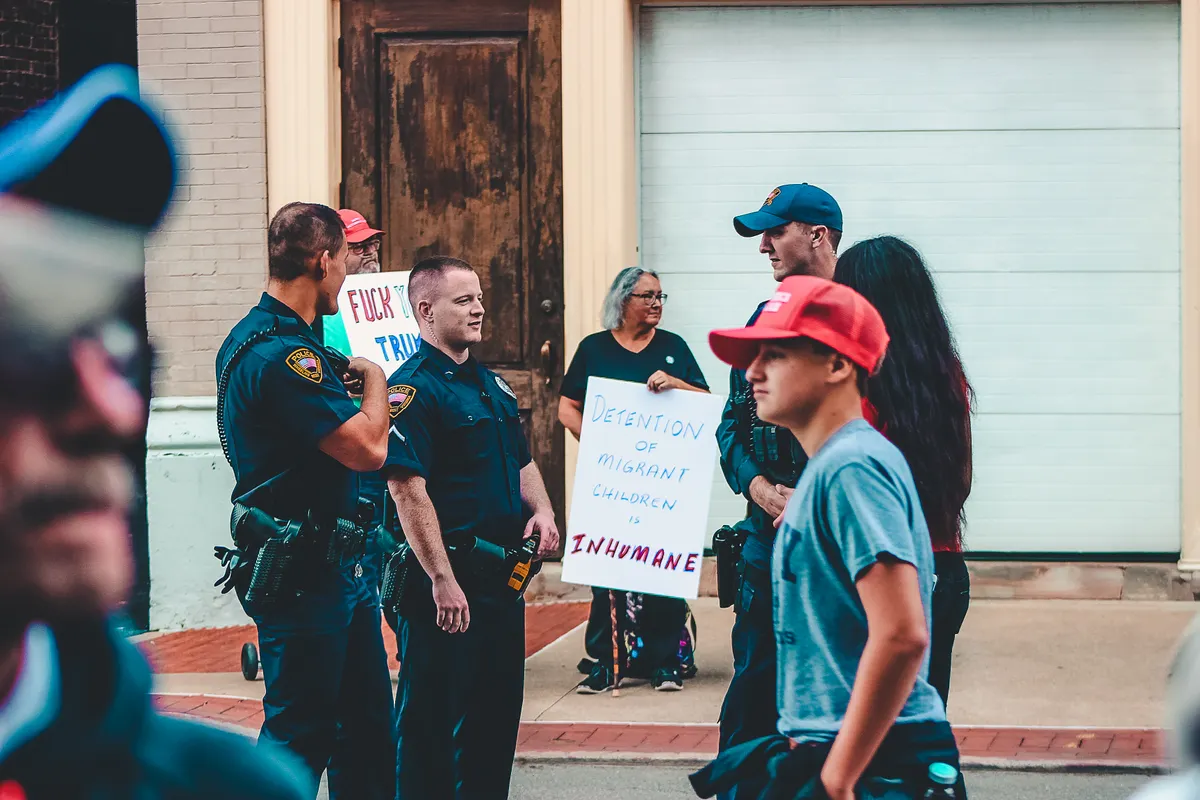

A new 5th Circuit bond hearing ruling issued on 2 July 2026 holds that immigrants held under the Trump administration’s indefinite detention policy must receive a bond hearing within 90 days of being taken into custody, delivering a setback to a policy that has generated litigation in more than 15,000 federal cases.
The two-to-one decision, authored by U.S. Circuit Judge Leslie Southwick and joined by Judge James Graves Jr., does not formally overrule a February ruling in which a different 5th Circuit panel upheld the government’s position. Instead, it draws a line between what Congress may authorise by statute and what the Constitution independently guarantees.
The U.S. Department of Homeland Security said it ‘disagrees with the ruling and is confident in its legal position regarding mandatory detention,’ adding that the administration had asked the Supreme Court the previous week to review a comparable decision from another appeals court.
What the 5th Circuit Bond Hearing Ruling Requires
The policy under challenge originates from an ICE memorandum dated 8 July 2025, signed by acting ICE Director Todd M. Lyons. The memo stated that the federal government had ‘revisited its legal position on detention and release authorities’ and concluded that undocumented immigrants who entered without inspection ‘may not be released from ICE custody.’ That represented a break from how every presidential administration since 1996 had applied the relevant statute, which had previously functioned solely as a border-enforcement tool.
The government’s legal theory rests on 8 U.S.C. §1225(b), which governs ‘aliens seeking entry into the United States.’ The memo extended that provision to cover individuals already living inside the country who entered without authorisation, treating them as perpetual applicants for admission regardless of how long they had resided in the United States. ICE officials argued the agency would soon have the capacity to detain such individuals indefinitely, citing a substantial funding increase from the recent reconciliation legislation, according to the National Immigration Forum’s legislative bulletin.
Judge Southwick’s opinion rejected that framing. ‘[S]tatutory admission status does not decide when aliens gain due process rights,’ the court held. ‘The Constitution, after all, is supreme, with statutes’ needing to conform to its dictates, not the Constitution to statutes.’ The panel concluded that the three petitioners, each of whom had lived on United States soil for over a decade and had children born in the country, were ‘entitled to the protections of the Due Process Clause’ regardless of the statutory label the government applied to them.
The ruling affirmed the grant of habeas corpus relief to all three individual petitioners at the district court level and extended its reasoning to the ‘thousands’ of similarly situated detainees within the 5th Circuit’s jurisdiction, which covers Texas and Louisiana.
A Deepening Circuit Split Ahead of Likely Supreme Court Review
The decision sharpens an existing circuit split rather than resolving it. On 25 March 2026, the 8th Circuit ruled in Herrera Avila v. Bondi that §1225(b)(2)(A) applies to immigrants already living inside the United States who entered without inspection years or decades earlier, endorsing the government’s mandatory-detention position, as analysed by MyAttorneyUSA. The 2nd Circuit reached the opposite conclusion, holding in its own published opinion that §1225(b)(2)(A) does not apply to noncitizens present in the United States after entering without inspection and that §1226(a) governs their detention instead, as set out in the 2nd Circuit’s opinion in Case No. 25-3141. The 6th, 10th, and 11th Circuits have also ruled against the administration; the 7th Circuit has yet to issue a majority opinion.
Within the 5th Circuit itself, the position is now internally divided. The February panel held the government was correct; the July panel has qualified that by drawing a constitutional floor beneath whatever statutory authority Congress may have conferred. The court was careful to leave deportation proceedings untouched: the ruling addresses the right to a hearing on detention, not a right to remain in the country.
At the district court level, the scale of the litigation is striking by any measure. Of the more than 15,000 habeas petitions filed since the administration’s detention surge, more than 13,000 have resulted in rulings against the government’s claimed detention authority, according to a rolling analysis by Politico.
The Supreme Court’s willingness to take up a related case, confirmed by the government’s own petition filed the previous week, means the constitutional question the 5th Circuit has now addressed may reach the court’s docket as soon as its next term. The outcome there will determine whether the 90-day bond-hearing floor the 5th Circuit bond hearing ruling has established survives, or whether the government’s broader mandatory-detention theory is ultimately vindicated.
