
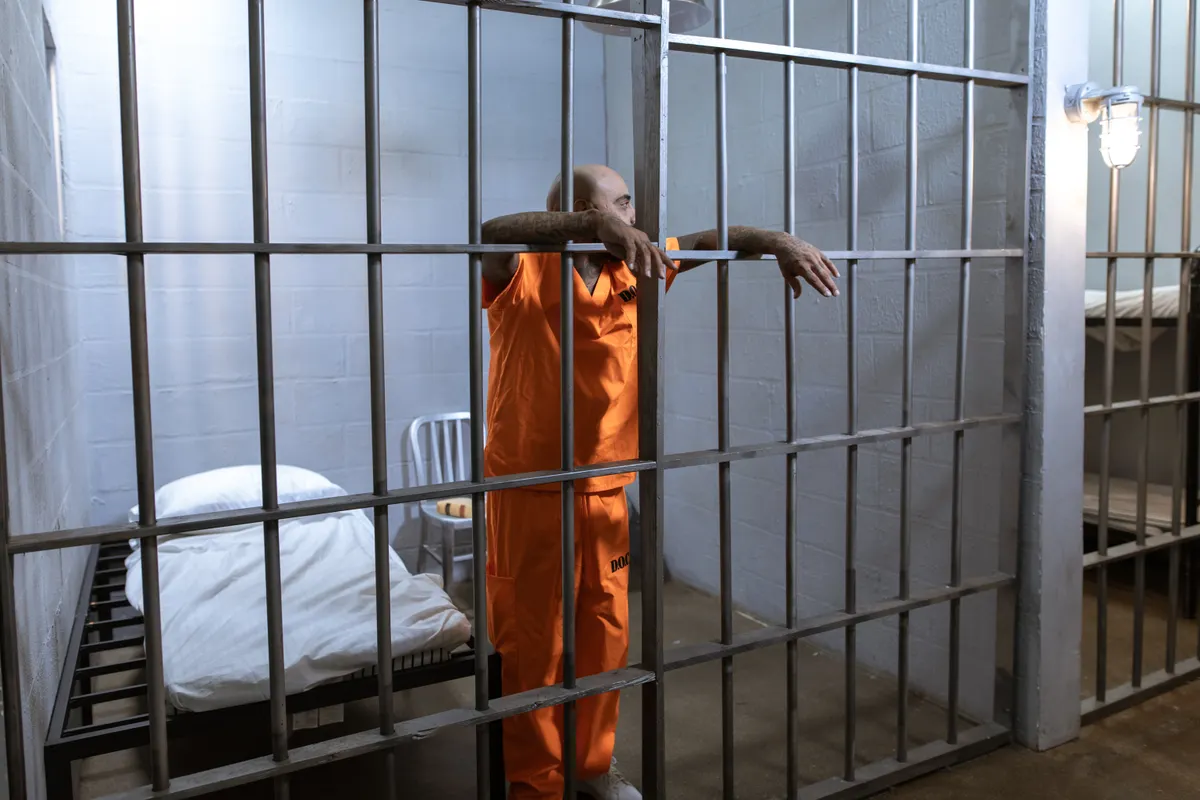

American prison reform has followed the same dispiriting arc for two and a half centuries: a humanitarian impulse, an institutional failure, and a return to brutality. That is the central argument of Reason’s cover story, ‘The American Prison Experiment’, published on 8 September 2026, in which journalist C.J. Ciaramella traces 250 years of well-intentioned penal policy and its recurring collapse.
The cover story anchors Reason’s special October 2026 issue. Ciaramella, a reporter at the magazine who previously served as a politics editor at BuzzFeed and a reporter at the Washington Free Beacon, discussed the piece in a wide-ranging conversation with editor Nick Gillespie on the Reason podcast.
Why American Prison Reform Keeps Failing
The penitentiary system began, in the late eighteenth century, as a deliberate humanitarian alternative to flogging and public punishment. It did not stay that way. According to the cover story, administrative whippings and outright torture (including electrocuting inmates with jerry-rigged crank telephones) persisted in American prisons until the end of the 1960s. Punishments only moved off the books once judges and state oversight boards began scrutinising conditions.
The pattern Ciaramella identifies is not one of ignorance but of institutional recidivism: reformers diagnose the problem correctly, build a new system, and the new system replicates the abuses of its predecessor. Convict leasing gave way to forced state labour. Overcrowding replaced the isolation cell. Mass incarceration succeeded the reformatory movement. The Brennan Center for Justice estimates that nearly two million people are currently incarcerated in the United States, with 450,000 returning home each year.
Angola: A Case Study in Institutional Failure
Louisiana’s Angola prison offers the starkest illustration. The state purchased the Angola camp from the James family in 1900 and resumed direct control of its prisoners in 1901, following fifty-six years of convict leasing, according to the Angola Museum’s institutional history. The state legislature abolished the Board of Control overseeing the facility in 1916 because of mismanagement and economic pressures.
More than a century later, the conditions on Angola’s farm lines remain the subject of federal litigation. In 2024, a federal judge ruled that Angola inmates with ‘serious illnesses or pre-existing conditions were laboring in the field under no work restrictions’ and that prison officials had displayed ‘deliberate indifference’ to the risks of sending men with serious health conditions to work in sweltering heat without adequate shade, breaks, or water. The ruling followed a class-action lawsuit brought by incarcerated men, reported in full by PBS NewsHour.
That forced agricultural labour operates within a legal framework that dates to the founding. A loophole in the Thirteenth Amendment to the US Constitution abolished slavery except as punishment for crime, making prison labour lawful. An Associated Press investigation found that prison farms have in recent years supplied millions of dollars’ worth of crops (including soy, corn, and wheat) to global companies such as Tyson Foods, Louis Dreyfus, and Riceland Foods, with goods entering the supply chains of brands including Kellogg’s Frosted Flakes and Pepsi.
Angola has also become a focal point for immigration enforcement. A $45 billion allocation from a reconciliation package passed by Congress in July 2025 has, in part, funded the expansion of immigration detention capacity across the country, including the use of Angola’s Camp J by Immigration and Customs Enforcement, according to the Vera Institute of Justice.
Reform Alliances and Alternatives
The podcast conversation also covers the collapse of the bipartisan criminal justice reform movement that coalesced in the mid-2010s around the First Step Act, and examines whether the political conditions for a revival exist. Alabama illustrates the difficulty: the Justice Department sued the state in 2020 over its failure to protect incarcerated people from violence and sexual assault. Shocking levels of corruption and death persisted after that action, and by 2024 multiple families of deceased inmates had filed lawsuits alleging that the University of Alabama at Birmingham had retained their loved ones’ remains without consent.
Ciaramella and Gillespie also discuss whether Scandinavian prison models, which have been piloted in modified form at a small number of American facilities, offer a workable alternative. The Scandinavian approach emphasises rehabilitation, purposeful activity, and normalised living conditions; American experiments borrowing from that model remain rare and politically contested.
The Reason Foundation’s author page for Ciaramella notes his prior work on criminal justice, surveillance, and civil liberties. His cover story is available in full on the Reason website. Whether the current political climate, shaped in part by a federal immigration enforcement build-up and the fracturing of the reform coalition, leaves any space for the next cycle of reform is the question his piece declines to answer optimistically.
