
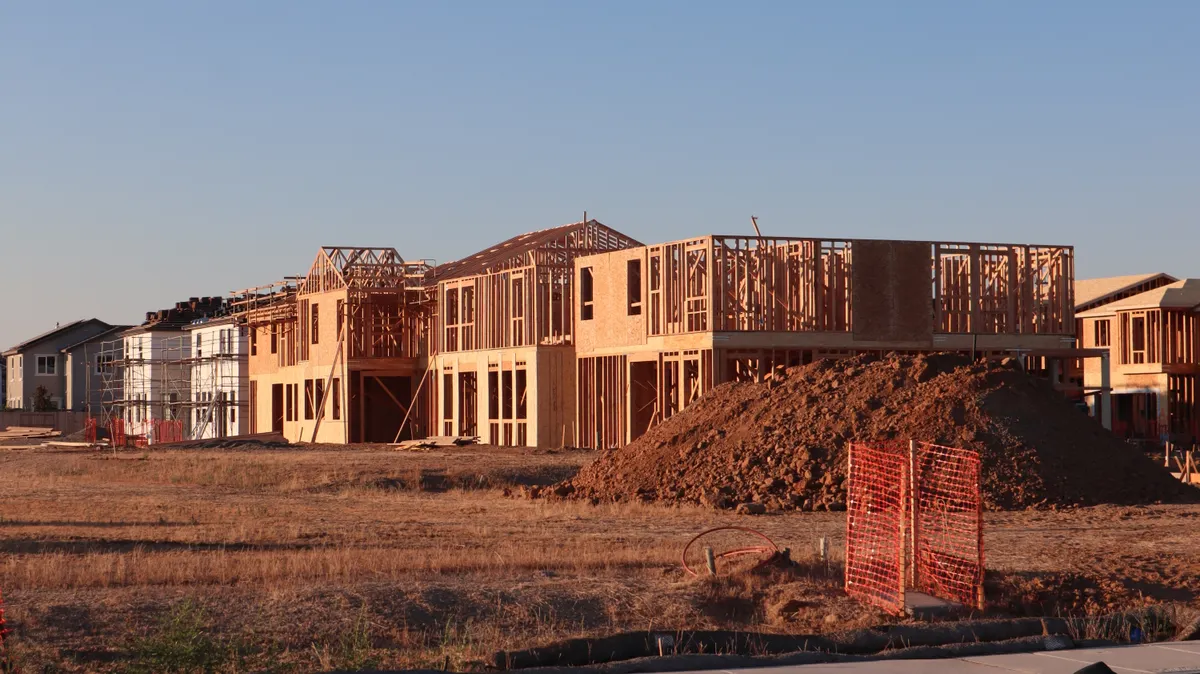

A Clean Water Act permit denial has brought a 265-home subdivision in Box Elder County, Utah, to a complete standstill, after the United States Army Corps of Engineers determined that a small irrigation ditch on the property was hydrologically connected to the Great Salt Lake, some 8.9 miles away. The developers, Lew Swain and Brent Bailey, are now suing the Corps in federal court, represented at no cost by the Pacific Legal Foundation (PLF), arguing that the agency has defied the Supreme Court’s ruling in Sackett v. EPA and exceeded its statutory authority.
The case, formally styled Willard Land, LLC v. U.S. Army Corps of Engineers, centres on the proposed Old Farm Subdivision, a planned 142-acre development on land just outside Willard, Utah, roughly an hour north of Salt Lake City. Swain and Bailey assembled the parcel over approximately two decades, and obtained approval from the city of Willard to proceed, subject to upgrading local water and sewage infrastructure. They paid $650,000 to drill a well and install a water line and storage tank, and a further half a million dollars in engineering, water development, and permitting studies before the Corps intervened.
The Clean Water Act Permit Denial and the Ditch That Did It
The Clean Water Act (CWA), in force since 1972, gives federal agencies authority to regulate discharges of pollutants into ‘navigable waters.’ Aware that even minor disturbance of a regulated water feature could trigger fines or criminal liability, Swain and Bailey contacted the Corps before breaking ground. The agency’s response was to map a connection between a small irrigation ditch on the northwest corner of the property and the Great Salt Lake.
According to the lawsuit, any single molecule of water originating in the ditch would need to travel 46,909 feet, roughly 8.9 miles, through a second unnamed ditch, north and then west under Interstate 15, and through an underground siphon that ‘artificially pipes water upgradient,’ before reaching Willard Bay. The Corps also ruled that because the ditch occasionally overflowed onto 2.74 acres of wetlands on the property, those wetlands were ‘indistinguishable’ from navigable water and therefore regulable. In April, three years after the developers first approached the agency, the Corps withdrew their CWA permit. The project stopped.
The decision sits uncomfortably alongside the Supreme Court’s 2023 ruling in Sackett v. EPA, which held that ‘navigable waters’ under the CWA encompasses only ‘those relatively permanent, standing or continuously flowing bodies of water’ and that wetlands are only regulable if they are indistinguishable from, and have a continuous surface connection with, those waters. In Sackett, the EPA had threatened the landowners with fines of more than $40,000 per day for alleged violations on a plot near a ditch feeding into a creek that eventually reached a navigable lake, before the Court unanimously rejected the agency’s jurisdictional claim.
Sackett v. EPA and Agency Resistance Since 2023
Charles Yates, a PLF lawyer who was part of the Sackett litigation team, told Reason that the developers had ‘unfortunately…found themselves sort of caught up in a broader national issue, that being the United States Army Corps of Engineers’ steadfast resistance to the Supreme Court’s decision in Sackett v. EPA and more broadly, its steadfast resistance to any limitation upon its Clean Water Act authority.’
Yates characterised the Corps’ mapping exercise as precisely what Sackett was designed to prevent: regulators contriving a ‘massive connection’ to assert jurisdiction over private land. ‘The entire point of Sackett was to make things simpler for landowners,’ he said. The PLF is simultaneously challenging similar Corps overreach in Ward v. U.S. Army Corps of Engineers, where the agency asserted jurisdiction over a private pond on the basis that a tributary could collect sufficient water to qualify for federal regulation, an approach the Supreme Court had already unanimously rejected.
The Trump administration has moved to curtail agency authority through rulemaking, but Yates expressed doubt that federal rules would change conduct at the regional level ‘where we’re seeing this obvious attempt to circumvent the Sackett decision.’
The litigation arrives at a difficult moment for Utah’s housing market. A Legislature-funded study by Envision Utah and the Governor’s Office of Economic Opportunity, the Utah Resource and Infrastructure Housing Capacity Analysis, projects that the state needs to build 842,515 new homes between 2026 and 2055 to meet expected demand, comprising roughly 427,000 single-family detached units, 287,000 single-family attached units, and 128,000 multifamily units. Approximately 75% of that demand sits on the Wasatch Front. Without action, the state is projected to meet only around 72% of demand by 2055, leaving a shortage of approximately 235,000 homes, according to KSL’s coverage of the study.
Against that backdrop, 265 homes in Box Elder County remain unbuilt while the federal courts decide whether a ditch that drains into another ditch, passes under a motorway, and travels nearly nine miles through an artificial siphon qualifies as a ‘navigable water’ under a statute whose scope the Supreme Court has already narrowed twice. The next move belongs to the district court.
