
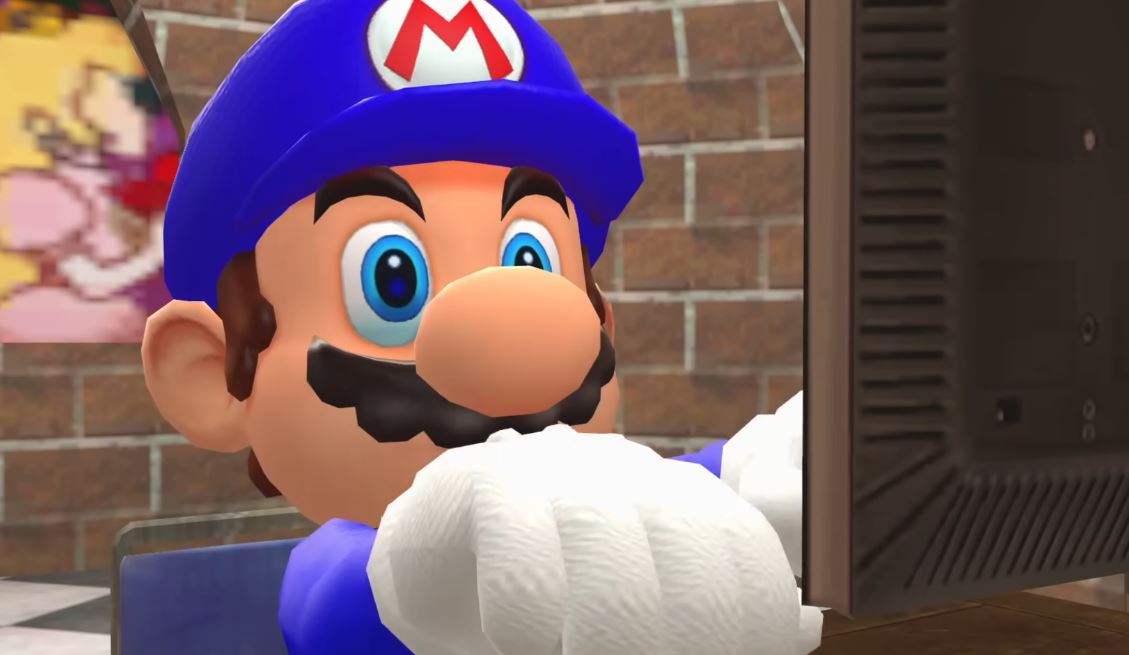

A startling number of viewers actually panicked when the SMG4 Lawsuit Arc debuted in late 2022. The forums came to life. The number of Reddit threads increased. In all sincerity, people were inquiring as to whether Nintendo had really filed a lawsuit against the Australian YouTube channel that had centered its entire brand around a disorganized, glitchy version of Mario. Even though the lawsuit itself wasn’t real, the worry was.
To be clear, Nintendo never filed a lawsuit against SMG4. The Lawsuit Arc, which ran from late September to October 15, 2022, was a complex, self-aware narrative arc that the channel created around the anxiety that its viewers had been carrying for years. Judge Kirby presided over the fictional trial, which took place in the Supreme Court of the Mushroom Kingdom and featured Nintendo as the plaintiff accusing SMG4 of copyright infringement. Meggy Spletzer played an unlikely defense attorney, and Lawyer Kong represented the massive gaming company. It was parody on top of parody.
At the conclusion of the arc, SMG4 prevailed due to fair use and creative transformation. After a rap battle, Judge Kirby decided in his favor, and that statement is true. Shigeru Miyamoto disclosed that the trial had been his method of verifying SMG4’s legitimacy. He is depicted here as a figure silently watching the entire situation. The solution was straightforward: SMG4 could remain, but it couldn’t have Mario’s appearance. His character model changed to an original GMOD design, and it has remained that way ever since.
Beyond the fiction, the situation is intriguing because of how well-founded the underlying legal issue is. For more than ten years, SMG4, which is operated by Australian Glitch Productions and Luke Lerdwichagul, has been operating in a legally dubious area. Most observers concur that it has survived because of a few interrelated factors. Compared to many American creators, Australian parody law provides more protections. In the past, Australian Nintendo has been far less aggressive than its American counterpart. Furthermore, even though SMG4’s content is based on Nintendo characters, it constantly modifies and mocks them instead of competing with or taking the place of any Nintendo product.
The distinction is made clearer by drawing a comparison to SuperMarioLogan, the American puppet channel that did face legal pressure from Nintendo. Discussions within the SMG4 community indicate that Nintendo’s concerns about SML extended beyond the unapproved use of its characters. It had to do with content that viewers found offensive and that negatively impacted Nintendo’s reputation. Despite its excesses, SMG4’s humor has generally stayed within a range that doesn’t specifically jeopardize Nintendo’s reputation.
There is a version of this tale that, in an odd way, feels almost elegant. Anxiety about possible copyright issues was transformed into one of the channel’s most memorable storylines after years of living with it. The fictional trial posed actual questions, such as what constitutes parody, who owns a character, and what transforms something. It responded to them in the most chaotic way imaginable—a gavel strike and a rap battle.
It was probably inevitable that the audience would be confused. When the story revolves around the channel’s own survival, the distinction between reality and storytelling becomes hazy. For those who are still curious, however, the solution is simple. Nintendo did not file a lawsuit against SMG4. It put on a show about the potential fear. Then it prevailed.
