
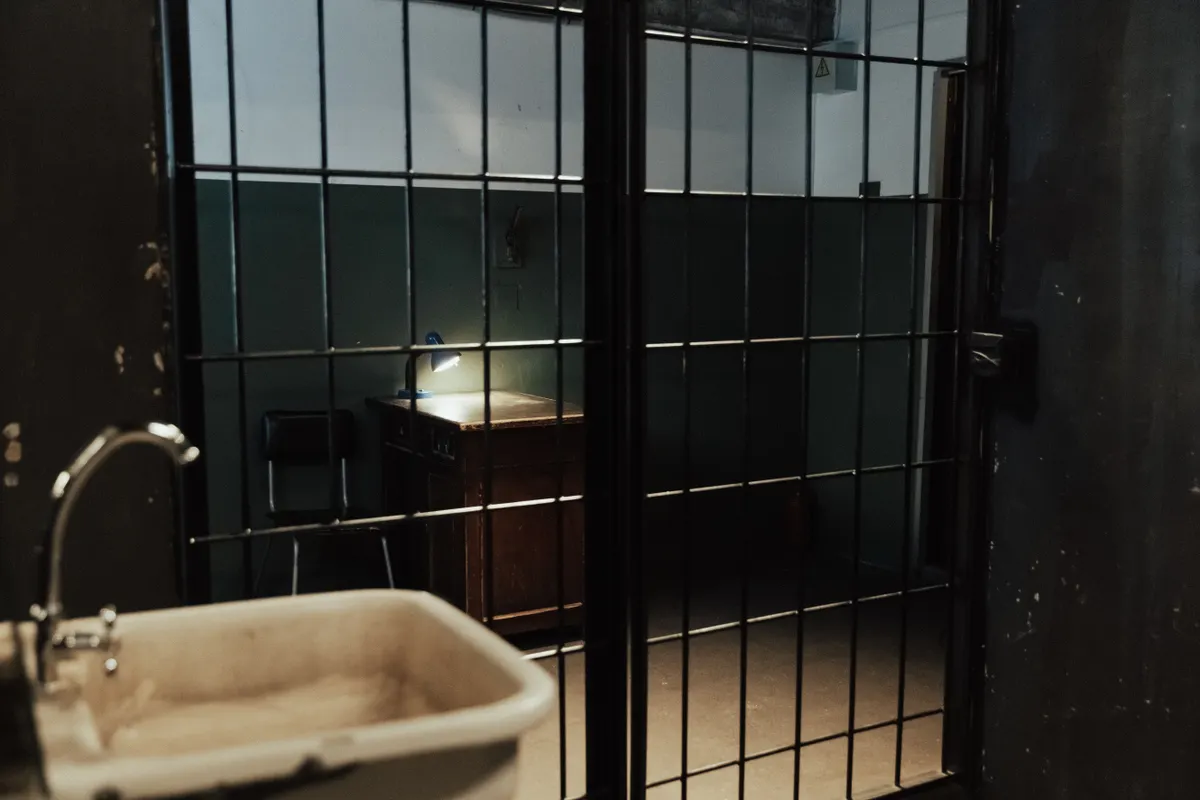

The United States Department of Justice has concluded there is reasonable cause to believe that California women’s prisons at Chowchilla and Chino have subjected incarcerated women to a pattern or practice of unconstitutional sexual abuse by staff stretching back to at least 2000, and continuing to the present day.
The findings report, formally titled Investigation of Central California Women’s Facility and California Institution for Women and issued on 13 August by the DOJ Civil Rights Division together with the US Attorney’s Offices for the Eastern and Central Districts of California, invokes the ‘reasonable cause’ standard under the Civil Rights of Institutionalized Persons Act (CRIPA), 42 U.S.C. § 1997 et seq. The report concludes there was an ‘unbroken pattern of often violent, sexual misconduct by staff against prisoners from 2000 through 2024, continuing to the present.’
The DOJ Civil Rights Division Special Litigation Section formally opened the CRIPA investigation on 4 September 2024, following lawsuits by hundreds of incarcerated women and the arrest of former correctional officer Gregory Rodriguez. The Department issued a subpoena in December 2024 as part of that process.
Rodriguez Conviction and the Scale of Abuse
Rodriguez’s case illustrates the span of the institutional failure. CDCR’s own records show he joined the department as a cadet on 22 July 1995, transferred to the Central California Women’s Facility (CCWF) as a correctional officer on 20 September 2010, and retired effective 25 August 2022, only after CDCR referred his case to the Madera County District Attorney’s Office.
The DOJ report identified more than 65 alleged victims. According to court records cited by an aggregator, Rodriguez was convicted in January 2025 on 64 counts of sexual abuse, comprising 59 felony charges (including rape, rape under colour of authority, oral copulation, sexual penetration, and sodomy) and five misdemeanour counts of sexual battery, covering abuse spanning an 11-year period at CCWF.
Between 2023 and 2025, women at the two prisons made more than 375 allegations of staff sexual misconduct. The DOJ found that CDCR delays investigations, fails to adequately investigate those allegations, and fails to protect reporting women from retaliation, in a pattern traceable to at least 2000. The sustained failure, the report concludes, violates the Eighth and Fourteenth Amendments, as well as the Prison Rape Elimination Act (PREA).
‘Female prisoners have the constitutional right to be free from sexual assault and harassment by prison staff,’ said Assistant Attorney General Harmeet K. Dhillon. ‘The Department of Justice’s investigation revealed that California’s Department of Corrections and Rehabilitation knew of repeated incidents of sexual assault and harassment against female prisoners, and failed to protect them.’
A Pattern Rooted in California Women’s Prisons: Retaliation and Structural Failure
The most visceral evidence of retaliation came in August 2024 at CCWF. What the DOJ report describes as a punishment for filing sexual misconduct reports against officers actually comprised two separate use-of-force incidents, first reported by the San Francisco Chronicle after internal surveillance footage was leaked. Guards herded incarcerated women into a cafeteria, then pepper-sprayed them; some were later pepper-sprayed outside with their hands restrained behind their backs.
CDCR paid $1,915,000 this April to settle a lawsuit brought by 13 of the women present, with individual plaintiffs receiving between $50,000 and $200,000 apiece, according to the San Francisco Chronicle. KQED reported that CDCR admitted no wrongdoing and agreed to no policy changes. Plaintiff Wisdom Muhammad described the experience: ‘I couldn’t breathe. My lungs were on fire, I thought I was going to die.’ A second federal lawsuit representing nearly 160 incarcerated women is scheduled for mediation this August.
Structural failures persist beyond the settlement. Attorney Tess Borden of the Prison Law Office, a civil rights firm that has sued CDCR, observed on a recent visit to CCWF that many officers had their body cameras switched off and that the hearing room where many of Rodriguez’s alleged rapes occurred still had no camera, according to Just Detention International. Her firm also found evidence that institutions routinely failed to refer serious sexual assault cases to outside investigators.
The DOJ report also records that former CDCR Sergeant Ralph Contreras Jr., a member of CCWF’s Investigative Services Unit responsible for initial investigations of staff sexual misconduct, pleaded guilty this April to child pornography charges. Investigators found rape scenes depicting adult men assaulting girls as young as six in his possession.
Amika Mota, executive director of Sister Warriors Freedom Coalition, said the findings confirmed what advocates had long argued: ‘For years, women and gender-diverse people inside California prisons have reported ongoing sexual abuse, harassment, retaliation, intimidation, and a system that too often protects the people causing harm rather than the people reporting it. The abuse is not isolated, it is structural and systemic.’
The DOJ has placed California on notice under CRIPA. If the state does not reach a remedial agreement, the Civil Rights Division may seek to enforce constitutional standards through federal litigation. A second mediation in August and CDCR’s response to the findings report will be the next indicators of whether California moves toward compliance or faces a federal lawsuit.
