

The US Export-Import Bank (EXIM) has approved a $99.6 million loan to Africell for technology investment in Angola, reigniting debate over whether the EXIM Bank Angola loan strategy serves American taxpayers or merely replicates the foreign lending model Washington accuses Beijing of weaponising.
EXIM, the federal credit agency that provides loans, guarantees, and insurance when private lenders will not, approved $5.03 billion in loans and long-term guarantees across 23 transactions in FY 2025. The Trump administration authorised 16 of those deals, worth $3.39 billion in aggregate. Across project and structured finance, the bank’s most flexible instruments, the administration has authorised $4.83 billion since taking office: 61 percent more than the $2.99 billion the Biden administration approved under the same categories.
EXIM’s total authorisations across all programmes, including short-term products, reached $8.7 billion in FY 2025, according to the bank’s annual report. Small business authorisations accounted for $1,697.8 million of that total, representing roughly 87.7 percent of the number of transactions EXIM processed in the year.
EXIM Bank Angola Loan: What the $99.6 Million Covers
The Africell facility finances technology infrastructure in Angola, where the company launched services in the oil-rich Zaire Province. Africell, which celebrated 25 years of operations in 2025 and issued a debut corporate bond worth $300 million in 2024, is the only US-owned mobile network operator on the African continent.
The company describes the EXIM loan as part of a broader $5 billion commitment to develop railways, bridges, and broadcasting infrastructure along the Lobito Corridor, a transnational route connecting the mineral-rich Democratic Republic of the Congo and Zambia to Angola’s port of Lobito. According to Africell’s newsroom, the Angolan investment sits alongside an ongoing solar site rollout in The Gambia.
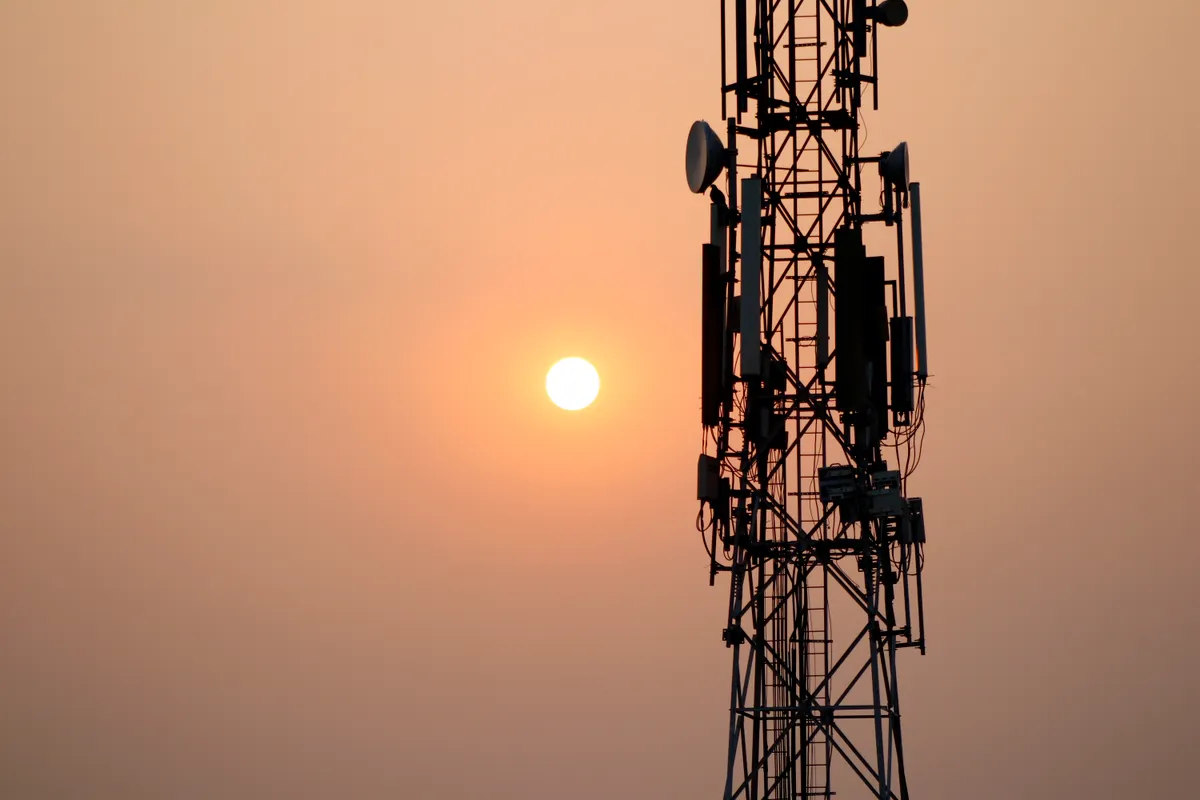
The administration’s strategic rationale centres on Huawei, which the Associated Press has estimated supplied more than half of the 4G and 5G network infrastructure across Africa. By backing Africell, Washington is attempting to offer an American-owned alternative in a market Beijing has dominated for more than a decade.
Whether that logic extends to mineral supply chains is less clear. The Lobito Corridor is positioned to give the United States and its partners access to cobalt, copper, and other materials critical to battery and defence manufacturing. But connectivity investment and direct mineral access are distinct levers, and the $99.6 million loan does not itself secure any offtake arrangement.
For context, EXIM’s project and structured finance transactions page shows that in FY 2026 alone the bank authorised $2,906 million for Perpetua Resources Corp in the US mining sector and $1,250 million for Reko Diq Mining Company in Pakistan under project finance, indicating where the heaviest mineral-sector commitments are being concentrated.
A Transparency Gap Written Into Federal Law
The Africell transaction falls below the $100 million threshold that triggers congressional notification requirements under 12 U.S.C. § 635a. Under that provision, before any board meeting for final consideration of a long-term transaction exceeding $100 million, EXIM must provide a notice and comment period; it must also aggregate the proposed transaction with all long-term loans and guarantees approved in the preceding 12-month period involving the same foreign entity and substantially the same product.
Because the Africell loan sits at $99.6 million, EXIM is not required to publish any explanation of the deal, nor to disclose whether private financing was available. When private lenders exit a market, that is ordinarily a pricing signal: the risk-adjusted return does not meet their threshold. Public financing removes that signal entirely.
Even above the $100 million threshold, the detailed congressional statement EXIM is required to submit is not published, and the bank faces no obligation to confirm whether private capital was sought and declined.
China’s Lending Record Offers a Cautionary Note
China’s Belt and Road Initiative, launched in 2013, has since disbursed $1.39 trillion across developing-world infrastructure projects, according to the Green Finance and Development Center at Fudan University. In 2025 alone, Beijing committed $61.2 billion to African nations.
The results are instructive. A 2023 study by Stanford’s Center on China’s Economy and Institutions found that distressed borrowers represented 60 percent of China’s overseas lending portfolio. The Lowy Institute projected that the world’s poorest countries would make record debt repayments totalling $22 billion to China in 2025, while Beijing simultaneously faces domestic pressure to recover outstanding loans and diplomatic pressure to restructure unsustainable ones.
Research published in the Journal of Economic Perspectives found that Chinese loan contracts frequently include confidentiality clauses barring borrowers from disclosing terms or even the existence of the debt. If Washington’s answer to that opacity is a domestic framework that does not require disclosure on sub-$100 million transactions, the contrast with Beijing’s model may be narrower than the administration suggests.
The next test will come as EXIM’s FY 2026 project finance authorisations are formally reported. If the Lobito Corridor commitments expand further, the congressional notification threshold and its aggregation rules will become the mechanism to watch.
