
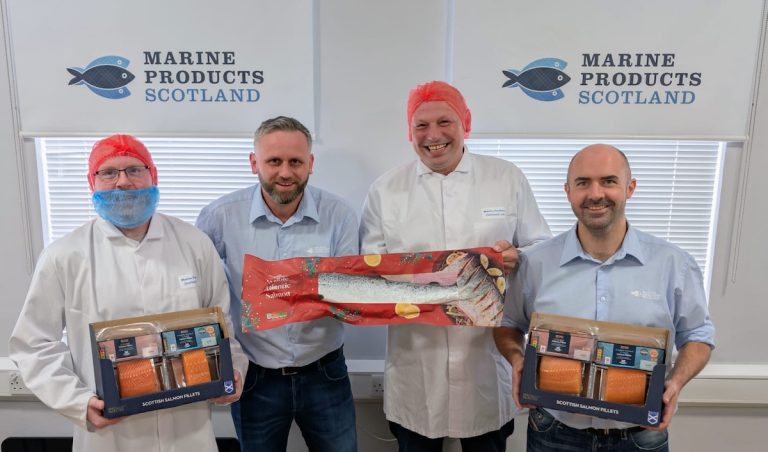
The company completed its transition to employee ownership this month, transferring shares into a trust held on behalf of its workforce. For Tokarczyk, now operations manager, the shift represented more than a technical restructuring. “I have been with Marine Products for 16 years, and what has always mattered to me is the people and the pride we take in what we do,” he said.
The move closes a chapter that began with uncertainty.
Angus Mackenzie, who founded the business, died in 2018. His family spent years considering how to preserve what he’d built without selling to a competitor or private equity firm. The Employee Ownership Trust model offered a third path—one that kept the salmon supplier independent whilst providing the Mackenzie family with an exit.
Mary Bisset, who has led Marine Products as managing director for eight years and worked there for over two decades, drove the transition. “This is a positive step for Marine Products. We wanted an ownership model that protects the legacy of the business while giving it the best possible platform for the future,” she explained. The company supplies salmon products to long-standing trade customers and retailers across the UK.
Under the new structure, a board of trustees holds shares on behalf of employees. Bisset and her leadership team continue running day-to-day operations. Staff won’t receive share certificates, but they’ll benefit from the company’s financial performance through bonuses and the security that comes with collective ownership.
“Employee ownership does exactly that – it keeps the company independent, allows decisions to be made for the long term, and recognises that our people are central to our success. The employees know this business best, and this structure puts them at the heart of safeguarding its future,” Bisset added.
Jurit LLP, a virtual law firm with nine senior partners and 25 consultant solicitors, advised on the transaction. Jeremy Glover, a partner in the firm’s Tax & Incentives team who specialises in Employee Ownership Trusts, steered Marine Products through the legal requirements. Chambers ranked Jurit’s EOT practice in 2025, reflecting growing demand for this succession route.
“We were delighted to support Marine Products through the legal process required to establish the Employee Ownership Trust and complete the transition. The structure ensures the company can continue to grow while keeping its culture, expertise and independence firmly intact,” Glover said.
The timing reflects a broader pattern among family-owned UK businesses confronting succession. Traditional sales often mean headquarters relocations, redundancies, or strategic pivots that erase a founder’s vision. Employee ownership trusts, by contrast, transfer control whilst preserving operational continuity.
Glover noted the trend. “Employee ownership is increasingly recognised as an effective succession solution for owner-managed businesses. It allows founders or shareholders to step back while protecting the legacy of the company and empowering the people who have helped build it.”
Yet the mechanics demand precision.
“Transactions involving employee ownership trusts require careful structuring to ensure the trust is established correctly, governance arrangements are clear and the transaction meets the relevant legislative requirements,” Glover said. Derek Ellery, a consultant solicitor at Jurit specialising in corporate and M&A, worked alongside Glover on the deal. “Working closely with the company and its advisers, we helped guide the business through each stage of the process so the transition could be completed smoothly and with confidence,” Ellery noted.
For Marine Products, the legal complexity translated into months of planning. The Mackenzie family needed assurance that the structure would deliver fair value. Employees required clarity on governance and their role as beneficiaries. The trust itself needed trustees capable of balancing long-term stewardship with commercial reality.
The deal also carried tax advantages, though neither the company nor Jurit disclosed financial specifics. EOTs, introduced in UK legislation in 2014, offer capital gains tax relief to selling shareholders under qualifying conditions—a sweetener designed to encourage this ownership model over conventional sales.
Tokarczyk, who joined the company in 2010, watched the business navigate Angus Mackenzie’s death and the uncertainty that followed. “Knowing the company is now owned for the benefit of employees gives real reassurance about the future. It feels like a natural next chapter – protecting what has been built while giving the business the stability it needs to keep going for the long term,” he said.
Whether that stability translates into growth depends on market conditions Marine Products can’t control—salmon prices, retailer consolidation, competition from Norwegian imports. But the ownership structure removes one variable: the risk of a sale that prioritises short-term returns over the workforce that built the brand.
Bisset remains at the helm, her leadership team intact. The trustees will meet quarterly, reviewing financial performance and strategic decisions. Employees won’t vote on company direction, but the trust’s governing documents require trustees to act in their collective interest.
The transition positions Marine Products alongside a growing cohort of UK businesses embracing employee ownership. John Lewis remains the highest-profile example, though hundreds of smaller firms have adopted EOT structures since the legislation took effect. Scottish food producers, facing succession pressures as founders retire, have taken particular interest.
For Jurit, the Marine Products deal adds to a portfolio that helped secure its Chambers ranking. The firm operates virtually, with lawyers based across the UK rather than anchored to costly city-centre offices. That model, partners argue, delivers senior expertise at lower rates—an advantage when advising mid-sized companies on complex transactions.
Glover’s team will likely field more enquiries as family businesses confront succession. The demographic wave of retiring baby-boomer founders shows no sign of slowing. Many built companies over decades but lack family members willing to take over. Employee ownership offers an alternative to selling to strangers.
Marine Products itself supplies salmon to customers it’s worked with for years. Maintaining those relationships mattered to the Mackenzie family and to Bisset’s management team. A sale to a larger food conglomerate might have meant renegotiated contracts, rebranded packaging, or consolidated operations that closed the Glasgow facility.
None of that will happen now. The business remains independent, anchored in Scotland, controlled by the people who process and distribute its products. Tokarczyk returns to work tomorrow with a different relationship to the company—no longer just an employee, but a beneficiary of its future success.
Whether that distinction changes how he approaches his role remains to be seen. Employee ownership enthusiasts claim it boosts productivity and engagement. Sceptics note that without direct share ownership or voting rights, staff may not feel meaningfully different about their work.
What’s certain is the Mackenzie family achieved what it set out to do eight years after Angus died. The business he built continues, independent and intact. And Marcin Tokarczyk, sixteen years in, now owns a piece of what he helped create.