
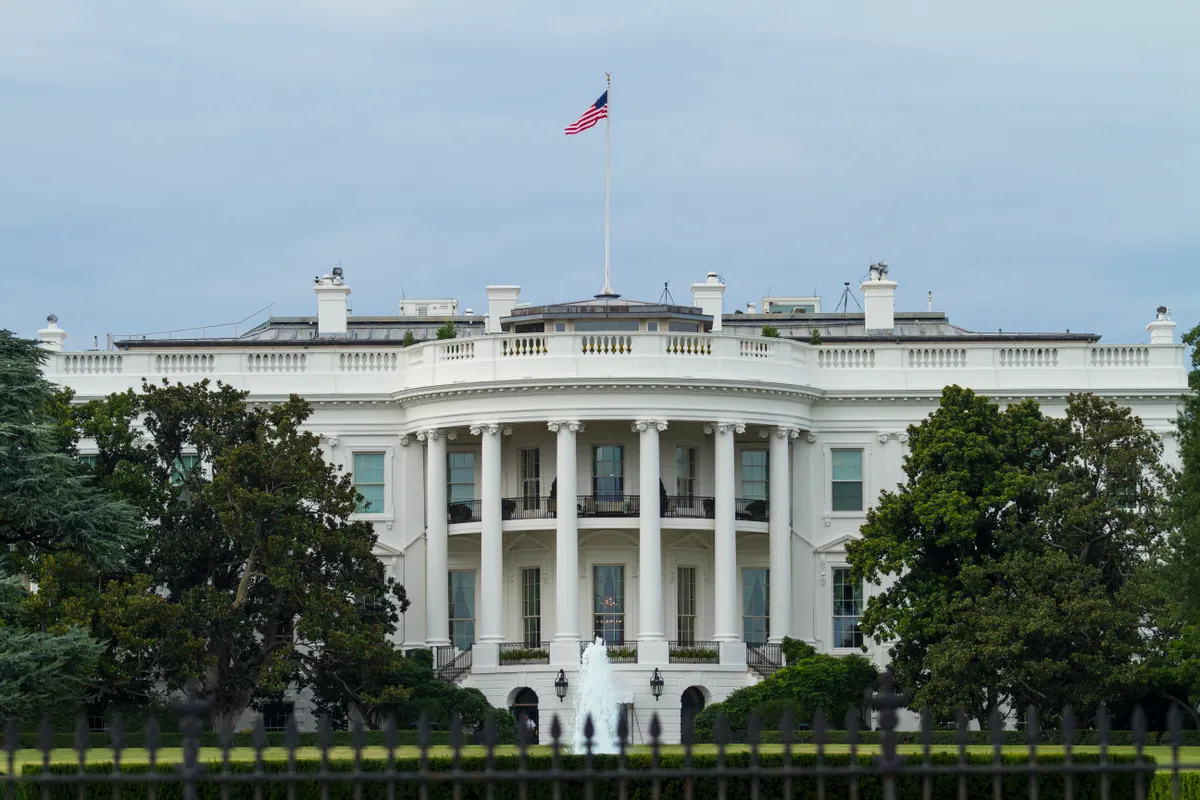

A federal White House press ban targeting CNN, MS NOW and Politico collapsed in the courts within days of President Donald Trump announcing it, with Judge Kelly ordering senior administration officials to restore the outlets’ press credentials on or around 24 September 2026.
Trump had announced the ban on his Truth Social platform, declaring it ‘effective immediately’ and accusing all three organisations of publishing ‘FICTION and LIES.’ He offered few additional details when pressed by reporters in the Oval Office later the same day, saying only that ‘fake news’ and ‘cumulative stories’ had prompted the decision.
As of Friday afternoon on the day of the announcement, journalists from all three outlets were still present on White House grounds with no visible sign of removal, according to the Associated Press. By Saturday morning, however, their credentials had been formally revoked.
Lawsuit Filed, Then a Court Order
CNN, MS NOW and Politico filed suit against the administration on approximately 21 September 2026, arguing that barring them from White House grounds violated their First Amendment rights. The three outlets also sought emergency relief to halt enforcement of the ban pending the outcome of the case.
The court moved swiftly. Judge Kelly issued an order requiring the administration to restore access, but compliance was not immediate: journalists from all three outlets were still being denied entry on the morning of approximately 24 September, prompting their lawyers to ask the court for an ‘immediate’ hearing on the grounds that senior White House officials had ‘repeatedly violated’ the order. Reporters from all three organisations were regaining access to the White House complex by around noon that day, according to CBS News.
Separately, the administration moved to bar the outlets from other forms of press access. Politico was subsequently excluded from the Air Force One press pool for a presidential trip to Nebraska, with CNN having faced a similar exclusion the week prior. Judge Kelly’s order was described as limited to White House grounds, leaving the question of travel pool access unresolved.
The Legal Architecture Behind the White House Press Ban
Legal practitioners representing press-freedom interests pointed immediately to the 1977 D.C. Circuit decision in Sherrill v. Knight as the controlling authority. The ruling held that once the White House opens its press facilities to credentialed journalists, it cannot deny access on an arbitrary basis. Crucially, it imposed procedural requirements: any denial must serve a compelling government interest, and the affected journalist must receive notice, an opportunity to respond, and a final answer in writing.
The Reporters Committee for Freedom of the Press had filed an amicus brief in Sherrill v. Knight alongside officers of the White House Correspondents’ Association and the National Press Club, arguing that credential denials without published standards, notice and a hearing opportunity would violate the First Amendment.
Bruce D. Brown, president of the Reporters Committee, described the current ban as ‘textbook viewpoint discrimination’ that courts would likely strike down if challenged. Aaron Terr, public advocacy director at the Foundation for Individual Rights and Expression, was more direct. He told CNN: ‘Press credentials aren’t a reward for loyalty to the government. A free, even adversarial, press is a sign of our country’s strength.’
CNN condemned the ban as ‘an illegal assault on this fundamental right,’ invoking its constitutional entitlement to report ‘without hindrance or interference from the government.’
A Pattern of Press Restrictions
The White House press ban sits within a broader pattern of access disputes between the Trump administration and the press corps. The Associated Press was barred from the Oval Office and Air Force One starting 11 February 2025 after it declined to adopt the administration’s preferred designation of ‘Gulf of America’ for the Gulf of Mexico. A lower federal court subsequently ruled that the administration had improperly retaliated against the AP. The judge wrote that the government ‘cannot treat [the AP] worse than its peer wire service,’ though the ruling stopped short of ordering permanent access to specific events. The case, Associated Press v. Taylor Budowich, Karoline C. Leavitt, and Susan Wiles, is now before a three-judge panel of the U.S. Court of Appeals for the D.C. Circuit.
During Trump’s first term, the White House revoked the press credentials of then-CNN correspondent Jim Acosta in 2018. A Trump-appointed federal judge temporarily restored Acosta’s access, ruling that the White House had violated his due process rights. The administration ultimately reinstated the credentials on a permanent basis, and CNN dropped its lawsuit.
Numerous Democratic lawmakers condemned the current ban, with some characterising it as an authoritarian move ahead of the midterm elections. The White House Correspondents’ Association also joined in condemnation.
With the Air Force One exclusions still in effect and the underlying litigation unresolved, the scope of Judge Kelly’s order and the administration’s willingness to comply with it fully will be the decisive question in the weeks ahead.
