
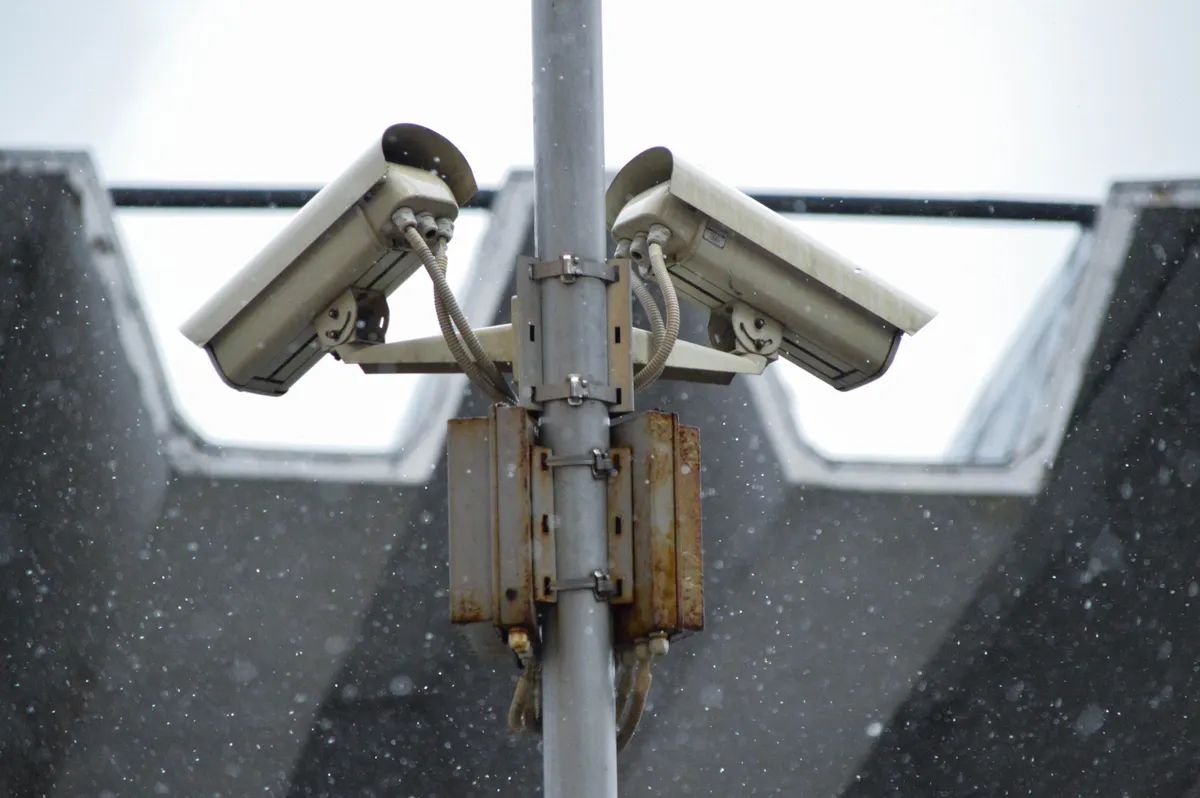

A licence plate reader backlash is reshaping American surveillance policy at speed, with Republican governors, state legislatures, and now a Senate subcommittee all moving against the automated camera networks that have quietly spread across the country over the past decade.
Texas Governor Greg Abbott last month ordered state agencies to halt funding for Flock Safety cameras, a network that a Texas Tribune investigation found had received at least $30 million in state grant money to build out across local police departments. Abbott’s spokesman Andrew Mahaleris confirmed the order, stating: ‘To the extent any funding comes from Texas agencies, those agencies are clarifying that those funds cannot be used for Flock cameras.’
Abbott also directed the state Department of Transportation to stop issuing permits for automated licence plate readers along state roadways, according to KENS5. The freeze came the day after Florida Governor Ron DeSantis declared the systems ‘out of control,’ with both governors citing documented cases of officers misusing camera data for personal purposes.
Abbott specifically mentioned a Lufkin, Texas, police officer charged with using the data to stalk an ex-girlfriend, her relatives, and acquaintances more than 10,000 times. DeSantis alluded to arrests in Sarasota and Haines City, Florida. ‘When I see, like, a police officer using this to track, like, an ex-girlfriend,’ DeSantis said, ‘I’m like, you know, what the hell’s going on?’
The Licence Plate Reader Backlash in Numbers
The scale of the pushback is considerable. The Institute for Justice, which unveiled a dedicated tracking database in August 2026, counted 181 local governments that had cancelled or declined to renew ALPR contracts since the beginning of 2025. In Texas alone, at least 23 jurisdictions have dropped contracts, suspended service, or scaled back their networks.
That figure has accelerated sharply. As recently as February 2026, an NPR report counted only around 30 localities that had deactivated Flock cameras or cancelled contracts. Flock Safety’s own chief executive, Garrett Langley, has maintained that new law enforcement partnerships continue to outpace cancellations, according to NPR.
The technology itself is more intrusive than a simple number-plate snap. Flock cameras use artificial intelligence to capture and store vehicle characteristics including make, model, colour, bumper stickers, and dents, building profiles that allow officers to track movements, identify nearby vehicles, and anticipate routes, all without judicial oversight.
Some 7,000 police departments have installed networks comprising around 140,000 cameras. The Institute for Justice has identified well over 100 abuse incidents, warning these ‘may be just the tip of the iceberg’ given lax oversight and widespread data sharing between agencies. A Wichita police supervisor acknowledged in 2024 that it is ‘not even possible’ to verify that each ALPR search complies with policy. In Illinois, an audit of 12 local agencies found that an ALPR provider had allowed US Customs and Border Protection to access state camera data in breach of a 2023 state law; Mount Prospect, Illinois separately disclosed that 262 immigration-related searches had been run against its ALPR data through a national lookup feature, according to the Policing Institute.
Public opinion has shifted in step. A recent YouGov survey found 46 percent of respondents opposed police use of ALPRs, including 31 percent ‘strongly’ opposed, against 38 percent in favour. A year earlier, 45 percent supported the practice and only 33 percent opposed it.
Senate Investigation and State-Level Regulation Take Shape
At federal level, Senator Josh Hawley (R-Mo.), Chairman of the Senate Judiciary Subcommittee on Crime and Counterterrorism, has driven the congressional response. On 3 September 2026, Hawley expanded his ALPR investigation beyond Flock Safety to encompass Motorola Solutions, Verkada, and Axon Enterprise, sending letters to each company’s chief executive examining the ‘collection, retention, and dissemination of the data generated by its artificial intelligence surveillance cameras,’ according to Hawley’s Senate office. He has also invited the chief executives of Flock and three other companies to testify before his subcommittee, though it has not been confirmed whether they have agreed to appear, according to the Tacoma News Tribune.
State executives are not waiting for Congress. Missouri Governor Mike Kehoe issued an executive order requiring that most licence plate and vehicle data be deleted within 30 days, prohibiting vendors from selling or commercialising Missouri-generated data, and banning integration with AI facial recognition technology, according to KSHB. The order is all the more pointed given that Blue Springs, Missouri, was among the first Flock Safety cities in the state, having committed nearly $5 million to installing the cameras.
The Institute for Justice is pursuing the matter through litigation as well as advocacy, arguing that a warrant should generally be required before police access ALPR data. ‘The police cannot police themselves,’ says the organisation’s attorney Robert Frommer. The Congressional Research Service has also examined the Fourth Amendment questions raised by the technology in a published analysis of ALPR background and legal issues.
Abbott has said ALPRs are ‘easily containable,’ adding: ‘They’re going to be required to be used responsibly if they’re used at all.’ Whether the Senate hearing produces binding constraints, or simply generates pressure that companies can wait out, is the question that will define the next phase of the debate.
