
What the Kuzminskiy District Court Ordered
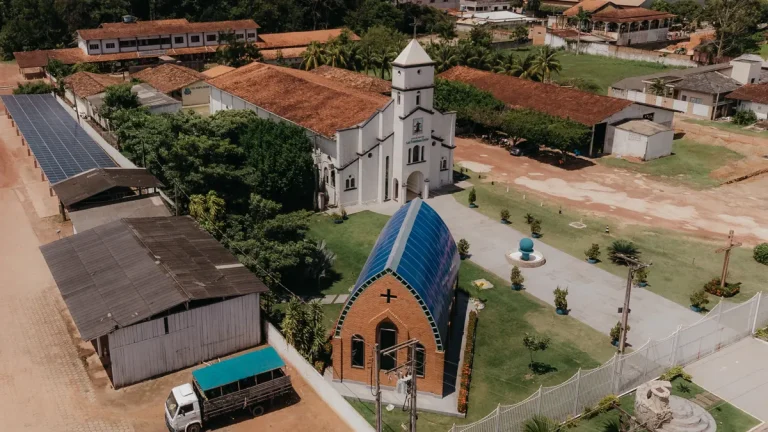
The ruling came from the Kuzminskiy District Court of Moscow, acting on a claim filed by the prosecutor’s office. The confiscated assets include 63 homes and commercial buildings totalling more than 11,000 square metres (118,000 square feet), along with 60 parcels of land covering 5.6 hectares (13.8 acres).
All 123 properties were owned by legal entities of Jehovah’s Witnesses registered in seven European countries: Austria, Denmark, Finland, the Netherlands, Portugal, Spain, and Sweden, according to JW.org.
The cadastral value of the seized assets is approximately 415 million rubles (around 4.7 million euros), though the defendant’s own assessment places the market value considerably higher.
The Moscow Property Seizure and the 2017 Ban
Russia’s Supreme Court banned Jehovah’s Witnesses as an ‘extremist organisation’ in 2017, simultaneously liquidating the group’s Administrative Centre, headquartered in St. Petersburg, and all 395 of its local religious organisations. The ruling affected more than 100,000 Jehovah’s Witness worshippers across Russia, according to Human Rights Watch.
Under the ban, those found to be leading Jehovah’s Witnesses activities face a maximum prison sentence of 10 years. Participants face fines of 300,000 to 600,000 rubles (then approximately US$5,343 to $10,687) or up to six to ten years in custody.
Many members have since been prosecuted for what Russian authorities classify as ‘extremist activity.’ Buildings that once served thousands of worshippers now stand largely abandoned and falling into disrepair, JW Russia reports.
ECHR Ruling Ignored
The July confiscation runs directly contrary to a judgment of the European Court of Human Rights issued on 7 June 2022. In Taganrog LRO and Others v. Russia, the court held that the 2017 Supreme Court ruling violated both freedom of religion and the right to peaceful enjoyment of possessions under the European Convention on Human Rights. Russia was required either to return previously seized properties or to compensate their value.
Russia has not complied. Having withdrawn from the Council of Europe in March 2022 following its invasion of Ukraine, Moscow no longer recognises the ECHR’s jurisdiction, leaving enforcement mechanisms effectively dormant.
Reuters reported the confiscation order as it was handed down, noting the breadth of the assets involved and the involvement of European-registered entities.
The case adds to a body of Russian court decisions that have progressively transferred Jehovah’s Witnesses assets to state control since the 2017 ban, notwithstanding the ECHR’s unambiguous findings. Whether affected European entities pursue compensation claims through alternative international mechanisms is now the central legal question remaining open.