
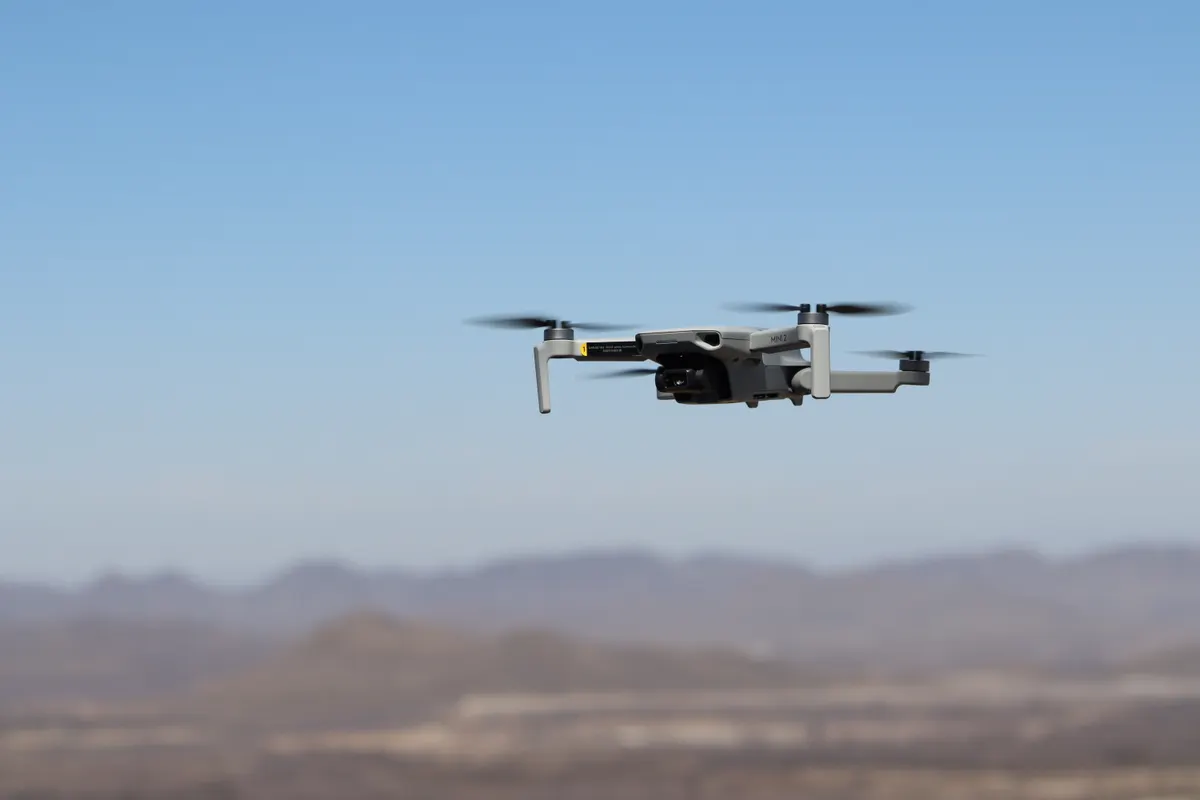

A settlement reached with the American Civil Liberties Union of Northern California will require Sonoma County drone surveillance to be authorised by a warrant before officials may overfly private homes or their surrounding curtilage, ending a programme that began as a cannabis enforcement tool and expanded into routine building-code policing.
The case, formally styled Schmitz, et al. v. Permit Sonoma, et al., was filed in Sonoma County Superior Court in June 2025 on behalf of three affected residents. The county has agreed to pay $50,000 to each of the three named plaintiffs and to delete drone footage within 30 days of collection unless it forms part of an active investigation.
The Sonoma County Drone Surveillance Programme and Its Origins
The programme dates to May 2019, when the Sonoma County Fish and Wildlife Commission approved an $8,000 grant to purchase drones for identifying non-permitted cannabis cultivation sites, according to the Press Democrat. The county’s original funding application said the drones would focus on remote cultivation sites. Officials subsequently authorised what internal documents described as ‘discretionary proactive investigations.’
By 2023, 70 per cent of drone flights ostensibly searching for cannabis found no cannabis violation at all. Records showed Permit Sonoma had amassed 5,600 photographs from 700 flights since 2019. Drone imagery had become a tool for ordinary code enforcement: unpermitted decks, trailers, fences, grading, outbuildings, and old cars.
Between October 2020 and 2024, code enforcement levied more than $3 million in fines for investigations that relied on drone surveillance, averaging $16,638 per case, according to the Sonoma County Gazette citing the ACLU complaint. Dozens of residents were issued swiftly escalating fines, sometimes reaching six figures, and some had their properties foreclosed.
Internal Emails and Constitutional Concerns
Internal correspondence obtained by the ACLU reveals that officials were aware of constitutional questions from an early stage. In a 2022 internal email, code enforcement supervisor Jesse Cablk wrote ‘I think that we should leave out language of warrants,’ and acknowledged the agency surveils ‘residences, yards, enclosures, sheds, greenhouses, etc.,’ according to the Davis Vanguard, citing the ACLU lawsuit. County correspondence and drone policy documents show officials chose not to adopt proposed language that would have limited surveillance over areas where residents have a reasonable expectation of privacy.
The 43-page lawsuit names, in addition to Permit Sonoma itself, director Tennis Wick, code enforcement manager Tyra Harrington, and four code enforcement supervisors and inspectors as defendants. Permit Sonoma’s drone policy, the latest version of which was approved by Wick in 2023, permitted aerial inspections based on citizen complaints or ‘staff observations coupled with any other facts that suggest violation of the Sonoma County Code.’ Critically, that policy had never been published nor brought before the Board of Supervisors prior to the litigation, the Press Democrat reported.
The first documented flight linked to an individual case occurred in June 2019, when former narcotics detective Todd Hoffman led an inspection of the property belonging to Keni Meyer, a dog trainer who would eventually lose her home near Sebastopol after the county cited a series of minor code violations and levied more than $375,000 in fines. Meyer has lived in a trailer park since a forced eviction in June 2025. She has a court date scheduled for 27 October and says she may yet recover her property.
‘They effectively shut down cannabis [industry] growth in the county,’ said Nick Hidalgo, a senior attorney with the ACLU of Northern California. ‘It dropped dramatically. They had no other reason to fly these drones, and so they expanded into all of these other purposes.’
O’Melveny and Myers partner Schneller stated in connection with the lawsuit: ‘These protections are more important than ever today, as drones make it cheaper and easier for government agencies to pry into people’s lives, invade the sanctity of their homes, and upend their finances.’
What the Settlement Requires
Under the settlement, the warrant requirement applies to private homes and their curtilage, the area immediately surrounding the residence. Officials may continue monitoring open fields without first obtaining a warrant or consent, according to KQED. Emergency circumstances provide a limited exception to the warrant requirement.
The county must also inform residents if their home has been surveilled by drone, provide flight logs to the ACLU of Northern California every six months for two years, and publish its drone policy through a public process before the Board of Supervisors, which county residents may attend. The county agreed to cease stockpiling images of private homes.
Sonoma County Board of Supervisors Chair Rebecca Hermosillo told the Press Democrat: ‘We need guardrails for this. It was implemented a little bit under the radar, so it’s important that we establish a drone policy…. I understand the intent but we shouldn’t use it, in essence, to spy on our constituents.’
A county spokesperson said the settlement is not an admission of fact, liability, or responsibility, and that the county had previously successfully defended its use of drones in court but opted to settle to avoid a protracted legal process. Three Permit Sonoma officials who oversaw the programme have already left their posts, and county counsel Robert Pittman announced his retirement in August 2025.
Meyer’s pending October hearing, and the claims of other residents who lost homes after warrantless flights, will test whether the settlement accelerates broader legal exposure for the county, subject to any onward proceedings in those matters.
